Five Open Source Assistants Compete with OpenAI Dots
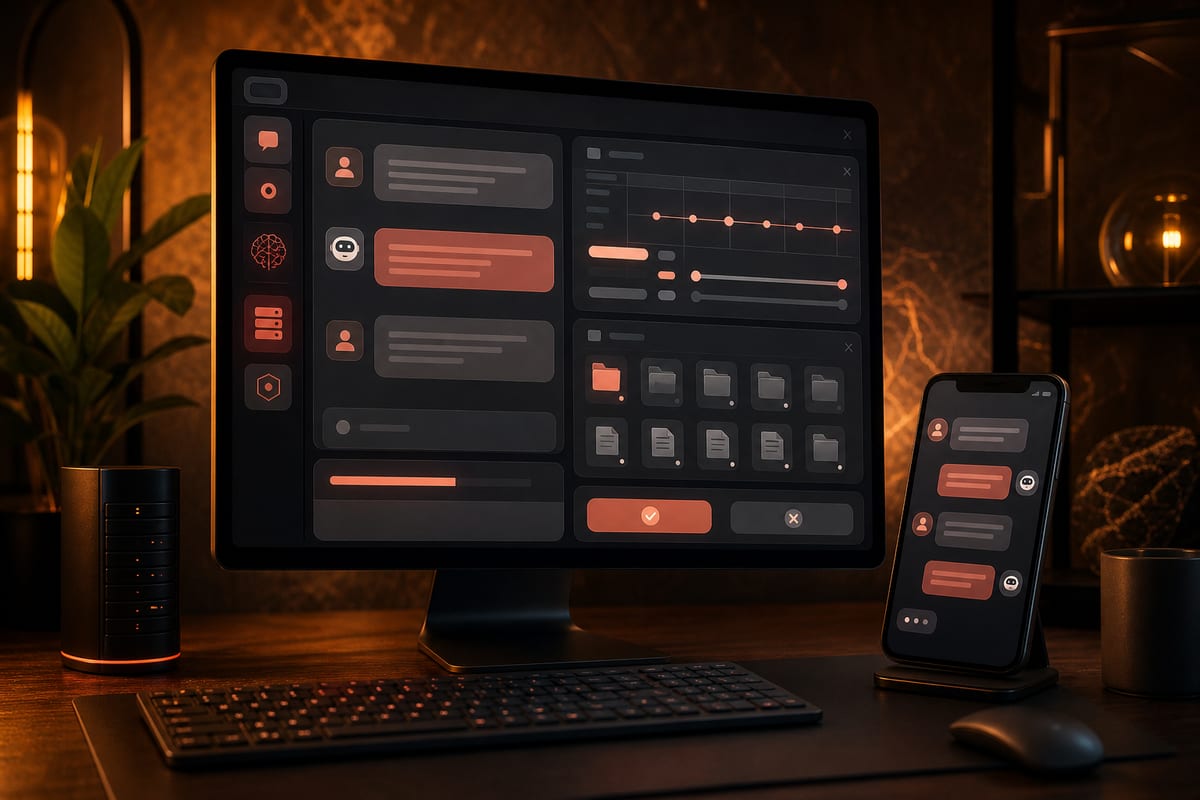
OpenClaw, Hermes Agent, QwenPaw, OpenHuman, and nanobot offer open-source assistants as alternatives to OpenAI Dots, the always-active ChatGPT agent. Hosting, memory, compatible models, and human validations distinguish these tools, some of which remain in beta.
Local Execution and Beta Versions
Developed in Rust, OpenHuman runs its agents, memory, and automations locally. The project prioritizes efficiency, with the ability to run multiple agents on relatively low-cost infrastructure. However, it remains in an early beta phase, where imperfections are possible.
Written in Python, nanobot adopts a lightweight architecture, usable on personal machines as well as on user-managed servers. It accepts both commercial AI providers and local models, notably via Ollama. Developers can examine its functionality, modify it, and add features.
QwenPaw also offers a choice between commercial APIs and compatible models executed on-site, providing greater control over expenses and privacy. Its desktop application is also in beta.
Memory and Agent Skills
With Hermes Agent, Nous Research emphasizes learning from usage rather than merely retaining discussions. After completing a task, the assistant can extract knowledge to create a reusable skill and then evolve it. It can also retrieve past exchanges and remember user preferences as well as information related to their projects.
QwenPaw, previously known as CoPaw, organizes its memory into three levels: the immediate work context, past conversations, and a personal knowledge base that can evolve. It combines this memory with automation and cooperation among agents. Each agent can have its own memories and skills, then collaborate with others on complex tasks.
OpenClaw also maintains persistent memory and accepts user-added skills. It allows for automating navigation and selecting from different AI models.
The AI brief the pros read every evening
The 7 best AI stories, the essentials in 5 min. Free.
Included when you join: our pick of the best AI guides & comparisons.
Choose your rhythm
Free · No spam · Unsubscribe in 1 click
Messaging, Interfaces, and Scheduled Tasks
Installed on a personal computer or server, OpenClaw connects to WhatsApp, Telegram, Slack, or Discord. Scheduled tasks and periodic checks enable it to track work, send updates, and trigger reminders. Its web interface consolidates assistant administration, conversations, and settings. However, this self-hosted solution requires configuring tools, protections, and access to models, as well as maintaining the installation.
Hermes supports scheduled tasks, sub-agents, messaging connections, and various language models. Hermes Desktop is used for chatting, managing skills, reviewing tool activity, and manipulating files; a dashboard is also available for the browser. In QwenPaw, scheduled executions coexist with messaging, navigation tools, and document processing. A web console complements its desktop application.
The OpenHuman application provides access to agents, process management, as well as files and applications. The tool automates both the browser and the computer, retains memory, and can launch scheduled processes. For actions requiring permission, it includes validation steps.
nanobot combines persistent memory, scheduled automations, web tools, file manipulation, and messaging connections. From its browser-accessible interface, users can manage their exchanges, review tool executions, configure models, and monitor automatic tasks.
Dots Continues Its Remote Work
Dots, for its part, has a cloud-hosted computer. The agent retains ongoing projects and can continue its tasks without continuously receiving new instructions. It can request validation when an important decision arises.
Accessible from a phone, it receives instructions, allows for scheduling work and linking applications, and acts in the background. Its capabilities include information retrieval, email management, project tracking, and creating websites or applications. Programming tools and reusable skills can be involved in complex tasks. This form of personal assistance has been notably popularized by OpenClaw.
Brief AI — AI news in French
The essentials of artificial intelligence news, decoded and explained every day.