Flox Launches Animal Deterrent AI and Raises $10 Million
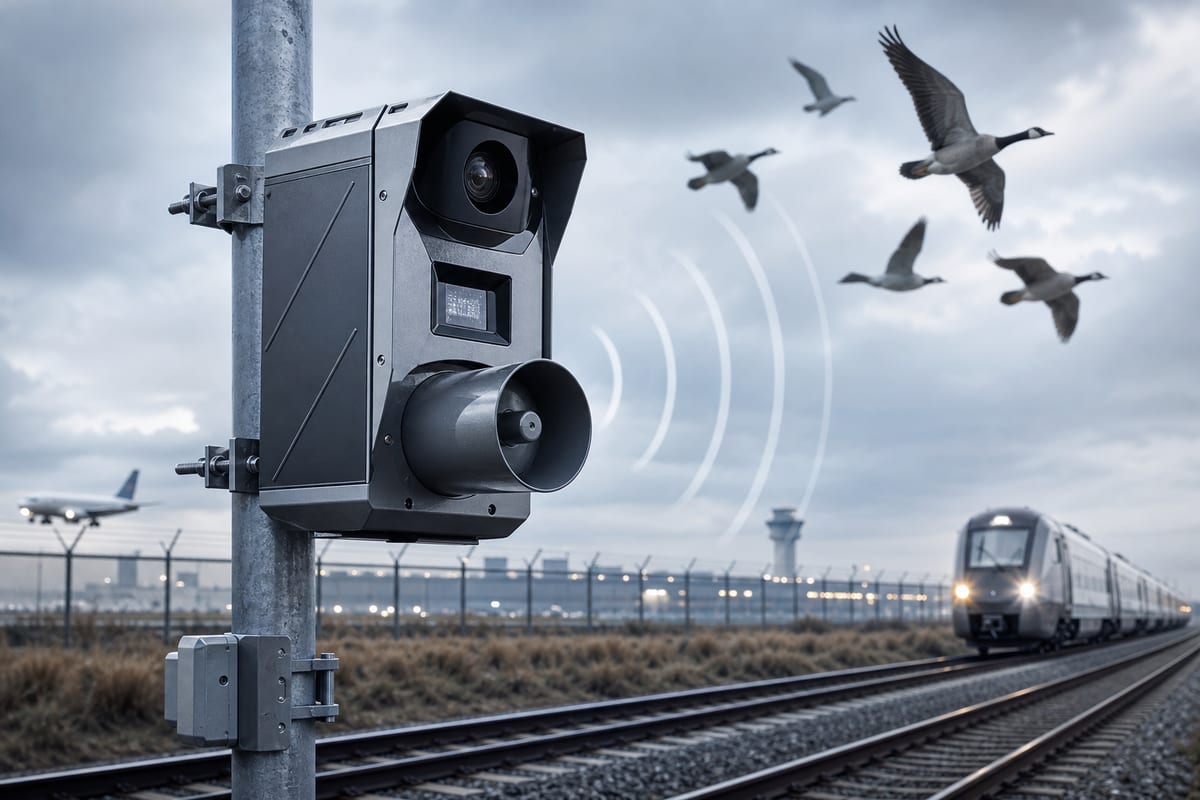
Swedish company Flox Intelligence, spun out from KTH, aims to transition its animal deterrent devices from pilot projects to mass deployment. The startup is opening a Series A funding round of $10 million, claims partnerships with companies like Alstom, and targets $1.5 million in revenue by 2026, while relying on approximately 150 devices already in operation.
$10M Funding Round, 2026 Revenue Goals, and Partnerships
Flox is opening a Series A funding round of $10 million to increase its installations from around 150 devices to several thousand and to expand its system beyond wildlife-related uses. The startup has already raised about $5 million in pre-seed and seed funding, with a seed round led by Unconventional Ventures and Tilia Impact Ventures, along with co-investors such as GENIUS NY, Norrsken, Satgana, and business angels. Founder Sara Nozkova aims for a revenue of approximately $1.5 million by 2026. On the market side, Flox combines the sale of units with recurring fees and relies on OEM partnerships where companies pay annual fees to integrate its software into vehicles like trains; Alstom is among these partners.
Deployments Across Three Continents and Various Sites
Approximately 150 devices are in operation in North America, Europe, and Australia, according to Sara Nozkova. The covered areas include airfields and airport perimeters, road and rail corridors—particularly at the ends of fences and wildlife corridor crossings—as well as national parks. Flox is also present on agricultural lands, in urban areas, on mining sites, and within critical infrastructures such as substations.
Perimeter Boxes That Detect, Identify, and Deter
Flox's equipment processes data locally instead of relying on the cloud and is based on perception systems developed from studying animal behavior. A motion detector activates the device when a presence is detected, a camera identifies the animal using models that operate directly on the device, and then a species-specific sound signal is emitted to drive it away. Sara Nozkova notes that the system learns from experience and varies its responses to avoid habituation. The battery-powered units can be mounted on poles, trees, or other supports. A software platform allows for monitoring deployments and field activity, generating reports for compliance and biodiversity tracking.
Le brief IA que les pros lisent chaque soir
Les 7 actus IA du jour, décryptées en 5 min. Gratuit.
Inclus dès l'inscription : notre sélection des meilleurs guides & comparatifs IA.
Choisis ton rythme
Gratuit · Pas de spam · Désabonnement en 1 clic
A Need Driven by the Cost of Wildlife-Infrastructure Collisions
The financial impact of wildlife collisions is significant: according to the FAA, the average annual cost for U.S. civil aviation is about $272 million between 1990 and 2025. In France, SNCF reports that over 8,000 trains experience disruptions each year due to the presence of stray animals, a factor that ranks among the top five causes of delays according to the company. In Brittany in 2023, 120 trains collided with animals, disrupting 660 services and causing over 15,000 minutes of delays.
Origins, Vision, and Competition in Animal Deterrence
With 13 years of experience in transportation and autonomous vehicles, Sara Nozkova designed a deterrent device that differs from traditional methods, believing that a louder device is not the solution and that systems designed for fixed environments fail in nature. She joined the AI lab at KTH in Stockholm to develop an approach that adapts its response based on species and behavior, leading to the founding of Flox Intelligence in 2020. The company is a finalist this year in Startup Battlefield 200 at an event held at Moscone West in San Francisco from October 13 to 15. Ultimately, Flox aims to make its software portable on machines operating outdoors, from trains to drones. In the face of competition, Robin Radar emits species-specific distress calls and logs activity, while iCHASE relies on computer vision and mobile laser technology. Sara Nozkova emphasizes the breadth of her system and field data, asserting that outdoor-operating machines will need to understand nature, a layer of intelligence that few players are building, according to her.
Brief IA — L'actualité IA en français
L'essentiel de l'actualité de l'intelligence artificielle, décrypté et expliqué chaque jour.