GenerationAI Paris 2026: A VIP Invitation for briefia.fr Readers
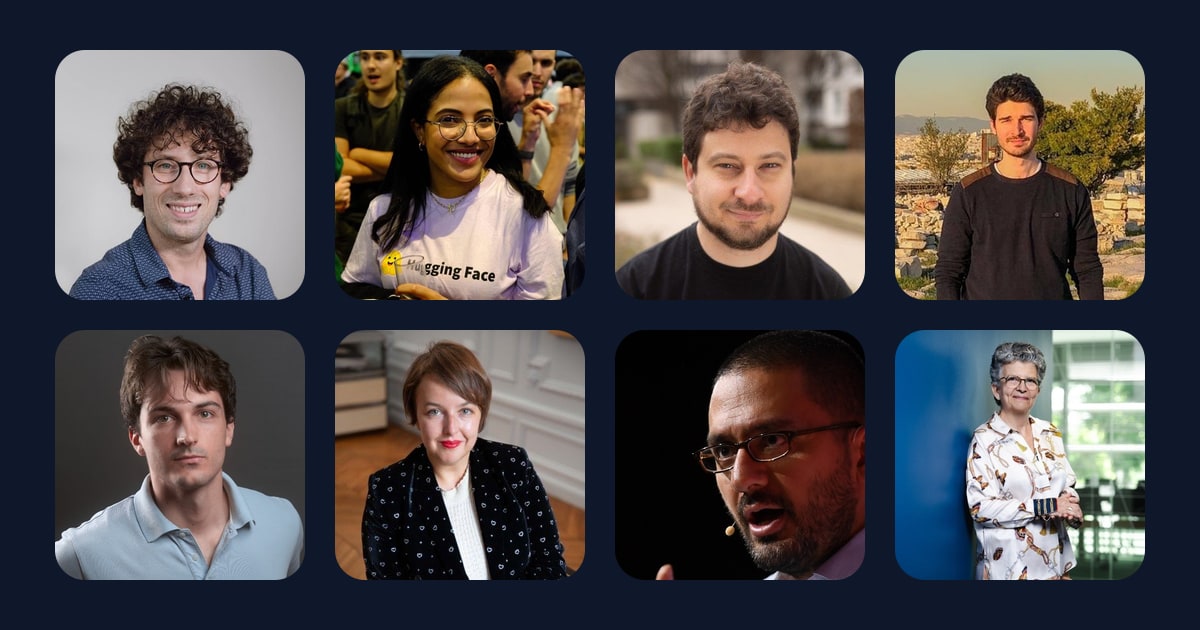
On Tuesday, December 1, and Wednesday, December 2, the CNIT Forest in Paris La Défense will host the third Parisian edition of GenerationAI, a conference that its organizers present as the "NeurIPS for AI engineers." More than 80 speakers, including teams from OpenAI, Anthropic, NVIDIA, and Hugging Face, over 2,000 expected participants, and eight parallel tracks, from the initial training of a model to the agent running in production. Brief IA readers can enter for free with the code BRIEFIAVIP, for a pass listed at €1,199 on the ticketing site.
The question that runs through the two days
Will your applications call the closed APIs of major labs, or will they run open models on your own servers? This is the common thread of this edition, and each track will revisit it.
The choice is far from theoretical. It determines the cost of each request, where the data goes, what happens the day the provider changes its prices or withdraws a model, and how much of the product truly belongs to you. Open models have made significant progress, while closed models still hold an edge in certain tasks: the conference aims to show where the boundary lies today.
Reserve my invitationFree with the code BRIEFIAVIP, already included in the link
Eight tracks, from initial training to production agent
The program follows the entire lifecycle of an AI system, across eight tracks that run simultaneously:
- Training LLMs: training data, scaling laws, synthetic data, reinforcement learning from execution results, distillation.
- Agent experience: how a person supervises autonomous work, including validations, interruptions, memory, and the right level of confidence.
- Tooling around the model: tools, sandboxing, permissions, context assembly, and observability—everything that transforms a model into a reliable system.
- The agent loop: planning, new attempts, context compression, recovery from errors, and agents that operate for long periods without supervision.
- Open models vs. state-of-the-art models: what the latest open versions can do, and where closed models still lead.
- Evaluations: contaminated or saturated tests, task sequences for agents, and internal evaluations that remain useful when changing models.
- Inference systems: service cost, caching, speculative decoding, and response times of agents that chain steps together.
- MCP and interoperability: Model Context Protocol servers in production, authentication, and the ecosystem of tools being built around it.
The organizers have set a rule: each session is presented by the team that achieved the result, with their method displayed on screen.
Notable speakers
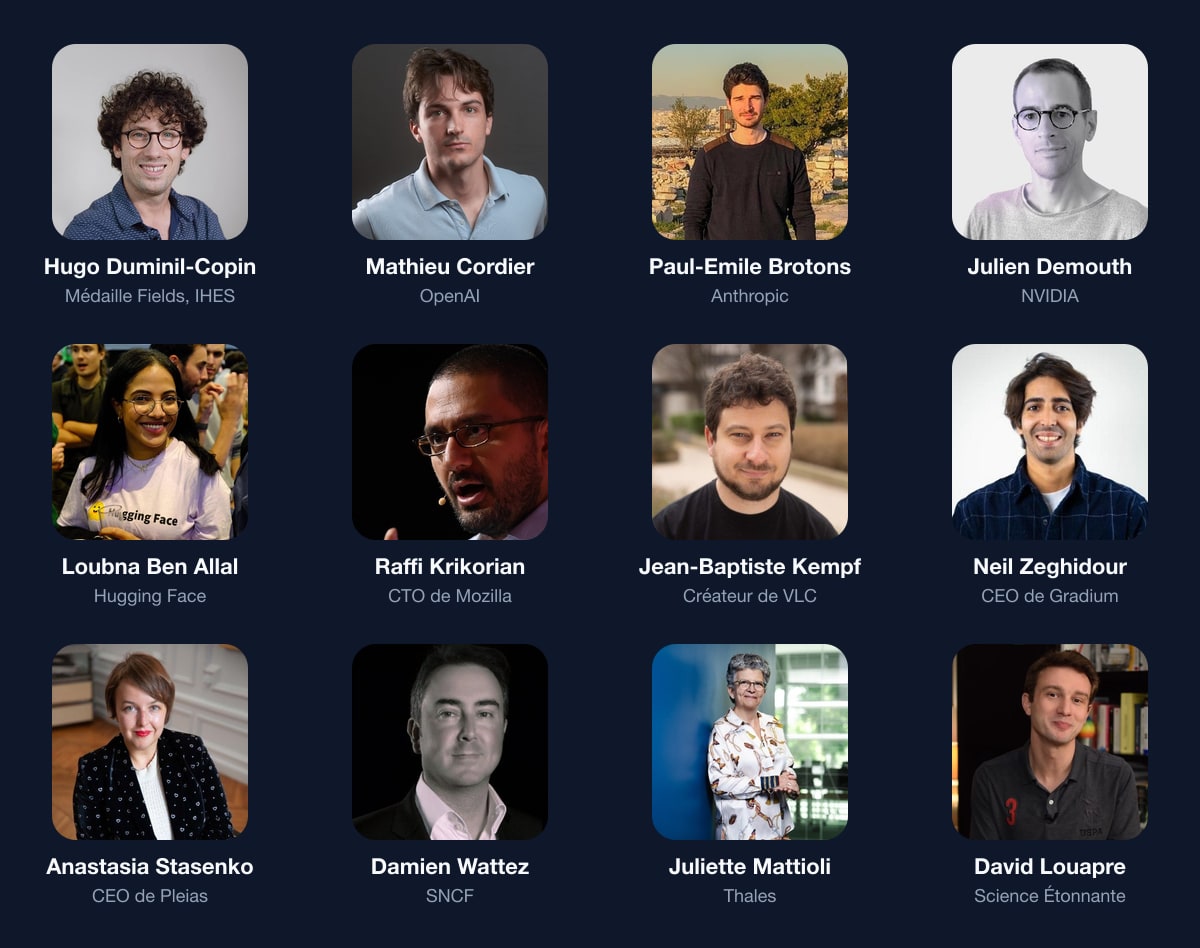 Twelve speakers from GenerationAI Paris 2026, including Hugo Duminil-Copin, Fields Medalist, and teams from OpenAI, Anthropic, NVIDIA, and Hugging Face.
Le brief IA que les pros lisent chaque soir
Les 7 actus IA du jour, décryptées en 5 min. Gratuit.
Inclus dès l'inscription : notre sélection des meilleurs guides & comparatifs IA.
Choisissez votre rythme
Gratuit · Pas de spam · Désabonnement en 1 clic
The labs. Mathieu Cordier, applied AI engineer at OpenAI. Paul-Emile Brotons, member of the technical team at Anthropic. Julien Demouth, who leads engineering for AI labs and models at NVIDIA. Raffi Krikorian, CTO of Mozilla. Yasser Jadidi, co-director of research at Aleph Alpha.
The researchers. Hugo Duminil-Copin, Fields Medalist, from the Institute for Advanced Scientific Studies. Loubna Ben Allal, researcher at Hugging Face, who led the SmolLM project. Simon Frieder, head of the AIMO prize, the mathematics olympiad reserved for AIs. Diego Perino, director of the AI institute at the Barcelona Supercomputing Center, and Stéphane Requena, CTO of GENCI, which manages France's research supercomputers.
The French creators. Jean-Baptiste Kempf, creator of VLC, now leading Kyber. Neil Zeghidour, head of Gradium. Anastasia Stasenko, head of Pleias. Steeve Morin, head of ZML. Remi Cadene, head of UMA. Steven Palma Morera, technical lead of LeRobot, Hugging Face's open robotics project.
The deploying companies. Damien Wattez, director of AI and innovation at SNCF. Juliette Mattioli, AI expert at Thales. Etienne Grass, head of AI at Capgemini. Axel Colin de Verdière, engineering director at Doctolib. Thomas Roux, responsible for AI productivity at Sanofi. Laurie Soffiati, managing director of Nabla in France. Charles-Pierre Astolfi, director of information systems at IGN.
AI and society. Economist Axelle Arquié, who studies threatened jobs and emerging ones. Alexandre Gefen, research director at CNRS and author of a cultural history of AI. Christophe Payet, from the Lab IA Artists at ARTE. And two popular science communicators followed by many on YouTube: David Louapre (Science Étonnante), also a researcher at Hugging Face, and Thibaut Giraud (Monsieur Phi).
The organizers have announced 72 names out of over 80: the complete list is available on the conference website.
Reserve my invitationFree with the code BRIEFIAVIP, already included in the link
Who it's for
GenerationAI is primarily aimed at those who build: AI engineers and researchers, startup founders, technical leads who must choose a model, equip agents, or prove that a system can handle the load. If your team is torn between an API and an open model, or if your agents work in demonstration but not yet in production, these two days are made for you.
GenerationAI is also part of FOST Paris, which brings together 25 conferences dedicated to the future of software, from APIs to cybersecurity, with over 10,000 participants and more than 500 speakers in total. This provides an opportunity to network with specialists in APIs, cloud, and cybersecurity between sessions.
Your invitation in three steps
- Open the ticketing site with the button below: the code BRIEFIAVIP is already entered.
- Choose 1 "Late Bird" ticket, listed at €1,199: the discount applies automatically, bringing the total to €0.
- Click "Continue" and provide your information.
Brief IA is a media partner of GenerationAI Paris: this code is reserved for its readers.
Reserve my invitationFree with the code BRIEFIAVIP, already included in the link
Practical information
- Dates: Tuesday, December 1, and Wednesday, December 2, 2026.
- Location: CNIT Forest, 2 place de la Défense, 92092 Puteaux.
- Access: La Défense station, RER A and metro line 1.
- Price: free with the code BRIEFIAVIP, instead of €1,199.
The event is also listed in the Brief IA agenda.
Brief IA — L'actualité IA en français
L'essentiel de l'actualité de l'intelligence artificielle, décrypté et expliqué chaque jour.