Ghost Murmur: CIA's AI Tracks Heart 65 km in Iran
Le brief IA que les pros lisent chaque soir
Les 7 actus IA du jour, décryptées en 5 min. Gratuit.
Inclus dès l'inscription : notre sélection des meilleurs guides & comparatifs IA.
Choisis ton rythme
Gratuit · Pas de spam · Désabonnement en 1 clic
Ghost Murmur: A Revolutionary Technology from the CIA
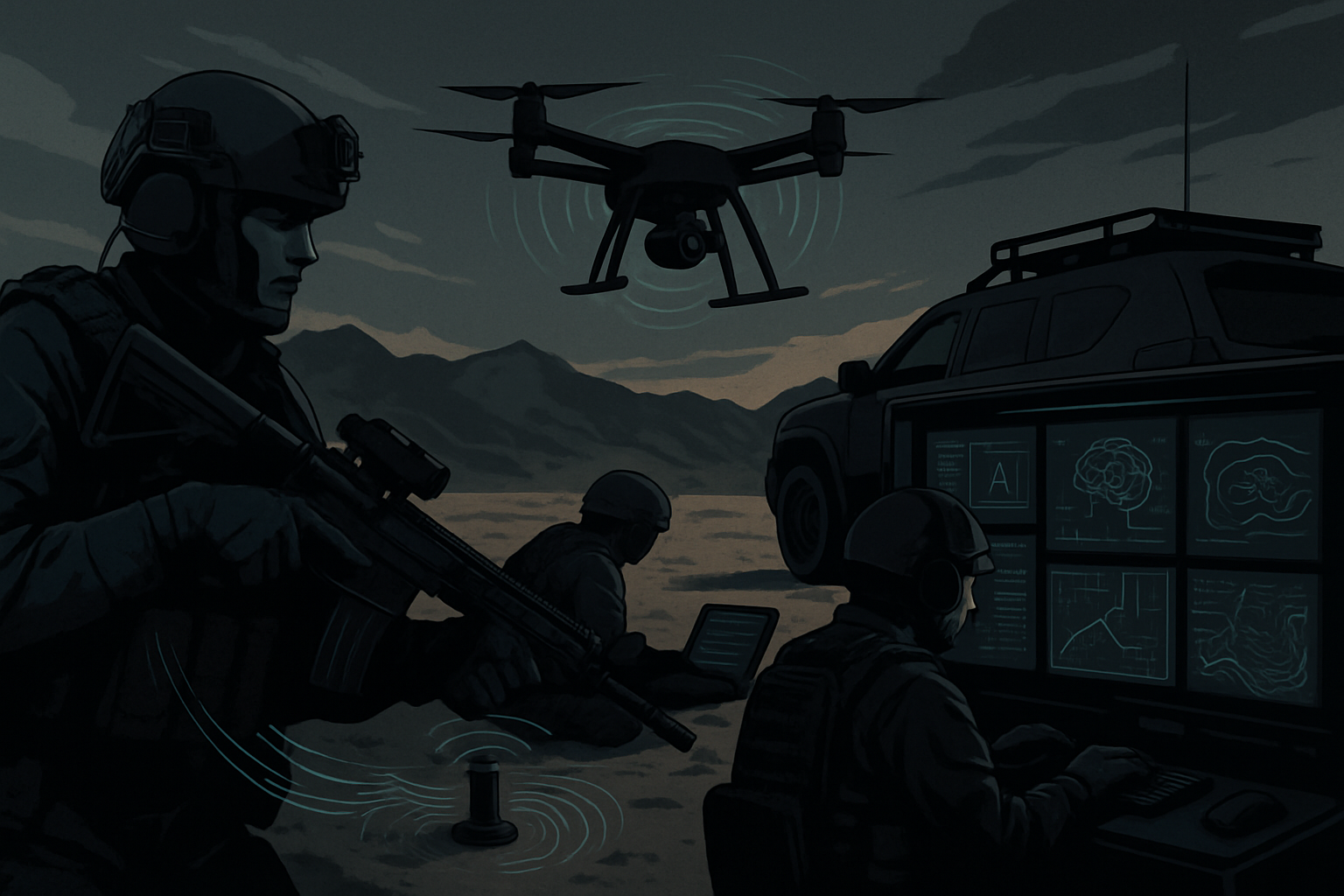
The CIA has recently implemented cutting-edge technology to locate a lost American pilot in the Iranian desert. This system, dubbed Ghost Murmur, combines artificial intelligence and quantum magnetometry to capture electromagnetic signals emitted by the human heart, even from a distance of 65 kilometers. This technological advancement promises to transform methods of remote human location.
An Unprecedented Device for a Mission in Iran
The incident took place in Iran, where an American pilot, shot down in hostile territory, was located thanks to Ghost Murmur. This system, previously unknown to the public, enabled the detection of the pilot's heartbeat, hidden in a mountain crevice, after traditional search methods had failed. The Iranian desert, with its unique conditions, facilitated this detection by reducing interference.
The operation of Ghost Murmur relies on the analysis of electromagnetic signals associated with the human heart. The artificial intelligence integrated into the system filters out ambient noise to isolate a specific biological signature. Each piece of data undergoes thorough processing before being validated, ensuring the accuracy of the location.
The Technology Behind Ghost Murmur
Ghost Murmur utilizes advanced sensors capable of detecting extremely weak electromagnetic fields, thanks to quantum magnetometry. These sensors, made from ultra-sensitive materials, allow for the identification of variations consistent with a human heartbeat. However, data processing is not instantaneous. The algorithms require significant analysis time, which limits the use of Ghost Murmur to isolated areas with low signal saturation.
The Iranian desert played a crucial role in the success of this operation. The nighttime conditions, with a pronounced thermal contrast between a living body and the cold ground, enhanced detection accuracy. This technology, while revolutionary, is still in the experimental phase and raises questions about its limitations and potential applications.
A Successful First Operation
The rescue operation of the American pilot marked the first real-world use of Ghost Murmur. American forces mobilized aerial and ground resources to successfully carry out this mission. The pilot survived two days in a hostile environment before being rescued. Military officials described this operation as complex but successful, with no American casualties.
Ghost Murmur provided crucial confirmation for locating the pilot, complementing standard survival beacons. Analysts cross-referenced the data to validate the target, thus demonstrating the effectiveness of this technology in critical situations.
Perspectives and Questions
Ghost Murmur opens new perspectives for remote human location. The potential applications of this technology extend beyond rescue missions, with tests already underway on military aerial platforms. However, the scope of application remains in the experimental phase, and questions persist regarding the AI's ability to track a biological signal without visual contact. The technical implications of this technology could be significant, but further validations are needed to confirm their viability on a large scale.
Brief IA — L'actualité IA en français
L'essentiel de l'actualité de l'intelligence artificielle, décrypté et expliqué chaque jour.