Google Adapts Kubernetes for AI Agents
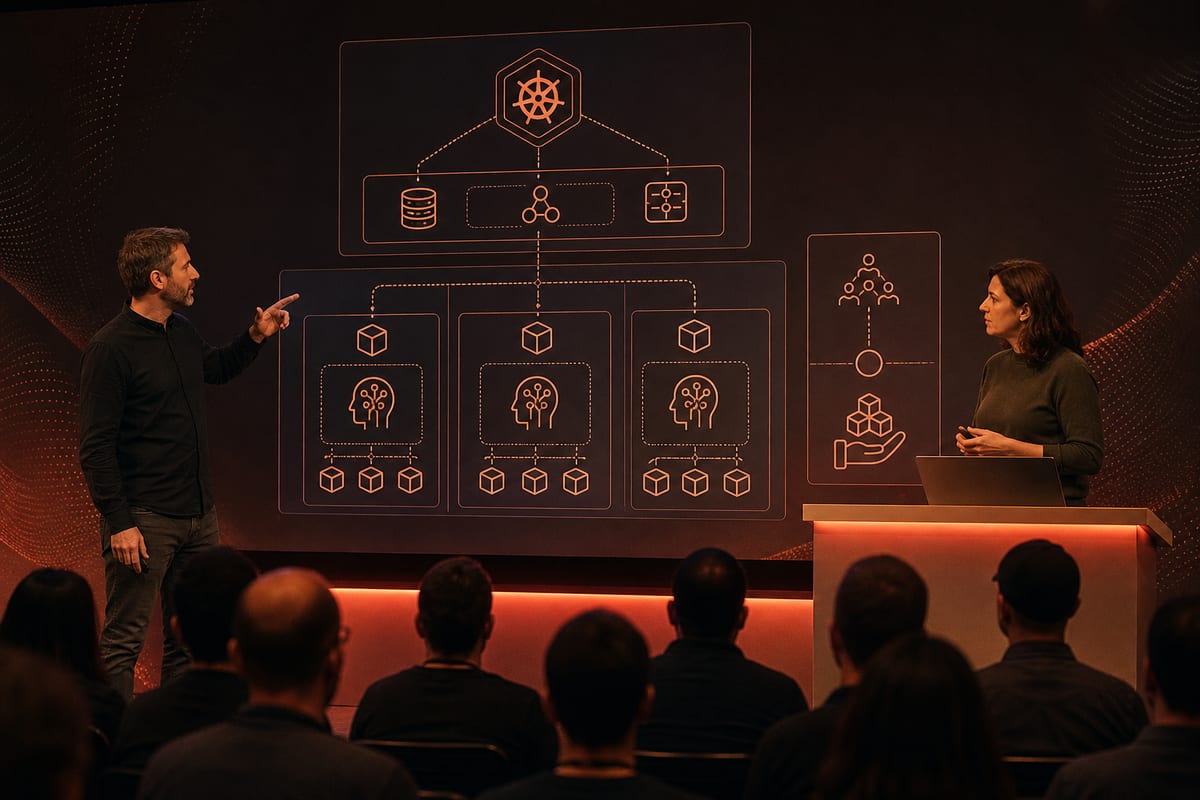
AI agent workloads are testing Kubernetes, saturating the API and causing CPU cycle waste when sandboxes remain allocated despite inactivity. Google responds with Agent Substrate, now at version 1.0 and entrusted to the CNCF, along with optimized clusters by workload type to avoid fragmentation while enhancing isolation and network safeguards.
Inactive agent sessions drive up CPU waste
Google customers report that most of the time, their AI agents remain inactive, but a sandbox must stay allocated for the entire session. Jaana Dogan explains that this constraint leads to significant CPU cycle waste. In naive deployments, the proliferation of pods can also push the Kubernetes API mechanics to their limits, according to Jago Macleod, putting the control plane to the test. As these workloads multiply, Jago Macleod believes that human judgment becomes more valuable, and it is not simply about "launching a prompt and forgetting," but about bringing expertise and discernment to another level of the system.
Google steers clusters towards agent workloads rather than flexibility
Cloud providers are questioning the overall flexibility offered by Kubernetes clusters. According to Jago Macleod, Google no longer views each cluster as an engine with unlimited flexibility but is now looking to tailor them to specific workloads. He mentions a shortage of memory and machine resources, as well as the importance of improving efficiency by directing clusters towards targeted use. Agent workloads, which are highly variable, do not align with what Kubernetes was designed for. Some teams have even developed custom control planes to address this. Initially designed for microservices and then extended to training where a pod can occupy an entire node, Kubernetes must now face a different category of needs with agents.
Le brief IA que les pros lisent chaque soir
Les 7 actus IA du jour, décryptées en 5 min. Gratuit.
Inclus dès l'inscription : notre sélection des meilleurs guides & comparatifs IA.
Choisissez votre rythme
Gratuit · Pas de spam · Désabonnement en 1 clic
Agent Substrate runs in sandbox and joins the CNCF
Google offers Agent Substrate to run AI agents in sandboxes directly on Kubernetes. The project has been entrusted to the Cloud Native Computing Foundation and released in version 1.0. Jaana Dogan emphasizes that, since agents write their own code, it is inherently unreliable and requires strong isolation as well as network safeguards. Customers have also reported costly inefficiencies while expressing their desire not to see their Kubernetes fabric fragment after years of industrialization. These directions were presented by Jago Macleod and Jaana Dogan at KubeCon + CloudNativeCon NA, with the goal of adapting Kubernetes to agent workloads without breaking the ecosystem, even in scenarios where agents remain inactive for extended periods.
Brief IA — L'actualité IA en français
L'essentiel de l'actualité de l'intelligence artificielle, décrypté et expliqué chaque jour.