Google Books New Glenn for Its AI Satellites in 2029
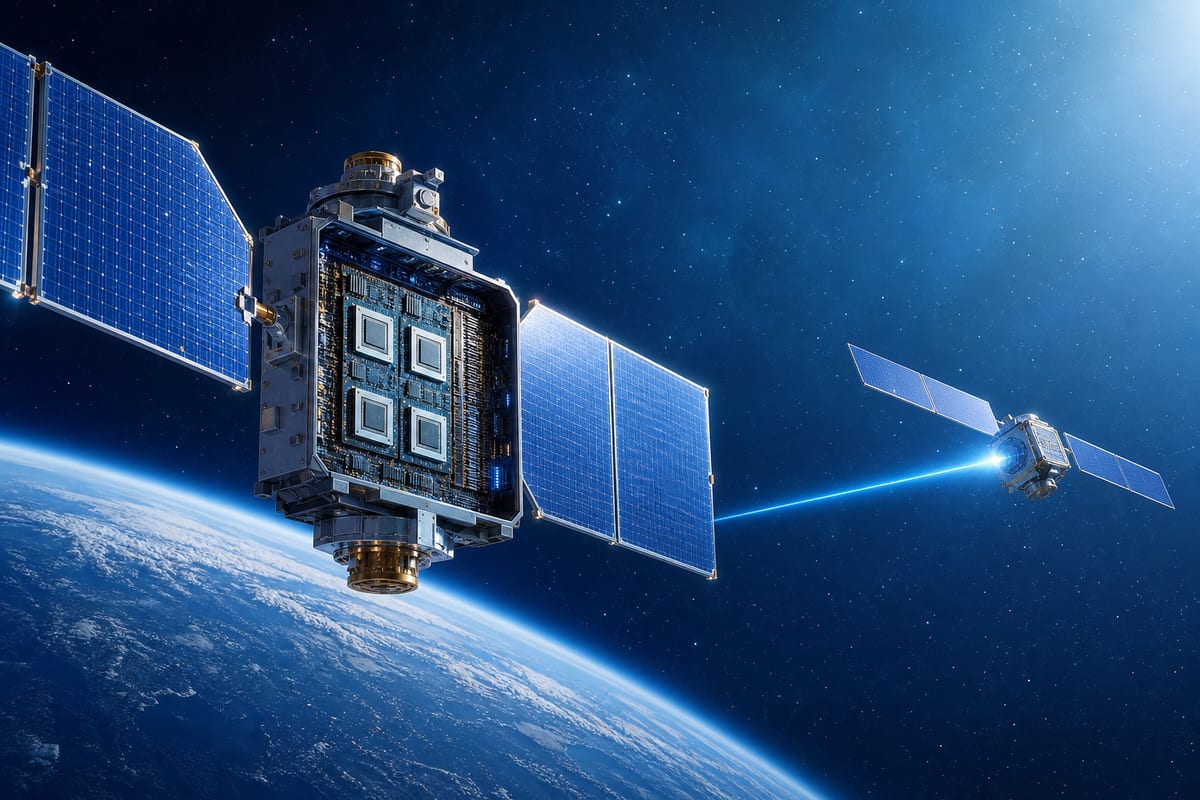
Google has reached an agreement with Blue Origin for the launch of AI satellites in the first quarter of 2029. This mission is part of Project Suncatcher, its research program dedicated to space data centers.
Google Tests Its Chips Against Space Constraints
The main technical challenges remain: in space, air cannot be used to cool the chips. Laser links also require the satellites to maintain a tight formation. Google is currently subjecting its chips to thermal and radiation resistance tests.
An initial prototype made by Planet was launched into orbit in October. It executed Gemma 4 and transmitted a haiku. Google plans to connect two satellites in 2027, ahead of the larger mission assigned to New Glenn.
New Glenn Awaits Its Return to Flight
The reserved flight will mark the first heavy launch mission dedicated to Suncatcher. However, New Glenn remains grounded after exploding during a test in May; its return to flight has been postponed to January. The price agreed upon between Google and Blue Origin has not been disclosed by either company.
Le brief IA que les pros lisent chaque soir
Les 7 actus IA du jour, décryptées en 5 min. Gratuit.
Inclus dès l'inscription : notre sélection des meilleurs guides & comparatifs IA.
Choisissez votre rythme
Gratuit · Pas de spam · Désabonnement en 1 clic
Other companies are pursuing projects for orbital data centers. In March, Starcloud secured $170 million to build one. However, SpaceX, a competitor of Blue Origin, indicated in its IPO filing that its own space facilities may never become operational.
Google Relies on Nearly Continuous Solar Power
To power its satellites, Google plans to use solar energy on a sun-synchronous orbit, synchronized with the Sun. This way, they should receive solar radiation almost uninterruptedly. According to the company, the production of panels placed in orbit can reach up to eight times that obtained on Earth, a point it emphasizes as AI infrastructures heavily tax terrestrial power grids.
Each satellite will be equipped with Google’s TPUs, short for Tensor Processing Units, processors designed for AI. The expected computing capacity for each would be comparable to that of a rack in a data center.
Brief IA — L'actualité IA en français
L'essentiel de l'actualité de l'intelligence artificielle, décrypté et expliqué chaque jour.