Google Brings Gemma 4 to Life in Orbit, Aiming for Twins in 2027
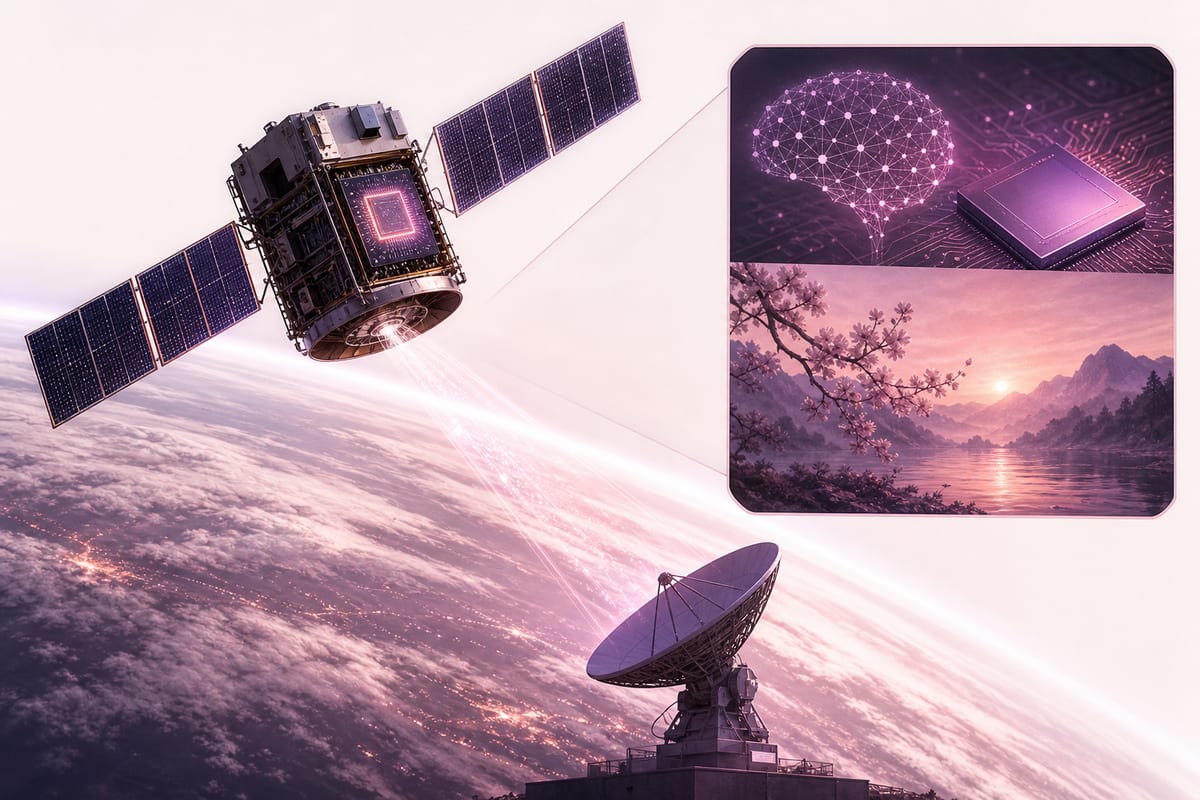
Google reports that it has operated TPUs in orbit and received a first response generated in space, sent back to Earth. The company is now preparing tests under thermal and radiative constraints, with the goal of launching a pair of interconnected satellites in 2027 as part of its Project Suncatcher.
Testing Under Constraints Before Orbital Twins in 2027
Google plans to continue a series of tests to evaluate how TPUs respond to thermal stress and radiation exposure in orbit. The company states that the reliability of these chips in space is a prerequisite for the next phase of the project, which aims to deploy interconnected satellite twins in 2027.
Le brief IA que les pros lisent chaque soir
Les 7 actus IA du jour, décryptées en 5 min. Gratuit.
Inclus dès l'inscription : notre sélection des meilleurs guides & comparatifs IA.
Choisissez votre rythme
Gratuit · Pas de spam · Désabonnement en 1 clic
A First Text Generated in Orbit and Sent Back to Earth
Google announces that it has powered up the TPUs on the satellite, allowing the onboard Gemma 4 model to generate a response to a request in the form of a haiku about space. The produced poem is: “Blue marble below / Data streams in silent grace / Starlight feeds my core.” Google also notes that it has tested other limericks and telemetry requests on the theme of space. This first response generated in orbit has been transmitted back to Earth.
Project Suncatcher, an Experiment for Space AI
These tests are part of Project Suncatcher, an experimental initiative by Google that could eventually enable the establishment of AI data centers in space. The satellite used for these experiments was launched into orbit earlier this month.
Brief IA — L'actualité IA en français
L'essentiel de l'actualité de l'intelligence artificielle, décrypté et expliqué chaque jour.