Google Creates a Simulated Web to Test Its Chrome Agents
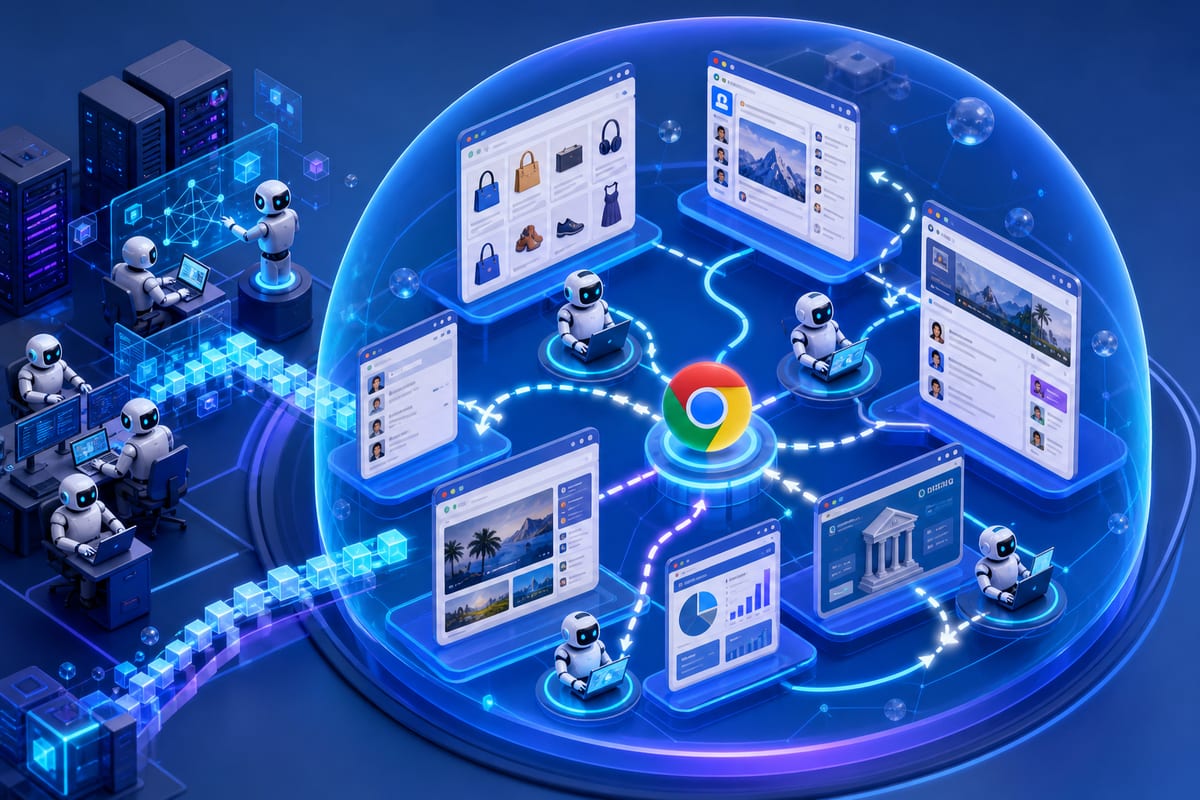
Google unveils the Mirror Dimension, an isolated Internet environment created by the Chrome team to test its browsing agents. These developing features rely on Gemini. The simulations replicate real services and include attacks designed to challenge the agents.
Chrome Protections Bypassed for Testing
To operate the actual browser in this artificial space, researchers had to bypass certain protections of Chrome as well as its validity checks. They notably created fake web certificates. The team deems the use of the real browser essential for obtaining accurate training.
These manipulations relied on the exceptional rights held by the researchers, who were masters of both the environment and the network. The Chrome team asserts that these actions would not be feasible against regular users operating the browser on the Internet. Google researchers further clarify that the agents being evaluated are benign and do not possess cyber capabilities.
Agents Create Simulated Sites
The setup includes merchant services, banking interfaces, and social networks, with components and attributes mirroring their real counterparts. The extensive and diverse environment remains under the complete control of the Chrome team. It was necessary to quickly build a space large and varied enough to represent the real Web.
The team mobilized numerous agents tasked with developing the sites and applications. A dedicated AI guided them in the rapid creation of realistic services and associated data flows. The sites notably replicate the entry of promotional codes and the content of social media pages.
Le brief IA que les pros lisent chaque soir
Les 7 actus IA du jour, décryptées en 5 min. Gratuit.
Inclus dès l'inscription : notre sélection des meilleurs guides & comparatifs IA.
Choisissez votre rythme
Gratuit · Pas de spam · Désabonnement en 1 clic
Tests Examine Agent Decisions
The agents must perform their tasks in Chrome while interacting with the simulated sites, just as they would on the Internet. Concealed attacks using prompt injections are employed to test their defenses.
Testing environments that are too restricted limit training. A model may also recognize that it is undergoing an evaluation and adjust its behavior accordingly. Charles Qian, a software engineer in charge of AI security within Chrome, emphasizes the impossibility of anticipating all situations encountered: he describes a hostile Web, where each user can query the agent on any topic and any site, necessitating as thorough an exploration as possible.
Charles Qian reports observing an improvement in the agent's discernment regarding the data actually necessary to perform a task. He also notes that he has seen it progress in identifying situations that require user confirmation.
Google Plans Access for Its Teams
Researchers wish to offer this environment to other Google teams so they can conduct their own tests in safe and controlled conditions. Doug Turner, engineering director at Google, also aims to encourage external teams to consider a similar approach, without announcing their access to the Mirror Dimension.
The executive states that investments in this training approach will continue. He also anticipates that the realism of the simulations will need to increase as the models become more sophisticated.
Brief IA — L'actualité IA en français
L'essentiel de l'actualité de l'intelligence artificielle, décrypté et expliqué chaque jour.