Google Earth and Nano Banana: Philadelphia Transformed into a Dystopia
Le brief IA que les pros lisent chaque soir
Les 7 actus IA du jour, décryptées en 5 min. Gratuit.
Inclus dès l'inscription : notre sélection des meilleurs guides & comparatifs IA.
Choisis ton rythme
Gratuit · Pas de spam · Désabonnement en 1 clic
Google Earth Enriches with Nano Banana: A New Visual Dimension
Google recently announced the integration of artificial intelligence image generation technology into its Google Earth application, using the Nano Banana 2 tool. This new feature has been enthusiastically received by users, who have experienced moments that are both hilarious and unexpected. Indeed, the ability to transform familiar landscapes into unprecedented scenes has opened the door to a multitude of creative scenarios.
For over two decades, Google Maps and Google Earth have offered users the opportunity to explore the world virtually. At their launch, these tools captivated the imagination of many users, allowing them to travel virtually to all corners of the globe. Street View, although sometimes perceived as intrusive, has also generated significant interest. Google Maps focuses on navigation assistance, while Google Earth provides a more immersive exploration of places, including beyond our planet. This distinction is crucial for understanding how Nano Banana fits into the Google Earth ecosystem.
A Fun but Limited Feature
Nano Banana is known for its exceptional capabilities in AI image generation, and it has often been ranked among the best in this field. However, its integration into Google Earth does not prove to be as useful for serious professional applications as one might hope. The tool is nonetheless very entertaining when used for playful purposes. Users can have fun transforming urban landscapes into science fiction scenes or historical settings, without worrying about geographical accuracy.
Activating this feature is done via a new "Create an Image" button in the Google Earth toolbar. Once a location is selected, the user can enter a prompt to generate an image. For example, by choosing a house in New Jersey and zooming in on Street View, the user can attempt to add architectural elements. However, the tool can sometimes miss the mark, such as when it added a porch to the neighbor's house. This kind of mishap highlights the current limitations of the tool in terms of accuracy and contextual understanding.
For more precise renderings, it is sometimes preferable to capture an image from Street View and use it in another software like Gemini to achieve a more faithful architectural rendering. This shows that, despite its impressive capabilities, Nano Banana still requires adjustments to be fully integrated into professional processes.
Experiments in Palm Bay, Florida
One of the most interesting experiments took place in Palm Bay, Florida, in an area known as "The Compound." This place, with its 200 miles of poorly paved roads, is often a challenge for local law enforcement. Initially planned as a residential development in the 1990s, the project failed, leading to stories of real estate fraud and other incidents. Tales of murders and fires have become commonplace, turning this location into a sort of urban legend.
Using Google Earth, it is possible to reimagine "The Compound" as a thriving community with shopping districts and historic homes. The tool even allowed for visualizing this place in the Victorian era, with horses adding a touch of historical authenticity. This ability to transform an abandoned space into a vibrant and dynamic neighborhood demonstrates the potential of Nano Banana for urban planning, although it currently remains in the realm of playful experimentation.
A Dive into Philadelphia's Past
The experience continued with an iconic monument: Philadelphia's Independence Hall. Using Nano Banana, the user was able to travel back to 1776, recreating the appearance of the time of the Second Continental Congress. However, the tool showed its limitations by failing to correctly integrate historical data about surrounding buildings, such as the Public Ledger Building. The latter, although existing at different times, was not accurately represented in the generated visualizations.
Trials were also conducted to imagine Philadelphia at different times, in 1876 and 1976, but the AI did not always succeed in faithfully reflecting the architectural evolution of the city. For instance, the absence of the Public Ledger Building in certain historical visualizations highlights a lack of precision in the AI's integration of historical data.
Towards a Dystopian Future
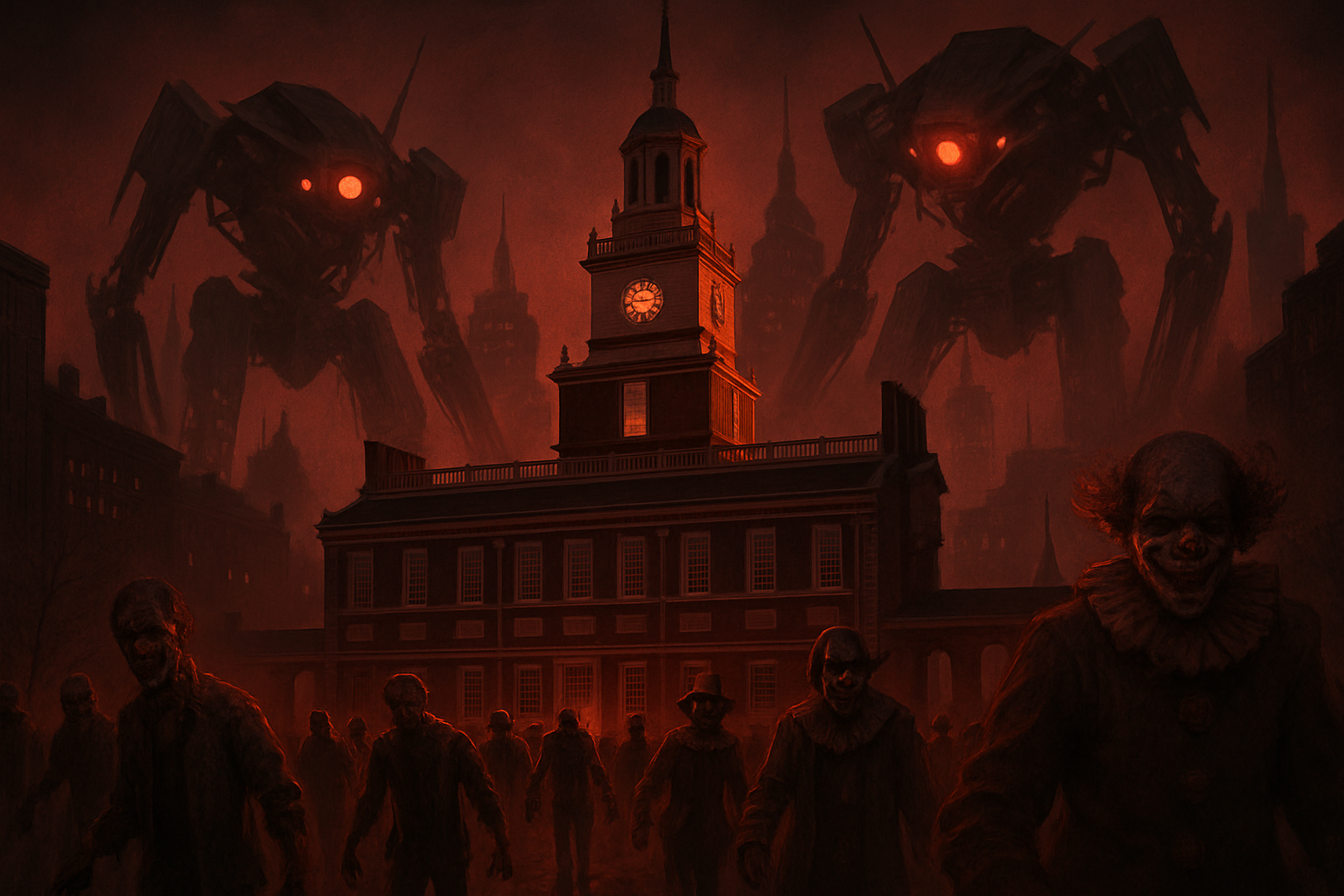
One of the most creative uses of Nano Banana was to project Philadelphia into a dystopian future. By asking the AI to visualize Independence Hall in 500 years, the user received surprising results, featuring futuristic elements like an "Ethical Genetic Archive." This vision raises questions about the issues of biotechnology and bioethics in the future. The power lines and other futuristic elements added to the scene illustrate how the AI anticipates technological and social developments.
The experience continued with even more fanciful scenarios, including zombies and malevolent clowns, transforming Philadelphia into a setting worthy of a post-apocalyptic film. These visualizations, while entertaining, highlight the limitations of AI in understanding and integrating complex cultural and historical contexts.
Conclusion: Between Amusement and Limitations
The integration of Nano Banana into Google Earth demonstrates the potential of AI visualization technologies for creative exploration and urban planning. However, it also highlights the current limitations of these tools for serious professional applications. This feature remains primarily a playful means of reimagining our world, with all the creative liberties that entails. Users should keep in mind that, while the tool is fun and innovative, it does not replace the human expertise and precision required for serious geographical or architectural projects.
Brief IA — L'actualité IA en français
L'essentiel de l'actualité de l'intelligence artificielle, décrypté et expliqué chaque jour.