Google Enhances Radio Transcription at Watch Duty
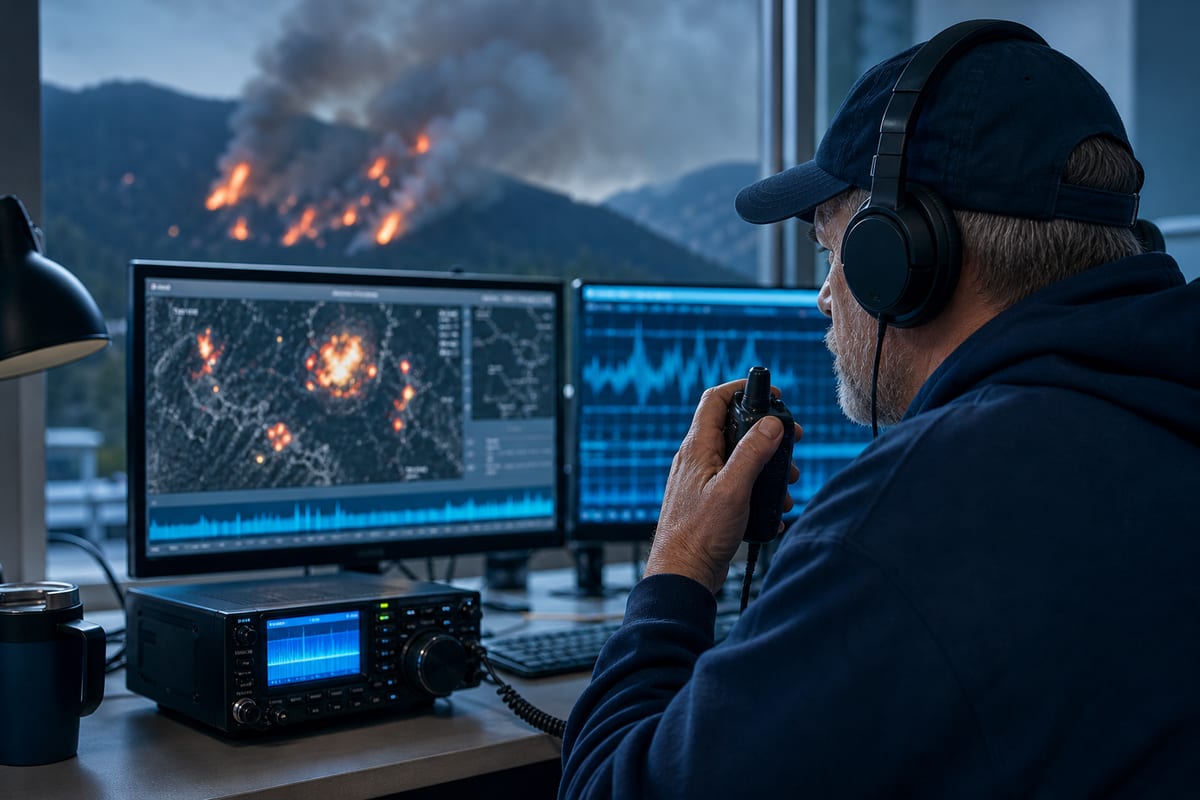
Google presented the results of its partnership with Watch Duty on Friday: its Gemini tool transcribed a nearly inaudible 911 call during a fire in less than 30 seconds. The wildfire tracking application offers the features developed in this project for free.
Teams Measure a Decrease in Errors
The engineers from Gemini and Watch Duty have identified several indicators to evaluate their tool based on the data collected. According to these teams, transcription errors for words have decreased by about 15% following the introduction of the model. Volunteer satisfaction with their transcription tools has risen from approximately 35% to 92%.
The system currently analyzes around 200 hours of communications from 400 radio feeds each day. Its design allows for the handling of over 10,000 feeds if necessary. To train the system, the Gemini teams utilized more than 20,000 hours of recordings provided by Watch Duty. The goal was to help it recognize the vocabulary used in firefighting interventions, including terms that are absent from common dictionaries or the books typically used for AI training.
Volunteers Retain Human Decision-Making
Within Watch Duty, active and retired first responders collect the information. Manual monitoring can cover a maximum of 20 distinct feeds, a task made challenging by interference and the rapid pace of specialized language. The Gemini engineers worked alongside them for six months.
Le brief IA que les pros lisent chaque soir
Les 7 actus IA du jour, décryptées en 5 min. Gratuit.
Inclus dès l'inscription : notre sélection des meilleurs guides & comparatifs IA.
Choisissez votre rythme
Gratuit · Pas de spam · Désabonnement en 1 clic
Google emphasizes that the system should not replace human judgment when lives are at stake. According to Stephanie Chew, project team lead at Google, delegating this demanding listening task allows volunteers to focus on verifying fires and sending alerts while residents can still react. A grant from Google.org enabled the project to be realized at no cost.
A Nighttime Alert During the Railroad Fire
During the Railroad fire in Washington State in July 2026, Watch Duty issued what it describes as its first critical alert sent at night. This alert originated from a 911 call that was garbled by interference. At the start of a fire, radio exchanges can be difficult to understand on the ground; the Gemini team reports that it has reduced the processing time for essential transmissions to just a few seconds. This assistance could speed up alerts to the public, facilitate more accurate map updates, and better inform rescue decisions.
Dave Merritt, co-founder and CTO of Watch Duty, notes that the system can also process flood reports transmitted via radio. He mentions receiving daily feedback from first responders who rely on the application to better understand the situation, especially when a disaster affects multiple counties. The platform's capabilities could also enable the provision of comparable tools to local fire services, 911 call centers, or Coast Guard operations.
Brief IA — L'actualité IA en français
L'essentiel de l'actualité de l'intelligence artificielle, décrypté et expliqué chaque jour.