Google and the Apig at Odds Over AI in France
Le brief IA que les pros lisent chaque soir
Les 7 actus IA du jour, décryptées en 5 min. Gratuit.
Inclus dès l'inscription : notre sélection des meilleurs guides & comparatifs IA.
Choisis ton rythme
Gratuit · Pas de spam · Désabonnement en 1 clic
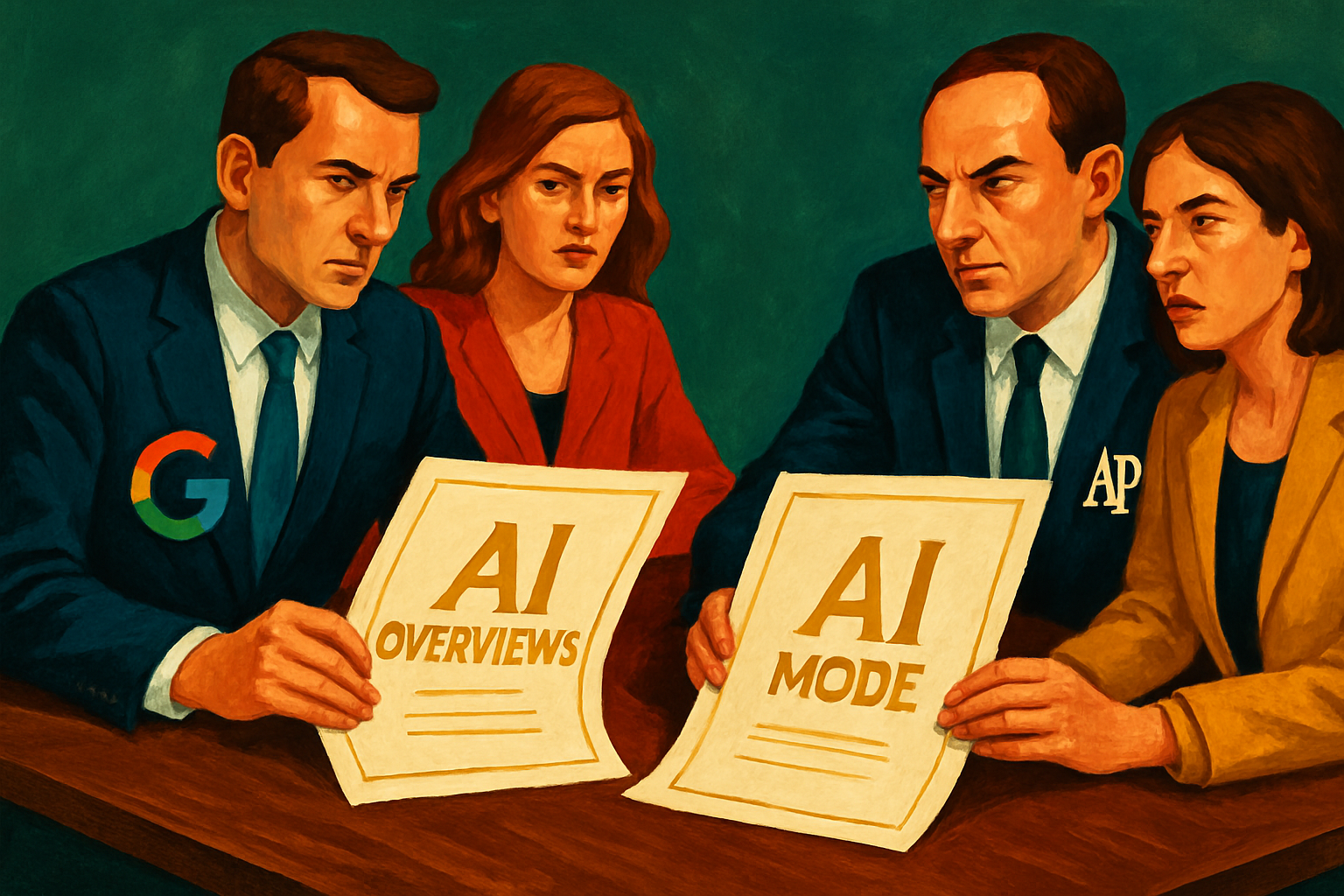
The French Competition Authority finds itself at the center of a major conflict between Google and the Association of General Information Publishers (Apig). On August 11, Apig filed an official complaint, denouncing the new artificial intelligence (AI) features introduced by Google, namely AI Overviews and AI Mode. Launched in July, these tools fundamentally alter the functioning of the search engine in France, raising concerns about their impact on news publishers and how content is presented to users.
Technical Details or Key Figures
Google's AI Overviews and AI Mode services aim to provide more comprehensive and contextualized answers to user queries. By using advanced algorithms, these tools synthesize information from various sources, allowing users to quickly access article summaries or direct answers to their questions. However, this approach raises concerns among news publishers, who fear that their content may be used without adequate compensation, thereby reducing traffic to their sites and impacting their advertising revenues.
According to recent studies, nearly 70% of users prefer to receive instant answers via search engines rather than clicking on links to full articles. This trend could exacerbate the situation for publishers, who rely on online advertising for their economic viability. Consequently, Apig believes that Google may be violating competition rules by favoring its own services at the expense of news content.
Impact / Consequences for the Sector
The conflict between Google and Apig could have significant repercussions for the entire press sector in France. If the Competition Authority sides with Apig, it could lead to changes in how Google uses and presents news content. Publishers could receive financial compensation for the use of their content, which could redefine the relationships between tech giants and traditional media.
Moreover, this case could prompt other countries to take a closer look at the practices of large tech companies. As Europe seeks to strengthen regulations on digital platforms, a decision in favor of Apig could set a precedent for other legislative initiatives aimed at protecting the rights of news publishers against digital giants.
Reactions or Perspectives
Reactions to this case are varied. On one hand, news publishers welcome Apig's initiative, considering it time to defend their rights in an ever-evolving digital environment. On the other hand, Google has expressed its willingness to collaborate with publishers to find solutions that benefit all parties. The company emphasized that its new tools are designed to enhance user experience and not to harm the media.
Discussions surrounding this case could also pave the way for negotiations between Google and news publishers, aiming to establish fairer revenue-sharing agreements. Globally, other companies may follow Apig's example, seeking to protect their interests in the face of the rise of AI technologies.
In conclusion, the disagreement between Google and Apig represents a crucial issue for the future of relationships between tech giants and news publishers. The decision of the Competition Authority could not only influence the media landscape in France but also serve as a model for other countries facing similar challenges. It will be essential to closely monitor this case, as it could redefine the rules of the game in the digital ecosystem and how information is consumed and monetized.
Brief IA — L'actualité IA en français
L'essentiel de l'actualité de l'intelligence artificielle, décrypté et expliqué chaque jour.