Google Restricts Meta's Access to Gemini: The AI Resource Battle
Le brief IA que les pros lisent chaque soir
Les 7 actus IA du jour, décryptées en 5 min. Gratuit.
Inclus dès l'inscription : notre sélection des meilleurs guides & comparatifs IA.
Choisis ton rythme
Gratuit · Pas de spam · Désabonnement en 1 clic
Google Limits Meta's Access to Gemini: A Matter of Resources
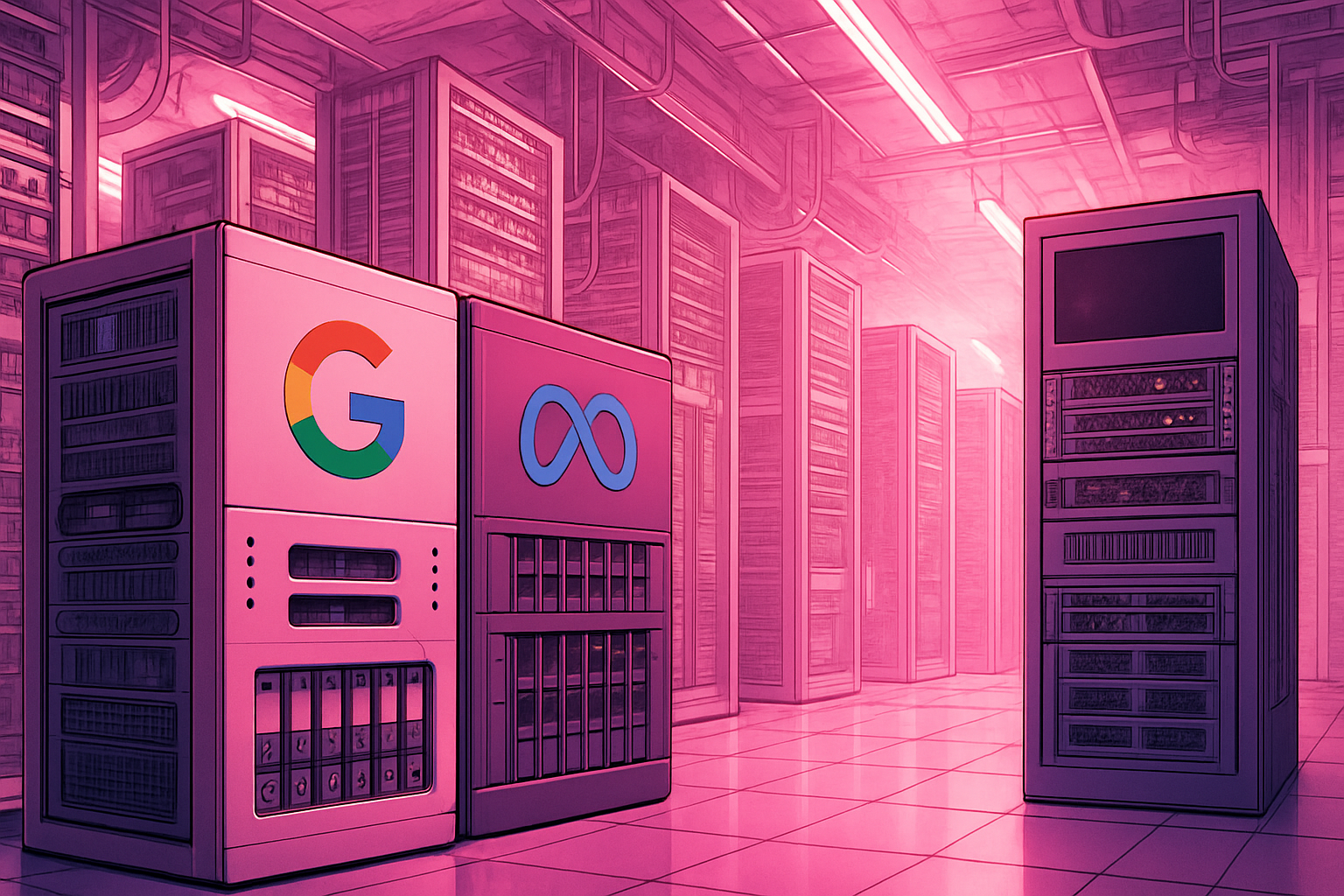
According to a report from the Financial Times, Google has recently decided to restrict Meta's use of its artificial intelligence model, Gemini. This decision is not the result of a direct rivalry between the two tech giants, but rather a more down-to-earth constraint: the lack of available computing power. This situation highlights the current challenges related to the infrastructure necessary to support the rise of artificial intelligence.
The Reality of Limited AI Resources
It is easy to assume that large tech companies have unlimited resources. However, even the most powerful players in the industry face hardware limitations, especially in the field of artificial intelligence. Servers do not multiply infinitely, and this seems to be precisely what led Google to limit Meta's use of Gemini. This decision reflects the growing tensions surrounding access to AI infrastructure.
Why Did Google Restrict Meta's Access to Gemini?
According to the Financial Times, Google reportedly asked Meta to reduce its resource consumption related to Gemini as early as March, after Meta reached the limits of available computing capacity. Meta's needs have significantly increased, as the company uses Gemini for essential tasks such as software development, advertising chatbots, customer service, and fraud detection. These uses are not mere tests but critical operations for Meta, which has found Gemini to be a more efficient solution than its own internal technologies in some cases.
The Global Server Shortage: A Challenge for AI
The question arises: how can such a server shortage affect powerful multinationals? The answer lies in the fact that the global infrastructure is struggling to keep pace with the rapid growth of AI. The episode between Gemini and Meta perfectly illustrates this problem. Building data centers is a long and complex process. Moreover, Meta does not have a public cloud service to meet its growing needs.
Meta's Colossal Investments
In light of this situation, Meta plans to invest $600 billion in its infrastructure. However, until these new facilities are operational, the company must rely on the resources of other players. This dependence leads to fierce competition for every available graphics card, creating situations where even the creators of these technologies are affected by the shortage.
Google and SpaceX: An Unexpected Alliance
In a surprising turn of events, Google, to run its own services, has had to lease servers from SpaceX for an amount nearing one billion dollars per month. Meanwhile, the costs associated with AI continue to rise, while profits remain elusive. Analysts point out that the revenues generated by AI are still low compared to the massive investments required. The price of tokens is increasing, forcing some companies to scale back their ambitions.
Brief IA — L'actualité IA en français
L'essentiel de l'actualité de l'intelligence artificielle, décrypté et expliqué chaque jour.