Google Opal Introduces Agent Step and Three Key Tools
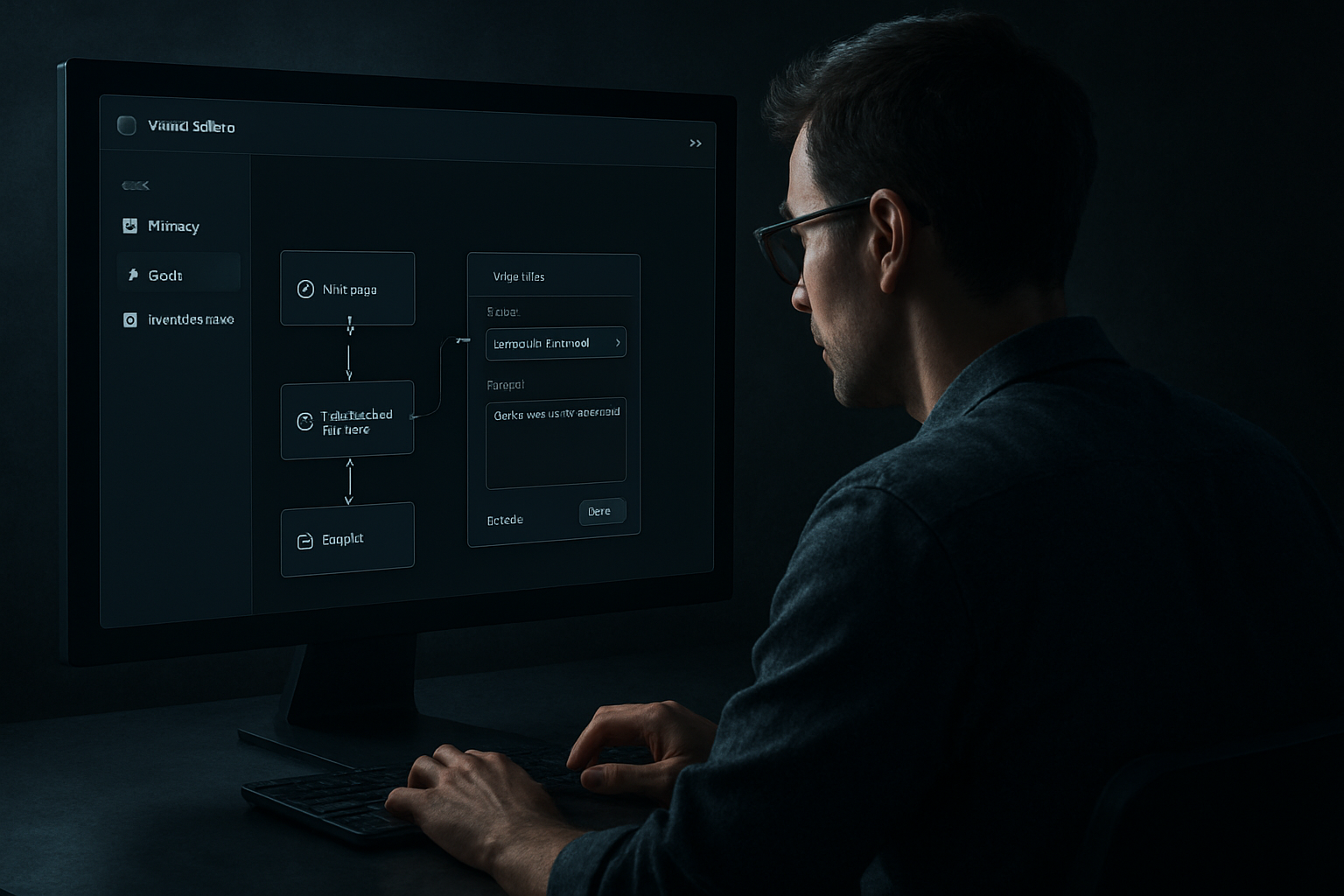
Opal, Google's no-code workshop for assembling AI applications, is no longer limited to predefined flows. A new agent step selects models and tools at execution, relies on persistent memory, can deviate from its path, and query the user. This evolution comes with an expanded catalog of models and an anchoring on Google for Developers.
A Use Case: An Adaptive Interview Coach that Remembers
One example of this change is a job interview preparation coach built with Opal. The tool takes a job description and a resume, asks a clarifying question if an important element is missing, decides whether to search the web for role-specific information, and generates a personalized preparation document. It also retains the targeted role and the user's level of experience for a future visit. The need for a follow-up question depends on what the user submits, the need for a web search depends on the role or company and the model's knowledge, and the direct transition to generation depends on the application's prior knowledge of the user. These needs correspond respectively to Memory, dynamic routing, and Interactive Chat.
The Agent Option Dynamically Chooses Models and Tools
Until now, the Generate step required selecting a model like Gemini for text or Imagen for images and executing a prompt, always in the same way and in a wired order. With the Agent option, you provide a goal, and the system determines, at execution time, which model or tool serves it best. The agent can, for example, leverage Gemini's reasoning capabilities to organize the steps, use a web search tool when recent data is required, or activate an image or video model if it fits the request. Google describes this evolution as a transition from a predefined and manually configured sequence to automation orchestrated by an agent, requiring less setup. In practice, while a story generator previously required setting the number of pages and associated instructions in advance since only programmed steps were executed, the agent simply needs a goal like writing and illustrating a five-page children's story about a lost kite, extracts the necessary elements, proposes twists, and adapts the flow as generation progresses.
Memory, Routing, and Chat Enhance the Agent's Capabilities
Three components make the agent step truly flexible. Memory allows for retaining information such as a name, preference, or previously communicated detail from one session to another and retrieving it automatically. Dynamic routing, via the @ Go to tool, enables the agent to choose its next step at execution rather than following a single predefined path, directing the flow based on the provided data. Finally, Interactive Chat introduces the possibility of pausing to ask a question or offer a choice to the user before resuming, whereas previous versions of Opal were limited to the data collected initially by the User Input step.
Le brief IA que les pros lisent chaque soir
Les 7 actus IA du jour, décryptées en 5 min. Gratuit.
Inclus dès l'inscription : notre sélection des meilleurs guides & comparatifs IA.
Choisissez votre rythme
Gratuit · Pas de spam · Désabonnement en 1 clic
An Expanded Model Catalog Covering Text, Image, Audio, and Video
The range of models available in Generate has substantially expanded beyond Gemini, Imagen, and Veo. The selector offers a dynamic selection of models and tools based on a declared goal, daily text and reasoning tasks, more complex multi-step reasoning scenarios, as well as image editing and generation, including complex visuals requiring precise text. It also includes text-to-speech synthesis, text-to-video and image-to-video generation, and instrumental music creation. An agent that chooses its path benefits even more from this diversity when a true range of specialized models is available.
Framework and Timeline: Opal Passes Through Google Labs Before Developers
The agent step was launched in February 2026, marking a break from the three-step model of User Input, Generate, and Output. Opal, which first appeared in July 2025 in Google Labs' experimental catalog, now has an official home on Google for Developers. Google Labs is presented as a space where the company tests ideas that may or may not be retained. Integration into the developers' site is generally interpreted as a sign of long-term commitment, and the pace of new feature releases since this change is highlighted as an additional indicator.
Implementation: From the Initial Prompt to Tool Integration
Building the interview coach starts with Create new and drafting a detailed prompt describing data collection, potential clarification needs, research if necessary, and document generation, while remembering the role and level. Opal translates this description into an initial flow composed of User Input, agent-based generation, and Output, before manual refinement of the wiring. The User Input step is configured to capture the description in text and the resume in file format, with advanced settings allowing for a file or any type of input to enable pasted text or documents. The generation step is set to Agent and uses a goal-oriented prompt to identify role, company, and seniority; if an element is missing, the agent queries the user, searches for common interview questions specific to the role if the context is lacking, and generates a document containing likely questions, discussion points from the candidate's experience, and two or three questions to ask. Typing @ in the prompt opens the menu to attach Memory and Interactive Chat. The applications produced in this way remain shareable via a public link, without server or deployment, and benefit from the editor, preview, Console, and version history, with the translation of goals into editable visual flows.
Brief IA — L'actualité IA en français
L'essentiel de l'actualité de l'intelligence artificielle, décrypté et expliqué chaque jour.