Google Prepares Suncatcher: Orbital AI and Economic Challenges
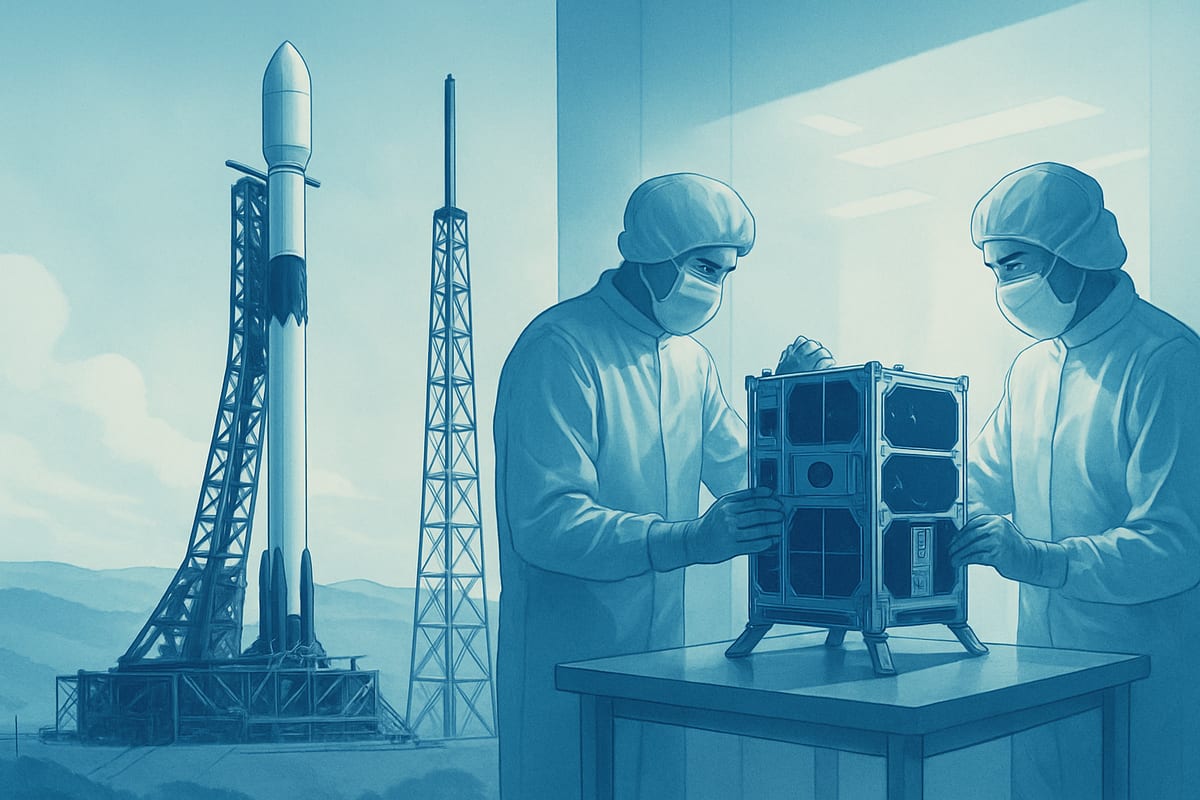
Before considering AI data centers in space, Google faces challenges related to cost, scale, and physics. An initial satellite, MVP, is set to launch on October 1 to test simple query processing from orbit, while other players are exploring the same path.
Costs, Scale, and Timelines Delay Profitability
For orbital data centers to become economically viable, launch costs would need to reach around $200 per kilogram. Jeff Bezos estimates it could take up to 20 years before these infrastructures are more profitable than those installed on the ground. Travis Beals, a leader at Google, indicates that approximately 10,000 satellites would be needed to match the capacity of a 1-gigawatt terrestrial data center. The lack of air in space prevents conventional cooling, and cosmic radiation poses a risk to electronic chips.
Le brief IA que les pros lisent chaque soir
Les 7 actus IA du jour, décryptées en 5 min. Gratuit.
Inclus dès l'inscription : notre sélection des meilleurs guides & comparatifs IA.
Choisissez votre rythme
Gratuit · Pas de spam · Désabonnement en 1 clic
MVP: An Orbital Testbed Built at Planet Labs
The experimental satellite MVP is scheduled to launch on October 1 aboard a SpaceX Falcon 9 rocket from Vandenberg Space Force Base in California. This refrigerator-sized satellite was built and tested at Planet Labs in San Francisco. According to James Manyika, vice president at Google, MVP should have enough power to process basic AI queries from orbit.
Google’s Solar Ambition and Competitors in the Race
Google aims to develop AI data centers in orbit, powered by solar energy as part of the Suncatcher project. SpaceX and Blue Origin are also working on orbital data centers.
Brief IA — L'actualité IA en français
L'essentiel de l'actualité de l'intelligence artificielle, décrypté et expliqué chaque jour.