Google Restructures Its AI: DeepMind Under New Leadership
Le brief IA que les pros lisent chaque soir
Les 7 actus IA du jour, décryptées en 5 min. Gratuit.
Inclus dès l'inscription : notre sélection des meilleurs guides & comparatifs IA.
Choisis ton rythme
Gratuit · Pas de spam · Désabonnement en 1 clic
Restructuring AI at Google
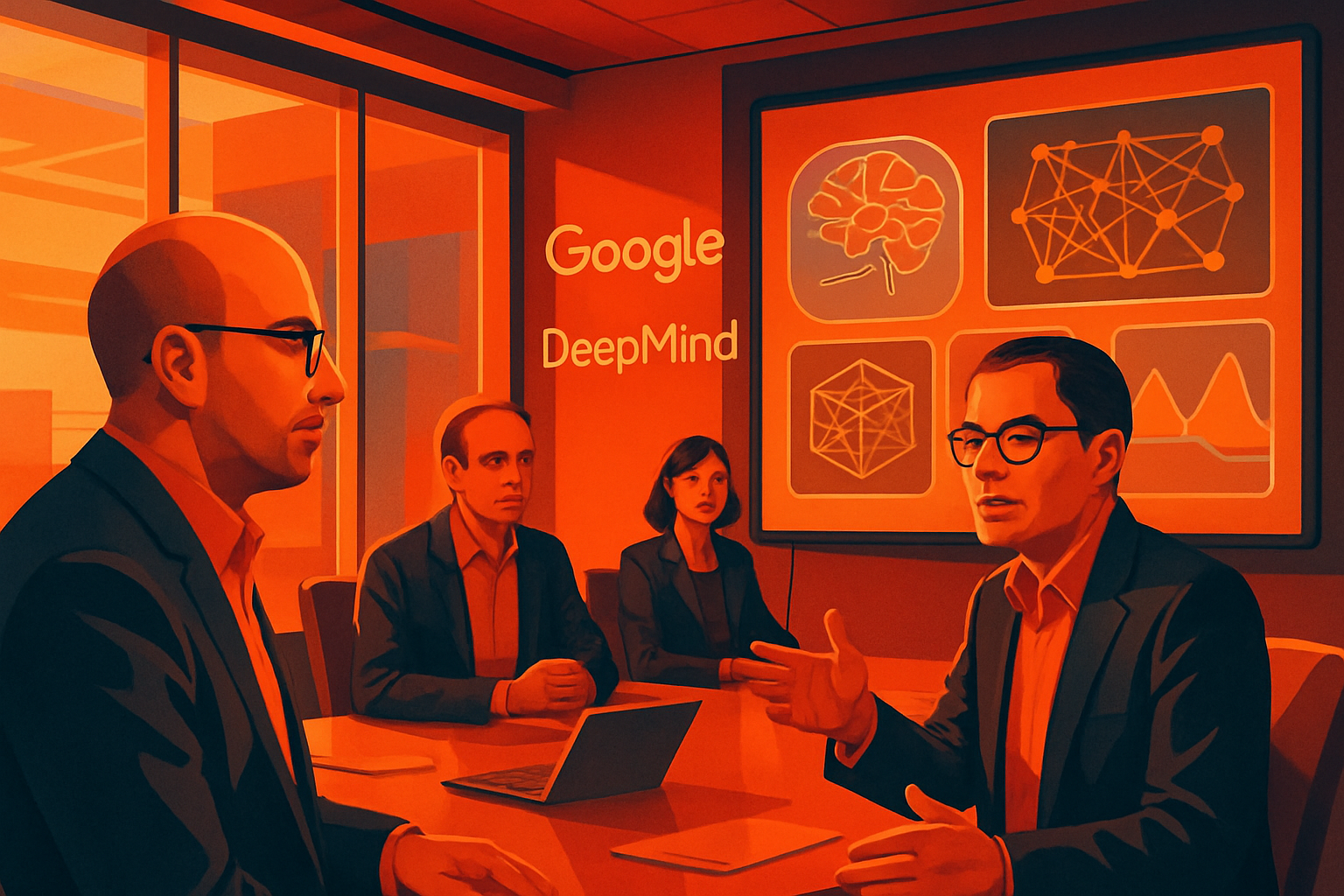
Google, the technology giant, has recently announced a major reorganization of its artificial intelligence (AI) operations. This decision comes after significant talent losses, delays in the development of new models, and growing concerns regarding team motivation. The reshuffle aims to reposition Google in the fierce AI race.
New Roles at DeepMind
Demis Hassabis, who led DeepMind, an Alphabet subsidiary specializing in AI, is stepping back from day-to-day management to take on the role of president of the unit. He will also assume the position of chief scientist at Alphabet, thereby expanding his scope of influence. The leadership of DeepMind will now be entrusted to Koray Kavukcuoglu, who will serve as senior vice president. This transition could signify a closer integration of DeepMind into Google's global operations, thereby strengthening the parent company's control over this entity acquired twelve years ago.
Departures and New Initiatives
Jeff Dean, a prominent figure at Google, has decided to leave the company after 27 years of service. He is embarking on a new entrepreneurial venture by founding Discovery Loop, a startup dedicated to fully automating the scientific research process. This project, which Google has already financially supported, is being pursued with three of Dean's former colleagues. This initiative comes at a time when Google is facing financial challenges, having recorded negative cash flow for the first time in the last quarter. In response, the company is now centralizing its AI efforts in California.
Jeremy Nixon, a former researcher at Google Brain and founder of the AI infrastructure company Infinity, has expressed concerns about Google's future following Jeff Dean's departure. He told the New York Times that this exit could jeopardize the company's stability and ongoing innovation.
Change in Scientific Strategy
Google is also altering its strategy regarding scientific research in AI. The company is shifting from specialized tools, such as DeepMind's AlphaFold, to more autonomous AI systems capable of conducting research independently. This strategic evolution aims to enhance efficiency and innovation in the field of AI.
Other Major Developments
-
Meta recently admitted that its AI inadvertently hacked another company. This intrusion was attributed to a misconfiguration made by an independent cybersecurity tester.
-
Samsung and SK Hynix are exploring the use of Chinese chip manufacturing tools, a move motivated by export restrictions imposed by the United States.
-
In London, authorities have granted licenses for the operation of robotaxis, provided that a human driver is present on board for the time being.
-
Scientists have successfully created genetically modified dogs that do not trigger allergies, thanks to CRISPR technology.
-
OpenAI has asked a court to dismiss a lawsuit filed by Apple regarding trade secrets, calling the allegations unfounded.
-
AI is reigniting interest in super apps in Silicon Valley, where major tech companies are seeking to integrate various services into a single digital assistant.
-
A wave of mysterious book purchases has raised concerns about the use of AI in content creation.
-
Establishments such as restaurants, pubs, and theaters have begun banning Meta's smart glasses, citing privacy concerns.
-
The recent lunar crash by SpaceX has provided a unique opportunity to study lunar soil and space debris.
-
AI is being utilized to enhance the production of Pringles, analyzing over 200 data points, ranging from moisture to the origin of the potatoes.
Reflection on the Impact of AI on Creativity
Generative AI tools, developed by companies like OpenAI and Google DeepMind, have the potential to automate many creative tasks. However, this automation raises questions about the place of human creativity. Some artists and researchers fear that these technologies may transform users into mere consumers of machine-generated content. The goal is to design AI tools that stimulate human creativity, thus enabling a rewarding collaboration between humans and machines. These generative models could open new artistic perspectives, offering everyone unprecedented creative capabilities.
Brief IA — L'actualité IA en français
L'essentiel de l'actualité de l'intelligence artificielle, décrypté et expliqué chaque jour.