Google to Test Its TPU Chips in Orbit Next Week
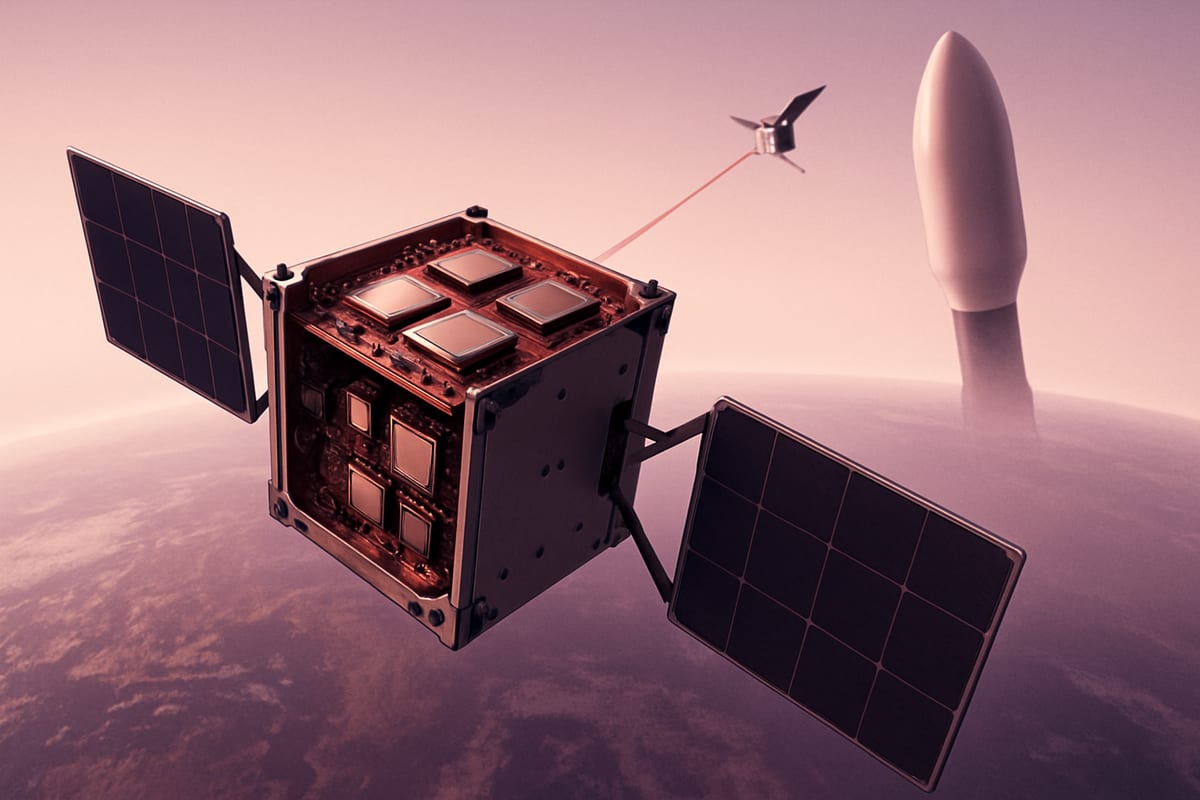
Google is set to send its first TPU chips into low Earth orbit, following a series of ground tests. The company plans a multi-year development, with a second phase anticipated in 2027 and specific technical objectives before any operational deployment.
Extended Timeline, Second Phase in 2027, and Planned Laser Links
Google states that the deployment of orbital data centers is not expected in the short term and that the project's development could still take several years. If the initial tests are successful, the company plans to send two more satellites in 2027. This second mission aims to test laser technology for communication between satellites. Ultimately, Google envisions satellites equipped with several dozen TPU chips, organized in clusters around the Earth. The company compares this approach to its early research on autonomous driving and quantum computing, conducted in measured stages.
Ground Validations: Vibration, Radiation, and Cooling
Before sending its chips into space, Google conducted a series of ground tests to assess the feasibility of orbital data centers. The results are deemed encouraging by the company. The chips were subjected to intense vibrations for 10 minutes, simulating the ascent into orbit, and withstood these stresses. Proton beam tests simulated exposure to radiation, with components that held up. The cooling system designed for space was tested in an environment replicating the vacuum of space and thermal conditions, but it still needs to be validated during orbital operations. The goal of the first mission is to verify that the TPU chip can withstand the journey and function correctly in space.
Le brief IA que les pros lisent chaque soir
Les 7 actus IA du jour, décryptées en 5 min. Gratuit.
Inclus dès l'inscription : notre sélection des meilleurs guides & comparatifs IA.
Choisissez votre rythme
Gratuit · Pas de spam · Désabonnement en 1 clic
First Mission in Low Orbit and Suncatcher's Energy Bet
Next week, Google plans to send its TPU chips into low Earth orbit for the first time, as part of a mission designed with Planet and launched by a SpaceX rocket. This phase corresponds to the launch of orbital testing. The objective is to harness the space environment to obtain computing power for artificial intelligence. The Suncatcher project aims to equip satellites with TPU chips capable of capturing 5 to 8 times more solar energy than on the ground. Google emphasizes that it is not certain of the project's success but highlights the advancements already made by its engineers.
Brief IA — L'actualité IA en français
L'essentiel de l'actualité de l'intelligence artificielle, décrypté et expliqué chaque jour.