Googlebook: Launch in September with Android, ChromeOS, and Gemini
Le brief IA que les pros lisent chaque soir
Les 7 actus IA du jour, décryptées en 5 min. Gratuit.
Inclus dès l'inscription : notre sélection des meilleurs guides & comparatifs IA.
Choisis ton rythme
Gratuit · Pas de spam · Désabonnement en 1 clic
Google is preparing Googlebook, a premium line of laptops built on Aluminum OS, a Linux-based system designed to merge Android and ChromeOS. The Gemini assistant is expected to be integrated at the system level, featuring functions like Magic Pointer and custom widget creation. Leaks mention several formats, including a 14-inch Acer OLED priced around $1,200 and a 13-inch Lenovo detachable powered by MediaTek, with a launch anticipated in September. However, several key parameters remain to be clarified, including pricing, enterprise management, offline capabilities, and Linux.
Key Points Still Unclear: Pricing, Offline, Updates, and Migration
Many essential elements remain to be clarified, including compatibility with Android, device pricing, offline features, and Linux functionality, enterprise administration, update policies, transition methods from ChromeOS, application performance, and Gemini's access restrictions to users' personal information. Additionally, no data has been provided regarding processor types, RAM, storage capacity, or pricing. The precise operation of Aluminum OS is also poorly documented at this stage.
Gemini as System Interface: Magic Pointer and On-Demand Widgets
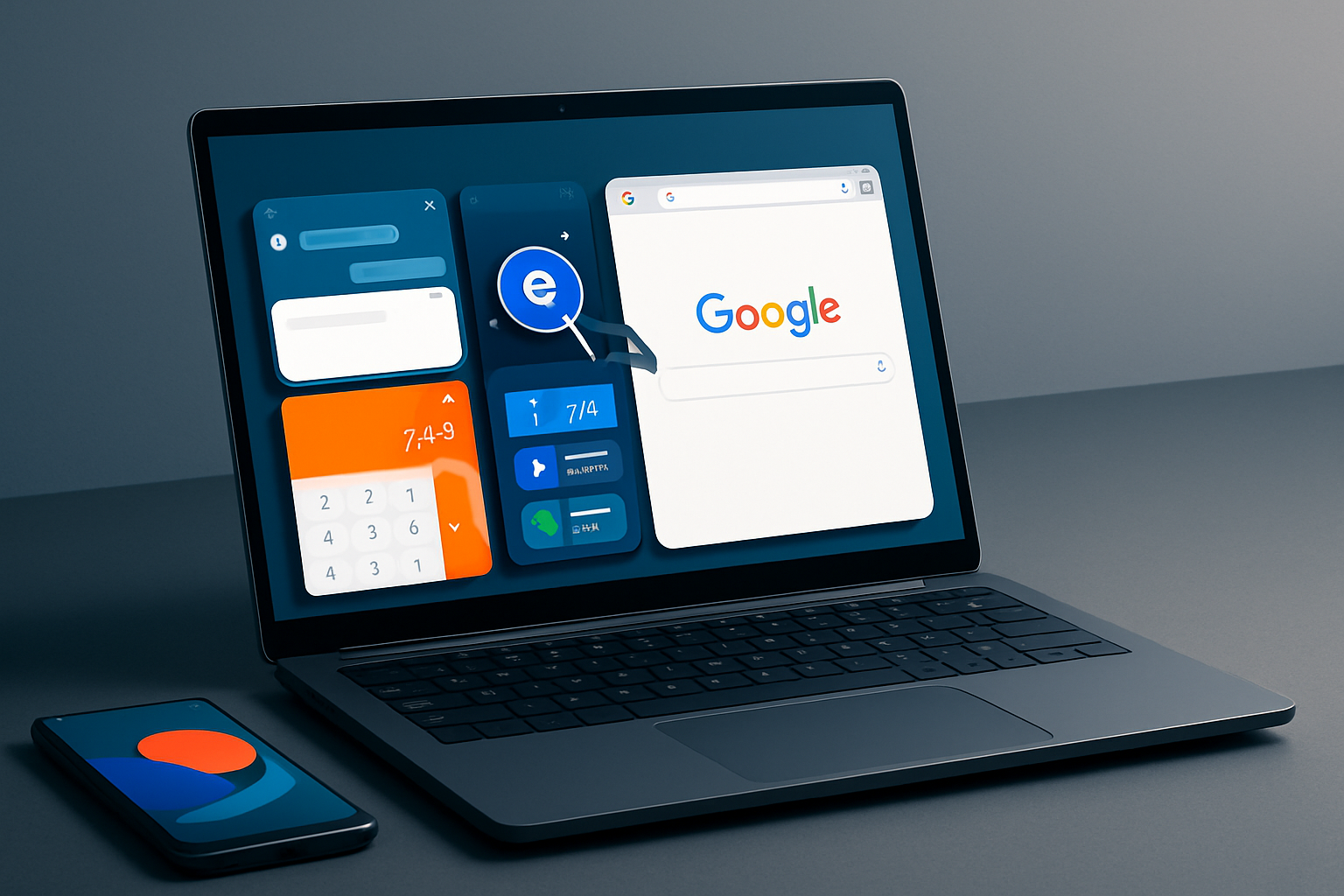
Google plans to make Gemini a layer of interaction at the system level rather than just a simple chatbot. The Magic Pointer function would activate by "shaking" the cursor to suggest actions based on the pointed content, such as transforming an email date into a calendar event or combining images to visualize furniture in a room. Another feature, Create Your Widget, is expected to allow users to generate desktop widgets through prompts. According to Google, Gemini can leverage web search and connect to services like Gmail and Calendar to assemble a personalized dashboard. The promise also includes seamless usage continuity between Android phones and laptops, without manual switching between devices.
Applications: Android at the Center and Adaptations for PC Use
The announced application strategy is firmly centered on Android. Google claims that existing Android applications will run on Googlebook and encourages developers to optimize them for laptop-type interactions: keyboard, mouse, touchpad, stylus, and game controllers. The stated goal is to go beyond the mere juxtaposition of Android apps and web software that characterized Chromebooks.
Anticipated Formats and Timeline: A Premium Line by September
Leaks from OEMs like HP, Acer, and Lenovo suggest a premium range available in several formats. Among the options mentioned are a 14-inch Acer OLED model priced around $1,200 and a 13-inch Lenovo Duet M detachable powered by MediaTek. The timeline is also becoming clearer, with a launch expected in September, although these leak-based indications remain to be confirmed.
Aluminum OS Unifies Android and ChromeOS, with OEMs on Board
The Googlebook is presented as a computer more oriented towards AI than Android compatibility. At the heart of the project is Aluminum OS, a Linux-based system that merges Android and ChromeOS. Google describes it as the "next generation of ChromeOS," integrating elements of the Android stack to achieve laptop-class behavior and native-level performance. This initiative extends a convergence effort that has been underway since 2009. Google relies on partners like HP, Acer, Lenovo, Dell, and Asus while continuing to market and support Chromebooks. This is not an unprecedented premium Pixel, but a new range that combines Android applications, the advantages of the ChromeOS browser, and positions Gemini as the central element. The entire approach is described as an effort to provide artificial intelligence with a refined laptop format.
Brief IA — L'actualité IA en français
L'essentiel de l'actualité de l'intelligence artificielle, décrypté et expliqué chaque jour.