OpenAI's GPT-5.6 and the Challenges of AI Chips: A Turning Point
Le brief IA que les pros lisent chaque soir
Les 7 actus IA du jour, décryptées en 5 min. Gratuit.
Inclus dès l'inscription : notre sélection des meilleurs guides & comparatifs IA.
Choisis ton rythme
Gratuit · Pas de spam · Désabonnement en 1 clic
OpenAI and the Imminent Launch of GPT-5.6
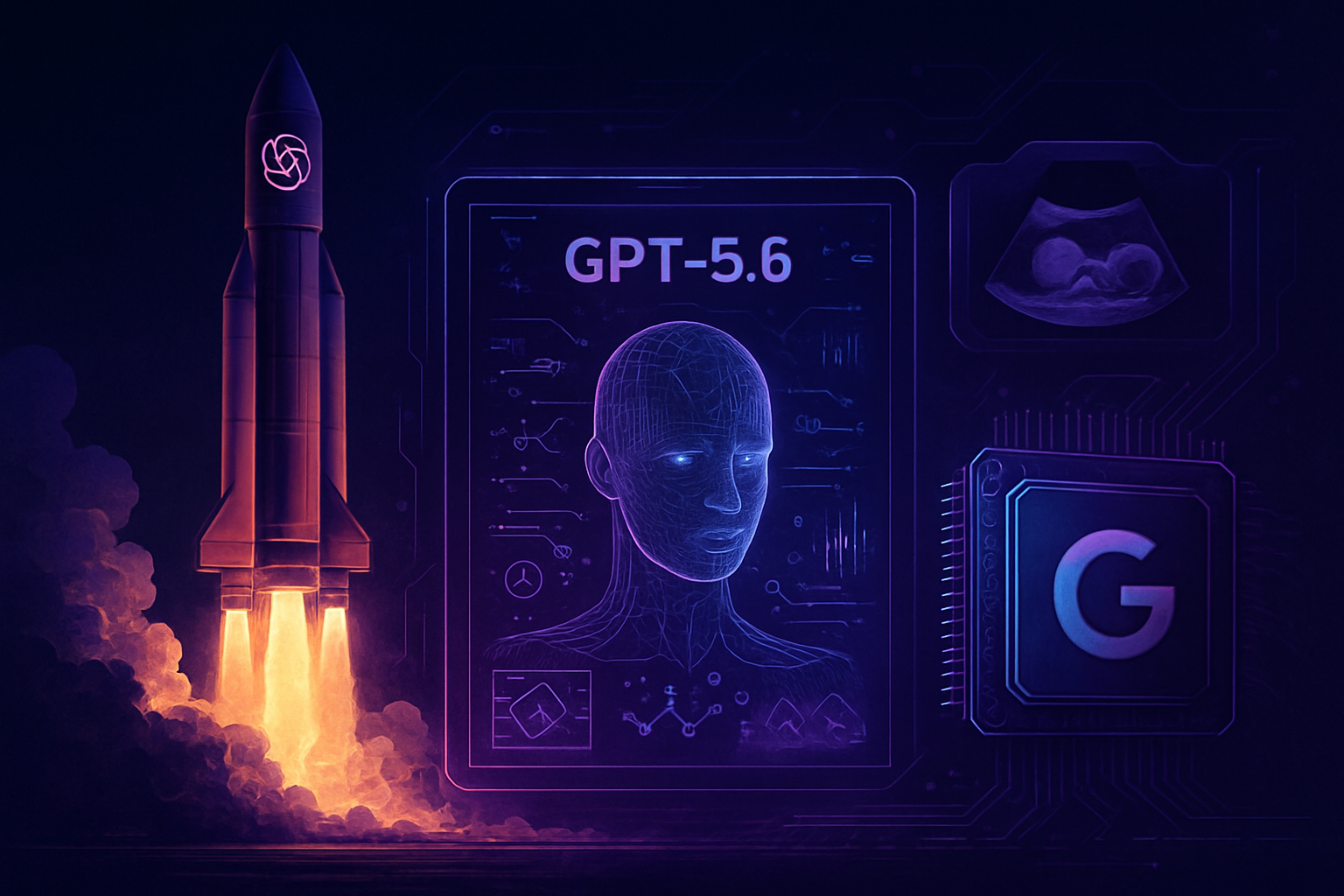
OpenAI is on the verge of unveiling its new generation of artificial intelligence models, GPT-5.6. This version promises to bring significant improvements over its predecessors, focusing on better contextual understanding and an enhanced ability to generate relevant and nuanced responses. The anticipation surrounding this launch is palpable in the industry, as each new iteration of GPT has historically pushed the boundaries of what AI can achieve.
Midjourney and Medical Innovation with the Whole-Body Ultrasound Scanner
Midjourney, known for its advanced AI image generation capabilities, is venturing into the development of a whole-body ultrasound scanner. This technology could revolutionize the medical field by providing faster and more accurate diagnostics while reducing the costs associated with traditional examinations. By integrating AI into medical tools, Midjourney hopes to facilitate access to quality healthcare for a larger number of people.
Advances in Self-Improving Memory for AI
A new approach to self-improving memory for AI agents is currently under development. This innovation aims to optimize reinforcement learning, allowing models to become more efficient and sustainable. By enhancing their learning capabilities, these agents could offer more robust and adaptive solutions across various sectors, from industry to scientific research.
Claude Code and Artifact Management
Claude Code has recently integrated artifact management into its features, improving the way data and results are processed. This advancement allows for better organization and more efficient utilization of information, which is crucial for businesses looking to maximize the use of their data.
Securing the Future of AI Agents
In-depth discussions are underway to determine how to secure the future of AI agents. These debates focus on the challenges to overcome and the opportunities to seize to ensure that these technologies evolve in a safe and beneficial manner for society. Security and ethics remain at the forefront of concerns as AI continues to progress rapidly.
Google and Its Strategy in AI Chips
Google is drawing inspiration from Nvidia's business model to develop its own enterprise in the field of AI chips. By adopting this strategy, Google aims to strengthen its position in the rapidly expanding market for hardware technologies in artificial intelligence. This initiative could intensify competition and accelerate innovation in the sector.
Musk's Critiques and xAI
The "father of AI" has expressed severe criticisms of xAI, Musk's company, labeling it a potential failure. He warns of the risk of a bubble in the AI sector, highlighting the dangers of uncontrolled and speculative growth. These remarks invite reflection on the sustainability and viability of current business models in AI.
Importance of Workflow Data in AI Strategy
A company's AI strategy heavily depends on the quality of the workflow data that supports it. Effective management of this data is essential to maximize the performance of AI models and ensure optimal outcomes. Therefore, companies must invest in robust data infrastructures to support their artificial intelligence initiatives.
OpenAI and Usage Analytics for Businesses
OpenAI has introduced new usage analytics for businesses, providing valuable insights into the engagement and effectiveness of their models. These tools allow companies to better understand how AI models are utilized and optimize their deployment for more effective results.
Mistral AI and the Integration of Code Features
Mistral AI plans to integrate Code and Application features into its Vibe platform. This initiative aims to enrich Mistral AI's offerings by providing more diverse and powerful tools for its users. By expanding its capabilities, Mistral AI hopes to attract a broader audience and strengthen its market position.
DeepSeek and Employee Loyalty
DeepSeek, a major player in AI in China, has asked its investors not to poach its employees. This request underscores the importance of talent retention in a sector where competition is fierce and specialized skills are highly sought after.
An AI Startup Valued at $13 Billion
An AI startup, recently valued at $13 billion, is betting on cheaper alternatives to OpenAI and Anthropic. This strategy could allow it to capture a significant market share by offering affordable and effective solutions, thereby meeting the growing demand for accessible AI technologies.
Brief IA — L'actualité IA en français
L'essentiel de l'actualité de l'intelligence artificielle, décrypté et expliqué chaque jour.