GPT-5.6 and Grok 4.5: The AI Race Intensifies in 2026
Notable Developments in AI
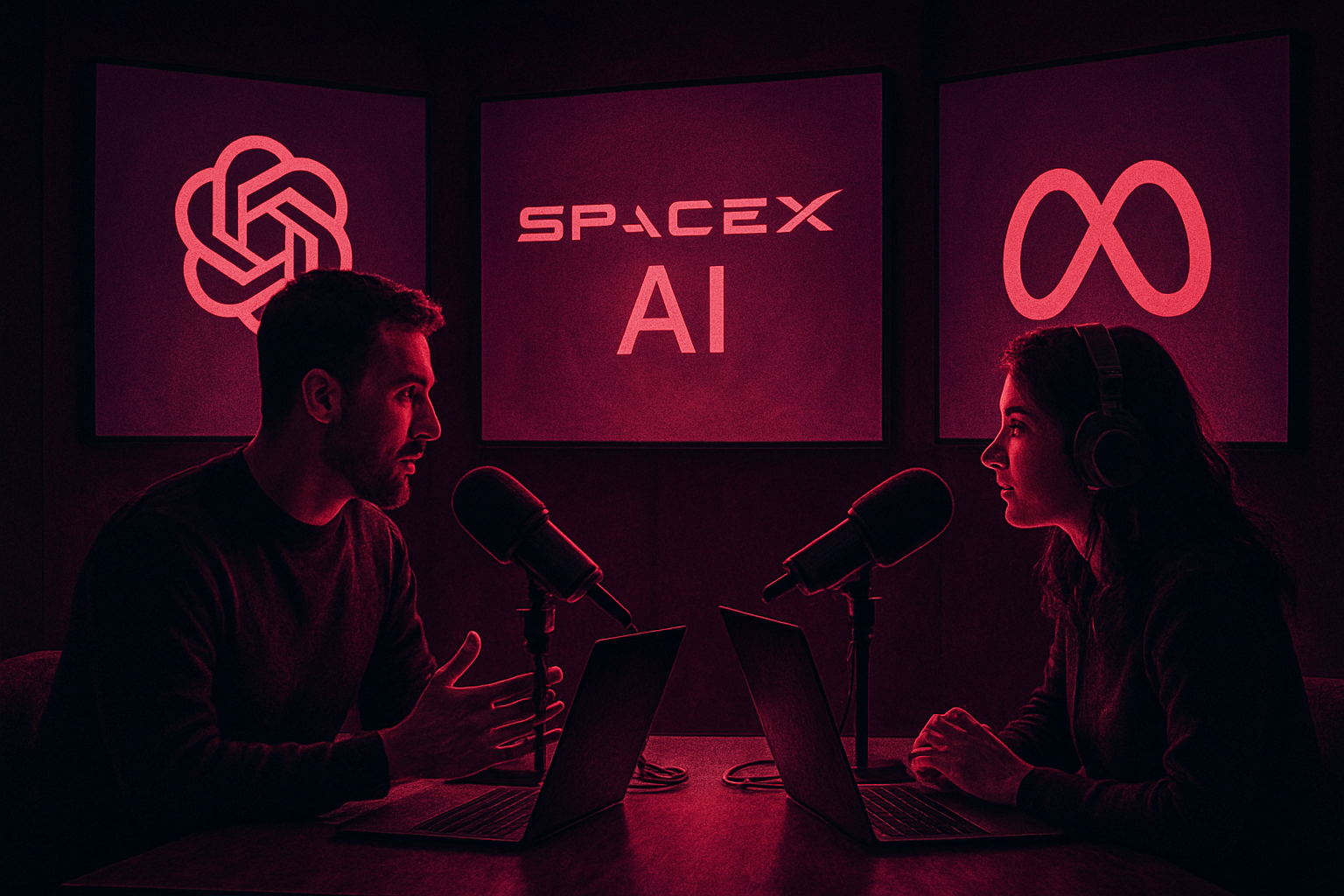
Last week was rich in announcements in the field of artificial intelligence, with several major players unveiling new versions of their models. OpenAI launched GPT-5.6, a significant advancement that includes the sub-models Sol and Luna. This launch was accompanied by a strategic decision to rename their desktop coding product to ChatGPT Work. However, this announcement was not without controversy, particularly due to concerns raised by the U.S. government regarding surveillance and the circumvention of cutting-edge models.
On its part, SpaceX AI introduced Grok 4.5, a class Opus coding model that stands out due to its very low cost. This model was launched with minimal security documentation, sparking discussions about potential security implications. Meanwhile, Meta unveiled Muse Spark 1.1, a model that aggressively positions itself in the market with competitive pricing and notable improvements in coding and cybersecurity benchmarks. Meta also emphasized a thorough security assessment for this model.
Innovations and Adjustments at Meta
Meta also made headlines with the launch of Muse Video and Muse Image. However, the latter was quickly pulled from the market after criticism regarding its ability to easily generate images from public Instagram accounts. This decision highlights the challenges faced by tech companies in managing privacy and data security. Concurrently, Chinese open-source models have continued to gain popularity, now representing over 30% of the weekly tokens on OpenRouter. This rise comes with increasing pressure on costs and discussions about potential risks, such as insider threats.
Le brief IA que les pros lisent chaque soir
Les 7 actus IA du jour, décryptées en 5 min. Gratuit.
Inclus dès l'inscription : notre sélection des meilleurs guides & comparatifs IA.
Choisissez votre rythme
Gratuit · Pas de spam · Désabonnement en 1 clic
Infrastructure, Policy, and Security
In the realm of infrastructure, Meta is currently exploring the possibility of selling AI computing power as a cloud service. This initiative could transform how companies access the computing resources needed to develop and deploy AI models. In the United States, energy regulators have intensified pressure on network operators regarding high-load data center connections, underscoring the growing importance of energy efficiency in the tech sector.
Anthropic has also contributed to advancements in security with the publication of an interpretability method called "global workspace" for verbalizable internal representations. This approach could enhance understanding and transparency of language models, a crucial aspect for their large-scale adoption.
Geopolitical Tensions and International Strategies
On the international front, reports indicate that China may restrict foreign access to its top AI models, a decision that could have significant repercussions on the global AI market. Additionally, the AI 2040 project proposes coordination between the United States and China to slow technological advancements until alignment on security and ethical standards is improved.
Timestamped Discussions
Discussions on these topics were detailed in the podcast, with segments dedicated to each major announcement. For instance, the introduction of GPT-5.6 by OpenAI was addressed at 00:02:03, while the launch of Grok 4.5 by SpaceX AI was discussed at 00:15:41. These exchanges provide an in-depth overview of the strategies and implications of these developments for the future of artificial intelligence.
Brief IA — L'actualité IA en français
L'essentiel de l'actualité de l'intelligence artificielle, décrypté et expliqué chaque jour.