GPT-5.6 Sol: OpenAI Surpasses Claude Fable in Efficiency
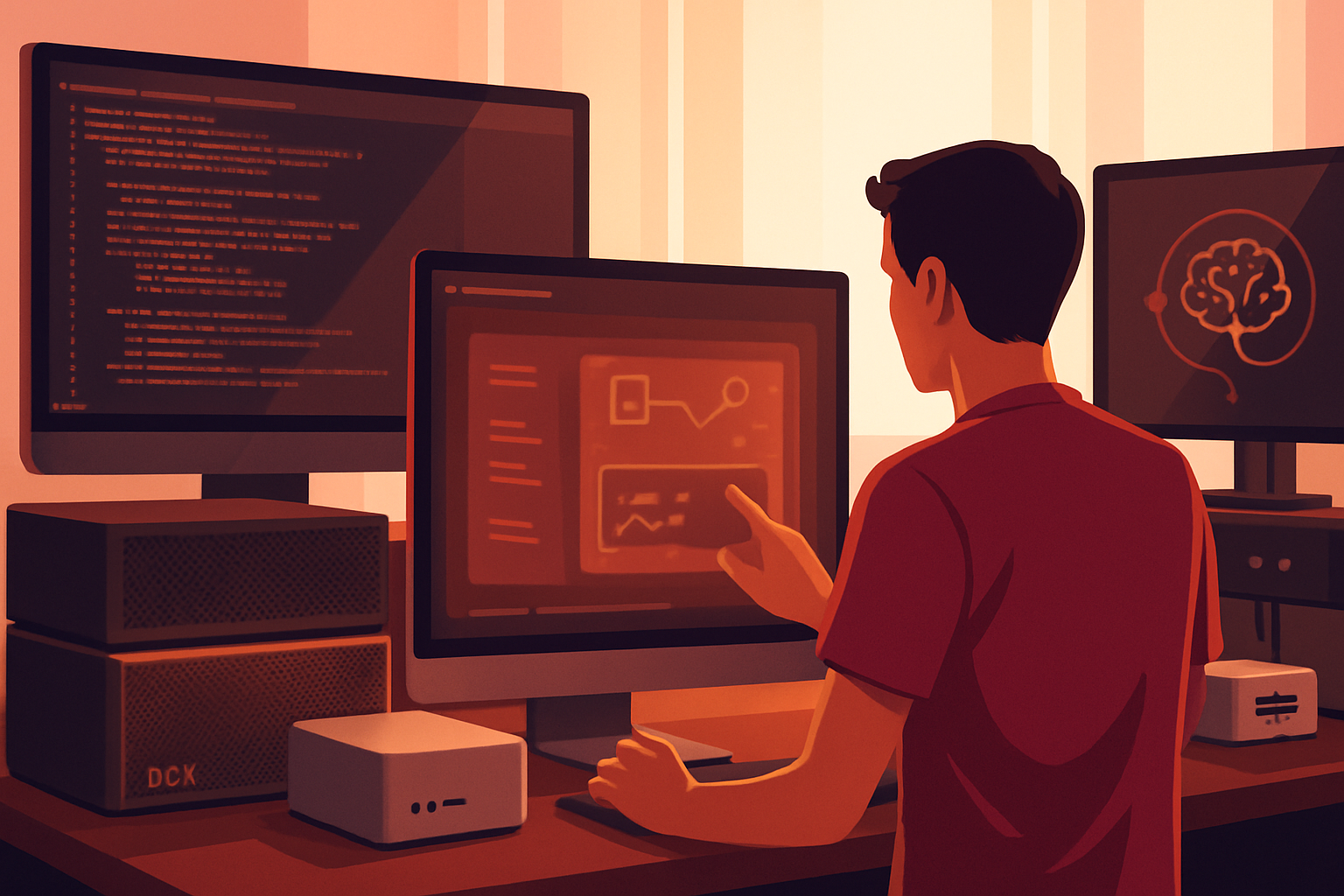
The Importance of Agent Harnesses in Automation
In the field of software engineering, agent harnesses prove to be essential tools for optimizing the efficiency of artificial intelligence agents. Claire, a seasoned engineer, highlighted the importance of these harnesses by comparing them to versatile tools like Claude Code or Codex. She developed a custom harness using the Claude Agent SDK specifically to automate bug triage in Sentry for ChatPRD. This harness structures the workflow, encodes permissions, and connects tools like Sentry and Linear, transforming a repetitive engineering task into a process that the agent can execute consistently.
The Foundations of an Agent Harness
An agent harness is essentially a code that surrounds an AI agent to make it more effective in a specific task. Although the term may sound complex, it is simply a set of codes that you write to enhance the performance of an AI agent in a particular domain. Examples of complex harnesses include Cursor and Claude Code, but a harness can be as simple as eight files and a terminal interface. The goal is to create an environment where the agent can operate optimally for specific tasks.
When to Build a Harness
Building a harness becomes relevant when the same workflow requires consistent configuration and results. This particularly applies to tasks that are partly deterministic, with defined steps and tools, and partly non-deterministic, where the AI must determine root causes and draft reports. For example, bug triage in Sentry follows a defined process of evidence collection and ends with a set of artifacts, making it an ideal candidate for automation through a harness.
The Efficiency of Tool Adapters
Specialized tool adapters often outperform general access to content management platforms (CMP) for specific workflows. Instead of giving the agent broad access to Sentry, Claire built a custom adapter that extracts only the relevant information for a bug report. This approach makes the agent faster, less costly, and reduces the risk of deviation from the intended script.
Encoding Permissions
In a versatile coding tool, it is necessary to constantly remind the agent of permissions. However, with a harness, these permissions are encoded. For example, in Claire's harness, she can simply click "investigate," paste the Sentry link, and the agent already knows its constraints without needing reminders.
The Value of Structured Artifacts
The structured artifacts produced by a harness distinguish a one-off investigation from a resource at the team level. Each execution of Claire's harness generates a task log, a brief Sentry issue report, relevant logs, a work report, and a summary HTML file. These artifacts provide the engineering team with a consistent and easily searchable record of each bug investigation, eliminating the need for manual documentation.
The Flexibility of Multi-Model Routing
A harness allows for multi-model routing that versatile tools cannot offer. For example, Claude Code is associated with Claude, while Codex is linked to GPT. A custom harness using the Claude Agent SDK allows for selecting the appropriate model for each step, applying different tool policies per invocation, and switching models over time without modifying the interface. This flexibility is a strong argument for owning the harness layer.
The Evolution of Versatile Agents
Using an open chat field was sufficient until it was no longer so. Claire acknowledges that simply typing in Claude Code produced real work, but she has shifted her perspective: versatile agents are now better used to orchestrate specialized harnesses rather than to perform every task themselves. By providing a constrained agent with a specific harness, more consistent results are achieved than giving a powerful agent an open prompt.
Managing a Local AI 24/7 as a Solo Builder
Alex Finn, a solo builder, has successfully set up a fleet of local AI running continuously using hardware like Mac Studios, a DGX Spark, and an RTX 5090, along with a custom dashboard to keep the agents operating constantly. Alex explains how each machine plays a specific role, how he distributes work among local models like GLM, Qwen, and Ornith, and why unlimited inference changes the economics of AI workflows.
Le brief IA que les pros lisent chaque soir
Les 7 actus IA du jour, décryptées en 5 min. Gratuit.
Inclus dès l'inscription : notre sélection des meilleurs guides & comparatifs IA.
Choisissez votre rythme
Gratuit · Pas de spam · Désabonnement en 1 clic
The Case for Local AI
The main advantage of local AI is not the immediate return on investment but unlimited inference. Comparing a $10,000 Mac Studio to a $20 ChatGPT subscription may seem extravagant, but when you run an agent 24/7, cloud API costs escalate quickly. Continuously operating local models enable use cases that would otherwise be economically unviable. Alex uses his machines for security analysis, code reviews, and social signal monitoring, tasks that would cost thousands per month in cloud credits.
The Role of Each Hardware Level
Each hardware level has a specific role. The Mac Studio handles massive models slowly but with Opus-level intelligence. The DGX Spark, with its 128 GB of unified Nvidia memory and CUDA speed, is ideal for models like Qwen 3.6 that require speed and efficiency. The RTX 5090, although equipped with only 32 GB of VRAM, is extremely fast. Alex advises purchasing based on the task rather than the specifications.
The Importance of Tailscale
Tailscale plays a crucial role in managing a multi-machine setup. Once all machines are on the same Tailscale network, an agent like OpenClaw or Hermes can move between them, check the hardware, load the right model, and operate without manual configuration. Alex states that Tailscale requires no technical knowledge once installed and even recommends it for a single machine, as it allows testing local applications from a phone.
The Hybrid Security Scan Model
Alex's hybrid model for security scanning is an example of the efficiency of combining local and cutting-edge models. A local model like GLM 5.2 analyzes code every 20 minutes and deposits the results into a Markdown file. Claude Code checks this report once a day to determine what is real and worth fixing. This approach allows for volume work at a lower cost while using Claude Code for precise judgment, thus avoiding high expenses.
The Software Factory
Alex's software factory operates on two loops and a rocket emoji. Each morning, he uses a "building morning" prompt in Claude to generate a task list for his SaaS. The building loop retrieves these tasks and begins executing them, while the review loop checks the work. When a task passes review, Alex receives a Slack notification, and adding a rocket emoji triggers an automated merge. This method allows for transitioning from planning to review and code merging without manual intervention.
Redundancy with OpenClaw and Hermes
OpenClaw and Hermes serve different needs, and Alex recommends using both to ensure redundancy. He prefers OpenClaw for "big bang" moments and emotional connection, while Hermes is more reliable for repeated updates. His solution involves using three Hermes agents and two OpenClaw agents simultaneously, so when three of the five agents fail, the other two can fix them. This redundancy is a deliberate strategy.
Task Allocation by Model Intelligence
Task allocation by model intelligence is essential for making the AI fleet useful. GLM 5.2, while intelligent at the Opus level, is slow and suitable for deep, latency-tolerant tasks. Qwen 3.6 is fast and good enough to analyze Twitter for produced signals. Ornith 1.0, a tweak of Qwen with integrated reinforcement learning for coding, has outperformed Qwen in every evaluation conducted by Alex and runs comfortably on a DGX Spark. The idea is that "the smartest model everywhere" is inefficient; it is wiser to match model intelligence to task complexity.
GPT-5.6 Sol: A Model Redefining Efficiency
Claire put GPT-5.6 Sol to the test against Claude Fable, Sonnet 5, and other models in the GPT-5.6 range using a five-part benchmark for real product tasks. The result is clear: Sol becomes her new daily tool. Claire explains the reasons for this preference and also indicates in which cases she would continue to use Terra, Sonnet, or Fable.
The Practical Efficiency of GPT-5.6 Sol
GPT-5.6 Sol has proven to be the most practically efficient model Claire has tested, although Fable is theoretically smarter. In a benchmark covering five categories — PRDs, prototypes, wireframes, debugging, and agent voice — Sol achieved the highest taste score, with a significant margin on the 70% Claire/30% machine share. This gap between "hyper-intelligent" and "actually shipped" is notable, and for product work, Sol stands out.
The Superiority of Sol's Prototypes
The high-fidelity prototypes generated by Sol are more functional and opinionated than anything Claire has tested before. This feature makes Sol particularly suitable for tasks requiring increased precision and efficiency, making it a preferred choice for product development projects.
Brief IA — L'actualité IA en français
L'essentiel de l'actualité de l'intelligence artificielle, décrypté et expliqué chaque jour.