GPT-6.2 Astra Identifies a Designer in 22 Minutes
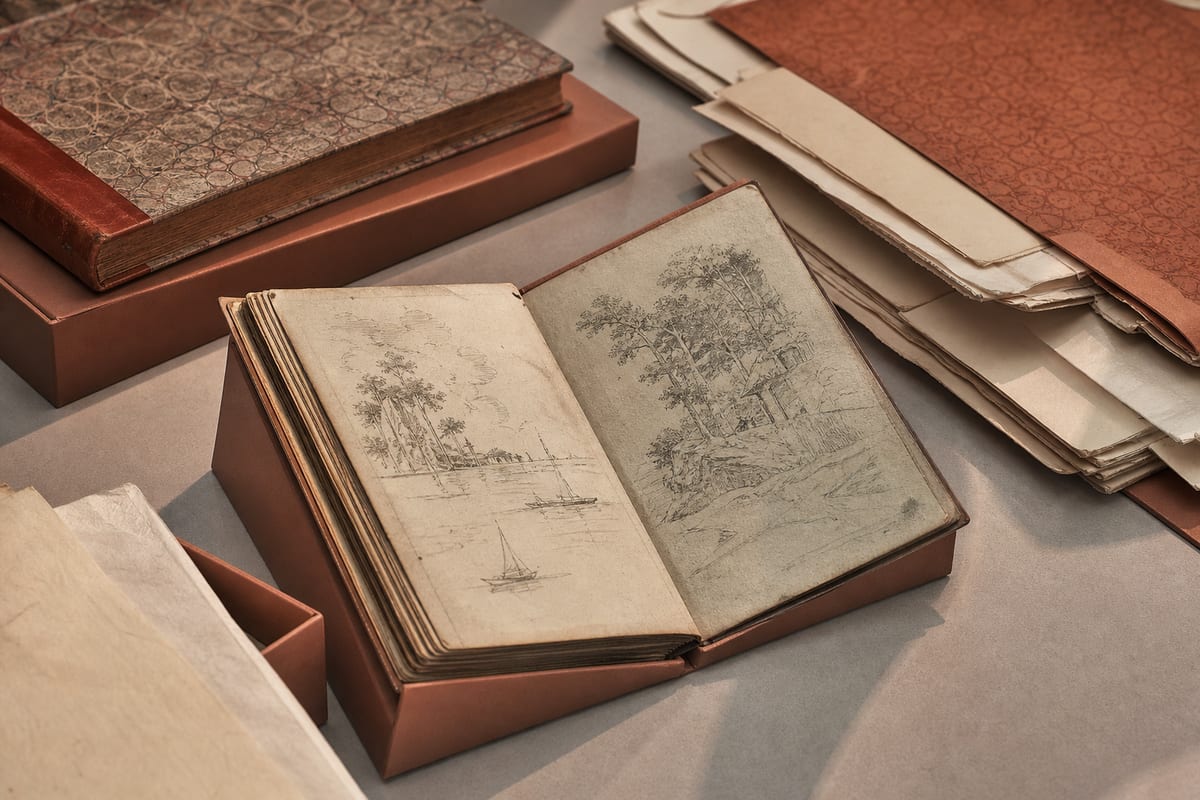
Mark Humphries, a history professor at Wilfrid Laurier University in Waterloo, Ontario, claims that GPT-6.2 Astra proposed an identity for the author of an anonymous notebook dating back to 1808 in just 22 minutes. Preserved at Yale, this notebook is believed to be attributable to the Viscount de Chabot. The historian confronted this proposal with a personal journal.
Humphries tempers the tech sector's praise
OpenAI President Greg Brockman relayed this attribution, celebrating the resolution of a historical mystery he deems significant. On X, digital professionals sent enthusiastic messages and congratulations to Humphries. However, he describes his relationship with this technology as more ambivalent than one might assume: he does not attribute all the necessary skills of a historian to it and does not use it for writing.
Among historians, discussions have focused on his method, with some jokes linking "Chabot" to "chatbot." Some remind that a human inquiry could have reached the same conclusion, which Humphries also acknowledges. He aims to convey the capabilities of the models without concealing their limitations.
According to Humphries, the Yale librarian he contacted reacted positively, but the institution had not yet followed up on the information. Yale did not respond to a request for comment.
Chabot's journal provides several clues
The identity proposed by the model is that of Louis-Guy-Charles-Guillaume de Rohan-Chabot, Viscount de Chabot, Humphries reports. The tool identified a mention of a journal kept by Chabot in a history thesis, which the historian could consult to verify this attribution. Reproductions on microfilm could be ordered.
Le brief IA que les pros lisent chaque soir
Les 7 actus IA du jour, décryptées en 5 min. Gratuit.
Inclus dès l'inscription : notre sélection des meilleurs guides & comparatifs IA.
Choisissez votre rythme
Gratuit · Pas de spam · Désabonnement en 1 clic
After comparison, Humphries found the writings of the journal and the notebook to be similar, but he did not see this as sufficient proof: he specifies that he does not have expertise in this area. However, he reports an exact match of dates, which places Chabot in the depicted locations at the corresponding times.
Another connection could be decisive. In his journal, Chabot recounts having drawn Fort St. Joseph while indicating the chosen angle; the notebook indeed contains a representation of the fort from that viewpoint.
The model examines documents citing hundreds of people
The document is located at the Beinecke Rare Book and Manuscript Library at Yale. Humphries, who has been studying trade exchanges related to fur since the pandemic, has been interested in it for a long time. The available clues were sparse: a few annotations, rare dates, and a route followed by thousands of travelers.
As a member of a group testing OpenAI models before their release, the historian directed GPT-6.2 Astra to digitize the notebook to search for its origin. He had selected Ultra, with the objective mode. According to his account, the model cross-referenced primary documents, including a fur trader's dinner journal and meeting minutes, to narrow down compatible identities with the visited locations.
Humphries emphasizes that this approach was not beyond the reach of an individual. However, the archives involved contained hundreds of names to verify: it is this verification work that he describes as particularly long and tedious.
Brief IA — L'actualité IA en français
L'essentiel de l'actualité de l'intelligence artificielle, décrypté et expliqué chaque jour.