GPT-Rosalind: OpenAI Offers 30 Free Access Passes to US University Labs
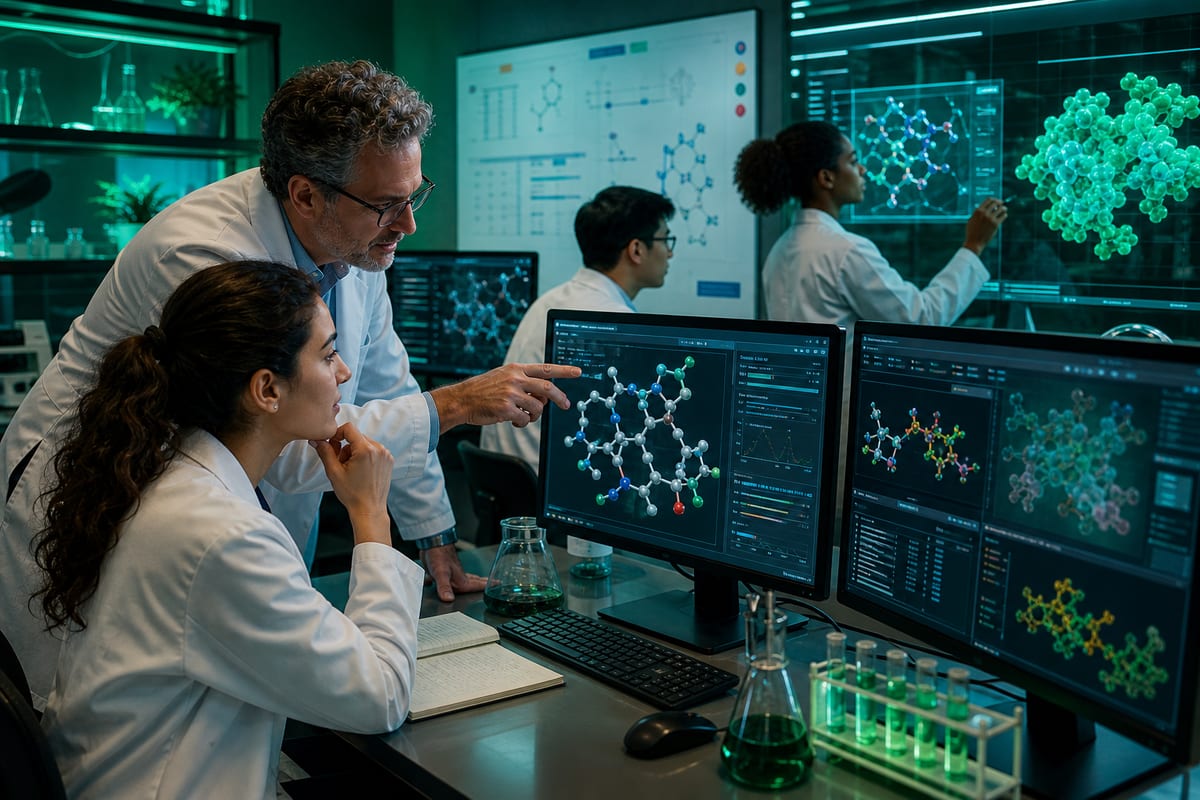
OpenAI launches an academic plan allowing American university laboratories to obtain up to 30 free accesses for 12 months to GPT-Rosalind and the company's commercial models, subject to trusted access approval. The offer, reserved for U.S. universities, includes checks and usage monitoring, with no API access at this time.
Limited Access for U.S. Universities and No API, with Preliminary Checks
The Rosalind Academic Plan is aimed at laboratories in American universities. Laboratory heads and principal researchers in institutions without an OpenAI Enterprise agreement can submit a request through a trusted access mechanism, while those affiliated with a university already partnered with OpenAI must use the Enterprise procedure specific to their campus. Upon validation, the heads have the option to activate free access to GPT-Rosalind for up to 30 designated members, as well as to other models offered in the plan, except for the API, which is not included at this stage. Verified heads manage access rights and are responsible for authorized use within their laboratory. Before any activation, OpenAI verifies the legitimacy of the institution and the identity of the head, examines their professional background, institutional affiliation, and authority to oversee access, and evaluates the laboratory's affiliation, activities, and intended use. Formal responsibilities are established, including the designation of an institutional security contact. After activation, monitoring and enforcement of rules continue. For high-sensitivity uses, checks take into account the approved scientific context, and OpenAI may seek clarifications to confirm authorization. This approach aims to detect potential abuses while limiting interruptions to authorized work.
Up to 30 Free Seats for 12 Months and Data Not Used for Training
Eligible laboratories can obtain up to 30 Business Standard seats at no cost, at a rate of $0 per user per month, for a duration of up to 12 months. The plan provides access to all of OpenAI's cutting-edge commercial models, within the limits of associated usage caps, and to GPT-Rosalind after trusted access approval. OpenAI specifies that research data shared under this plan is not used, by default, to train its models.
A Specialized Model in Biology and a Workbench to Orchestrate Scientific Tools
GPT-Rosalind is a model dedicated to life sciences, designed to enable advanced reasoning on complex biological issues. It works in conjunction with the Rosalind Workbench, which coordinates specific tools covering, among other things, medicinal chemistry, genomics, and laboratory support. Under a trusted access arrangement, approved researchers can use it to explore sensitive topics in a framework intended for legitimate research use.
Le brief IA que les pros lisent chaque soir
Les 7 actus IA du jour, décryptées en 5 min. Gratuit.
Inclus dès l'inscription : notre sélection des meilleurs guides & comparatifs IA.
Choisissez votre rythme
Gratuit · Pas de spam · Désabonnement en 1 clic
Application Areas: From Drug Design to Antibiotic Resistance
The intended uses cover the design of candidate drugs, therapeutic proteins, peptides, and enzymes, with the optimization of attributes such as molecular interactions, selectivity, stability, and development suitability. The model can contribute to identifying molecular signatures of diseases and developing minimally invasive diagnostics such as liquid biopsies, as well as designing and evaluating antibodies and vaccines against emerging variants. It can assist in studying host-pathogen interactions and the durability of immune responses, support approaches to gene and RNA-based therapies, including targeted delivery strategies, and apply to agriculture and animal health. Uses also extend to ecology and conservation to analyze biodiversity and environmental exposures, and to antimicrobial resistance with the search for new treatments, including against biofilms.
Reported Uses by Teams: Parameters of Ten Drugs and Accelerated Iterations
Academic teams are already exploring the integration of the tool into their work, from protein design to the study of neurodegeneration. At UCSF, the Zhao Lab reports having accelerated the gathering of physicochemical parameters of drugs using GPT-Rosalind, utilizing the PubChem and NCBI tools, and reports trials on ten drugs with refinement between predicted values and experimental measurements. Dr. Mathieu Bourdenx describes a use of GPT models throughout the research process, from literature review to refining experiments and computational approaches, to iterate faster and explore more options. Dr. Brian Hie anticipates improvements in discovery and design tasks and their deployment on a larger scale, with useful insights for biological researchers.
OpenAI's Stated Goal and Reminders of Breakthroughs from Fundamental Research
OpenAI presents the acceleration of scientific discovery as central to its mission, which aims for general artificial intelligence to benefit everyone. The company claims to invest, through this plan, in scientists conducting fundamental research and wishes to help more laboratories combine their expertise with tools dedicated to life sciences. It starts with university laboratories in a broader effort to disseminate AI tools and hopes that the reduction in access costs will allow more researchers to explore ideas whose impacts could extend beyond their teams, whether it be to better understand diseases, improve treatments, or enhance food resilience. In the background, major advancements have emerged from long-term academic work: the Human Genome Project has contributed to establishing modern genomics applied to medicine, diagnostics, and biotechnology; research on bacterial immunity has led to CRISPR-Cas9, a driver of progress in genomic editing, oncology, hereditary diseases, agriculture, and biotechnology; decades of mRNA studies have paved the way for COVID-19 vaccines and a new generation of vaccines and therapies.
Brief IA — L'actualité IA en français
L'essentiel de l'actualité de l'intelligence artificielle, décrypté et expliqué chaque jour.