Hark Pro, the AI Assistant that Takes Control of Your Computer
Le brief IA que les pros lisent chaque soir
Les 7 actus IA du jour, décryptées en 5 min. Gratuit.
Inclus dès l'inscription : notre sélection des meilleurs guides & comparatifs IA.
Choisis ton rythme
Gratuit · Pas de spam · Désabonnement en 1 clic
The startup Hark has launched Hark Pro, a personal assistant capable of executing tasks directly on the user's computer. The company emphasizes an approach of transparency and privacy and announces a native AI device for 2027. Its team advocates for the ambition to replace the computer rather than just being a simple app, while acknowledging that there are still open technical trade-offs.
A Native Device Announced for 2027 and Technical Unknowns
Hark plans to complement its software with a native AI device in 2027. The form of this hardware is not yet determined, with Abidur Chowdhury mentioning the discomfort factor of wearable cameras. He claims that the first product in preparation would be unprecedented. Meanwhile, the choice of the most suitable model type for personal assistants remains open: Hark's model, trained for computer use, aims for speed and reduced costs for these tasks, with uncertainties regarding potential knowledge losses compared to cutting-edge LLMs. The extent of the novelty of the future device remains uncertain. Abidur Chowdhury, who has experience in device design at Apple, is responsible for these announcements on the design side.
Claimed Privacy and Visible Navigation to Build Trust
Hark Pro displays, in real-time, in a window, the web navigation performed by its agent, a step that is generally invisible in other assistants. Abidur Chowdhury presents this choice as a way to build trust by concretely showing what the system is doing. He emphasizes that the company does not position itself like Meta or OpenAI and is not looking to sell advertising or exploit user data. However, fully utilizing this type of tool requires sharing a large part of one's digital life, which raises concerns about cybersecurity and social acceptability. When asked about profiling, Abidur Chowdhury responds that Hark's understanding of the user is strictly related to tasks to lighten the load, and users can connect email, calendar, hard drive, or payment cards according to their needs.
An Interface Focused on Task Execution on the Computer
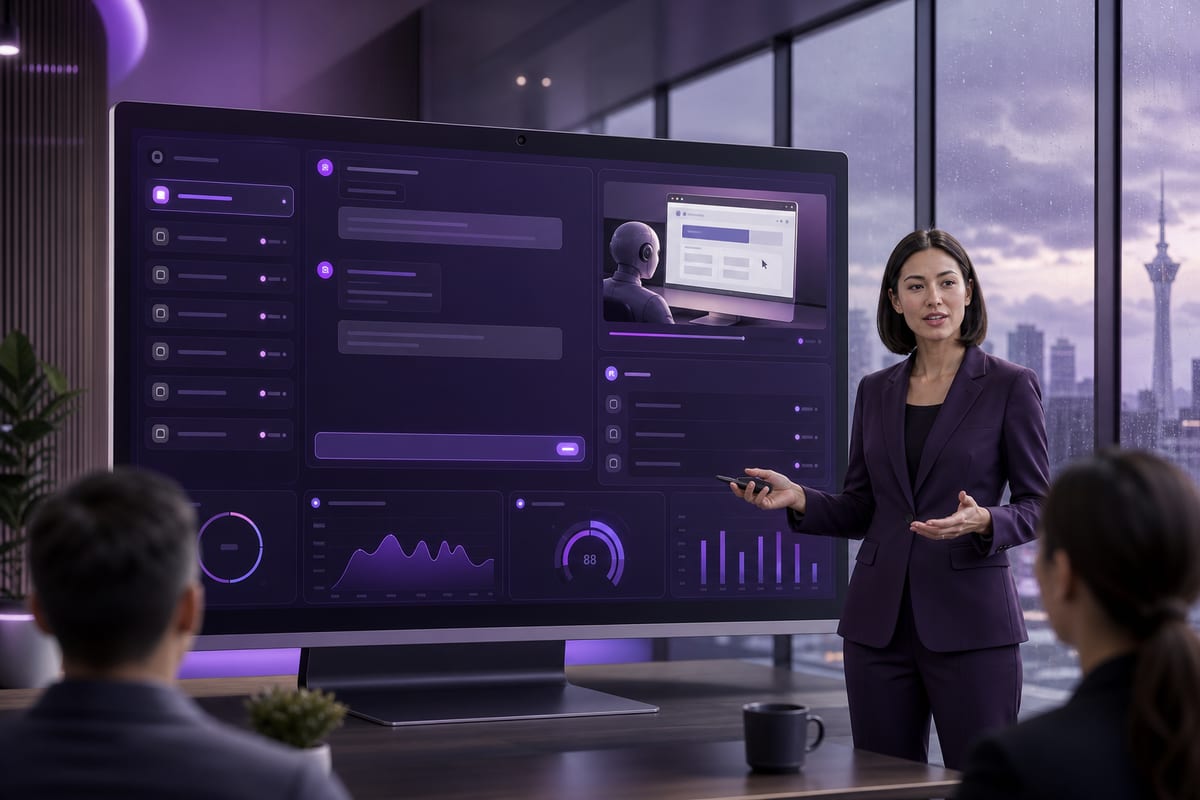
The core of Hark Pro is a model trained for computer use and intended to act directly on the user's computer. The application opens in full screen on a homepage with a central chat dialogue and a feed of possible actions, enriched with "panels" that serve as mini thematic dashboards. The background adapts to local weather and time. Beyond chatbot-like responses, the service aims for concrete support of digital tasks.
Demonstrations, Use Cases, and the Ambition to Replace the Computer
During a presentation, the assistant proposed handling expenses to approve, email responses, a meeting, and even booking a flight, although the latter had already been resolved according to Abidur Chowdhury. He also cites a case where the agent identified the need to renew a registration at the California DMV and completed the process online. The design lead asserts that Hark Pro seeks to completely replace the computer and claims better results than the competition, while admitting it might be slower than Muse, but operates end-to-end without requiring manual intervention. Identifying truly useful tasks to delegate remains a challenge for users. Abidur Chowdhury finally highlights the paradox of still having to type on a keyboard in a chatbot, a future of computing that still resembles a terminal.
Launch, Access Model, and Product Direction
Hark has launched Hark Pro with free access complemented by a subscription plan for heavy users. The startup, founded less than a year ago by Brett Adcock, has a clear product direction: to design a user interface for AI that resembles an operating system for future AI computers, rather than an isolated application. The company presents this direction as its goal, distinct from ambitions such as the pursuit of AGI.
Brief IA — L'actualité IA en français
L'essentiel de l'actualité de l'intelligence artificielle, décrypté et expliqué chaque jour.