Hollywood and AI: Joe Russo's Prophecy Goes Unheeded
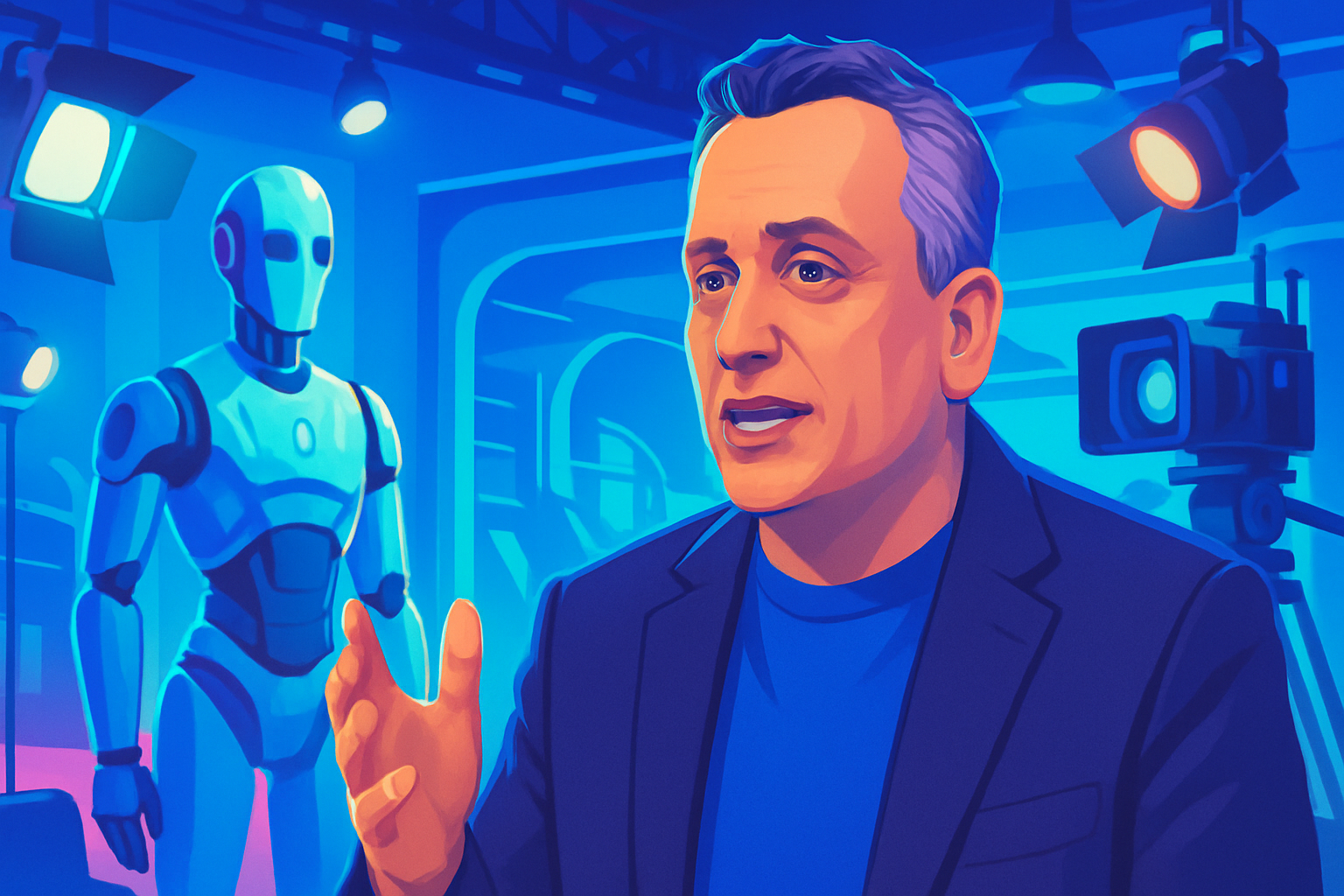
Joe Russo and His Vision of AI in Cinema
In April 2023, Joe Russo, director of the last two Avengers films and a board member of several AI companies, made a bold statement during an interview with Collider. He predicted that a film entirely generated by artificial intelligence would be released within two years. This announcement coincided with a massive strike that paralyzed Hollywood for five months, resulting in estimated losses of $5 billion according to the Milken Institute. However, Russo did not mention his financial ties to several AI companies during this announcement, raising questions about his motivations.
The Current Technological Reality
Since this prediction, no film entirely created by AI has been produced. Although tools like Google’s Veo 3.1 exist, they currently only allow for the creation of short video clips. The current technology does not yet enable the generation of a full-length feature film, which calls into question the validity of Russo's statements. His prediction seems more driven by his financial interests than by a rigorous technical analysis.
A Controversial Vision of Cinema
Russo also expressed his vision of a future where one could ask an AI to create a film with photorealistic avatars, for example, featuring Marilyn Monroe. He mentioned the possibility of creating a romantic comedy with his own avatar alongside that of the Hollywood icon. This approach reduces cinema to a mere customizable product, neglecting the artistic intention that characterizes the seventh art. Russo argued that AI would allow for the "democratization of storytelling," a debatable claim coming from a multimillionaire who has built his career on colossal budgets.
Le brief IA que les pros lisent chaque soir
Les 7 actus IA du jour, décryptées en 5 min. Gratuit.
Inclus dès l'inscription : notre sélection des meilleurs guides & comparatifs IA.
Choisissez votre rythme
Gratuit · Pas de spam · Désabonnement en 1 clic
Although Russo has not yet made a film entirely by AI, he has utilized this technology in his project "The Electric State," set for release in 2025. This film, with a budget of $320 million, has received negative feedback from both audiences and critics. Russo defended his use of AI by claiming that the criticism stems from a misunderstanding of the technology.
The Slow Evolution of Cinema
Historically, cinema has integrated new technologies at a measured pace. The advent of sound in 1927, color in the 1930s, and digital special effects with "Star Wars" in 1977 and "Jurassic Park" in 1993 transformed cinema without replacing human creativity. AI could transform cinema, but it is unlikely to replace the artist behind the camera. Cinema evolves slowly with technology, and while AI will bring changes, it can never replace artistic intention.
Brief IA — L'actualité IA en français
L'essentiel de l'actualité de l'intelligence artificielle, décrypté et expliqué chaque jour.