Hollywood: Unions Push for Concrete AI Safeguards
Le brief IA que les pros lisent chaque soir
Les 7 actus IA du jour, décryptées en 5 min. Gratuit.
Inclus dès l'inscription : notre sélection des meilleurs guides & comparatifs IA.
Choisis ton rythme
Gratuit · Pas de spam · Désabonnement en 1 clic
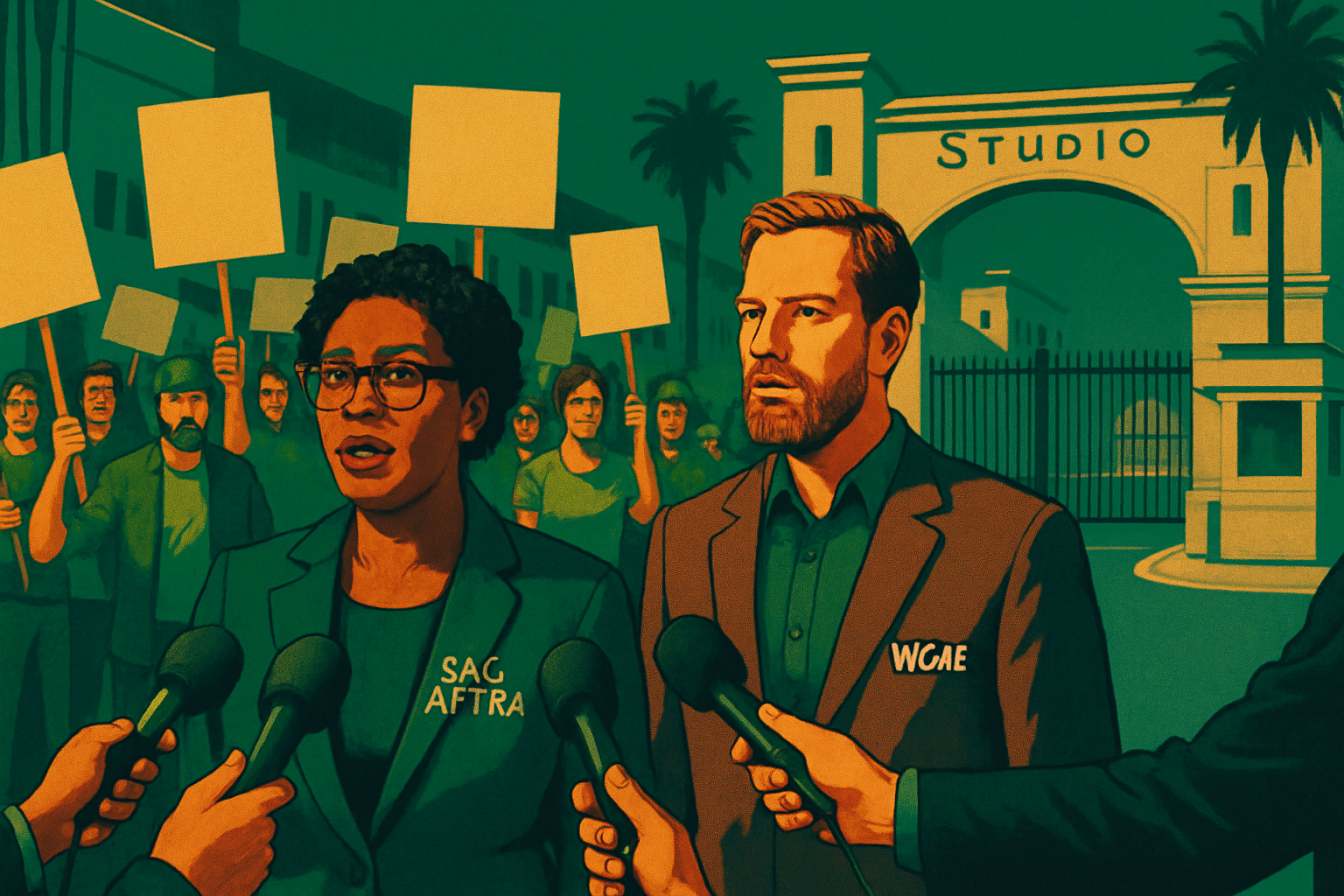
Two major unions, SAG-AFTRA and WGAE, outline their response to AI: contractual clauses, regulation, and corporate accountability. They consider some extinction alerts to be excessive while pointing to immediate damages such as 148 days of strikes in 2023 to secure guarantees and the requirement for consent and compensation for AI-generated actor replicas.
WGAE Targets Regulation and Remedies for Tangible Damages
Sam Wheeler, executive director of WGAE, criticizes the attitude of "tech oligarchs," whom he deems reckless and dishonest, and finds it hard to take their alerts about AI seriously. He reminds that the union has long warned about the existential risks of unregulated AI for workers, democracy, and the world. According to Wheeler, WGAE members negotiated significant protections in their contracts, and in 2023, writers went on strike for 148 days before securing guarantees from studios. However, he believes that collective bargaining does not replace public regulation and praises the actions of states like New York in the absence of federal initiative. Wheeler cites several harms exacerbated by AI, including worker disenchantment, the degradation of the Internet, misinformation, and rising energy costs. He urges policymakers not to be swayed by the doomsday rhetoric of AI companies, asserting that these damages are the result of human choices. For WGAE, the best way to guard against the worst scenarios is to address these concrete harms and hold AI companies and their leaders accountable.
SAG-AFTRA Calls for Safeguards and Early Public Messaging
Duncan Crabtree-Ireland, chief negotiator for SAG-AFTRA, explains that the union identified the potential impact of AI on its members' earnings early on and chose to speak out quickly to influence opinion in Hollywood. He states that SAG-AFTRA has secured significant safeguards governing the use of AI by major employers in the industry, rules that do not directly concern OpenAI, Anthropic, or Google, but apply to American companies producing professional content. Convincing the public of the reality of AI-related risks was a central goal during the strike vote, with a clear message about the stakes and ways to avoid the worst scenarios. Crabtree-Ireland believes that without this strategy, the AMPTP might not have accepted principles such as the obligation to seek permission and compensate actors for the use of their AI-generated replicas. According to him, the absence of such principles would have increased the economic incentive to replace human performances and accelerated digital replication, making workers' situations more precarious today. While he considers societal concerns about AI legitimate, he believes that some extinction warnings may be exaggerated and that doomerism often serves to attract attention. Jacob Coxon's departure from Anthropic caught his attention, but he remains uncertain about warnings issued by leaders or billionaires, while acknowledging that Coxon managed to resonate with the public.
Researchers and AI Leaders Call for a Slowdown, Trump Rejects
Jacob Coxon's departure from Anthropic has prompted other researchers to call for stricter safety protocols for AI. Meanwhile, leaders from Anthropic, OpenAI, Google DeepMind, and X have urged a slowdown in AI development across the industry. Donald Trump labeled these concerns as overreactions, while other American politicians have felt pressure to act legislatively. Evan Hubinger, head of alignment at Anthropic, stated that the technology could "kill all humans" in the next decade, and Coxon left Anthropic due to his concerns about AI.
In Audiovisual, AI Advances Despite Warnings
The AI tools used in entertainment differ from the systems that have triggered recent apocalyptic alerts and do not seem to present the same level of existential risk. However, models capable of generating digital replicas of actors and mimicking traditional directing tools threaten certain jobs. In 2023, Hollywood unions advocated for more protections and oversight, but this did not prevent the industry from adopting AI. These safeguards now provide workers with means to defend themselves when they believe AI is being used to their detriment. Several major studios, including Disney, Netflix, Amazon, and Lionsgate, did not respond to a request for comment on these warnings. Additionally, industry professional groups are urging the public to focus on current issues, while tech sector players warn about AI's potential to destroy humanity.
Brief IA — L'actualité IA en français
L'essentiel de l'actualité de l'intelligence artificielle, décrypté et expliqué chaque jour.