HP Announces Nearly 60% of AI PCs Among Its Shipments
HP announced on November 24 that AI PCs accounted for nearly 60% of its PC shipments in the fourth fiscal quarter, which ended on October 31. This proportion does not measure their arrival at end users or the usage of their AI capabilities. For companies renewing their laptops, hardware needs must also be examined as memory and storage increasingly weigh on costs.
Component Costs and Points to Check in Quotes
HP's Chief Financial Officer, Karen Parkhill, estimates that the combined share of storage and memory in PC component costs was nearly 40% at the close of the fourth quarter. She indicates a proportion of 15% to 18% at the beginning of fiscal year 2026. For 2027, she anticipates further increases, but at a slower pace. Micron, for its part, expects that shortages affecting these components will worsen in 2027 and 2028.
HP is working on less expensive designs and seeking competitive sourcing conditions to cope with this pressure. However, the cost of components alone does not determine the price paid by the buyer. In a written quote, the minimum RAM and SSD capacities per job should be specified, along with the exact reference, validity period, delivery time, and allowed replacements.
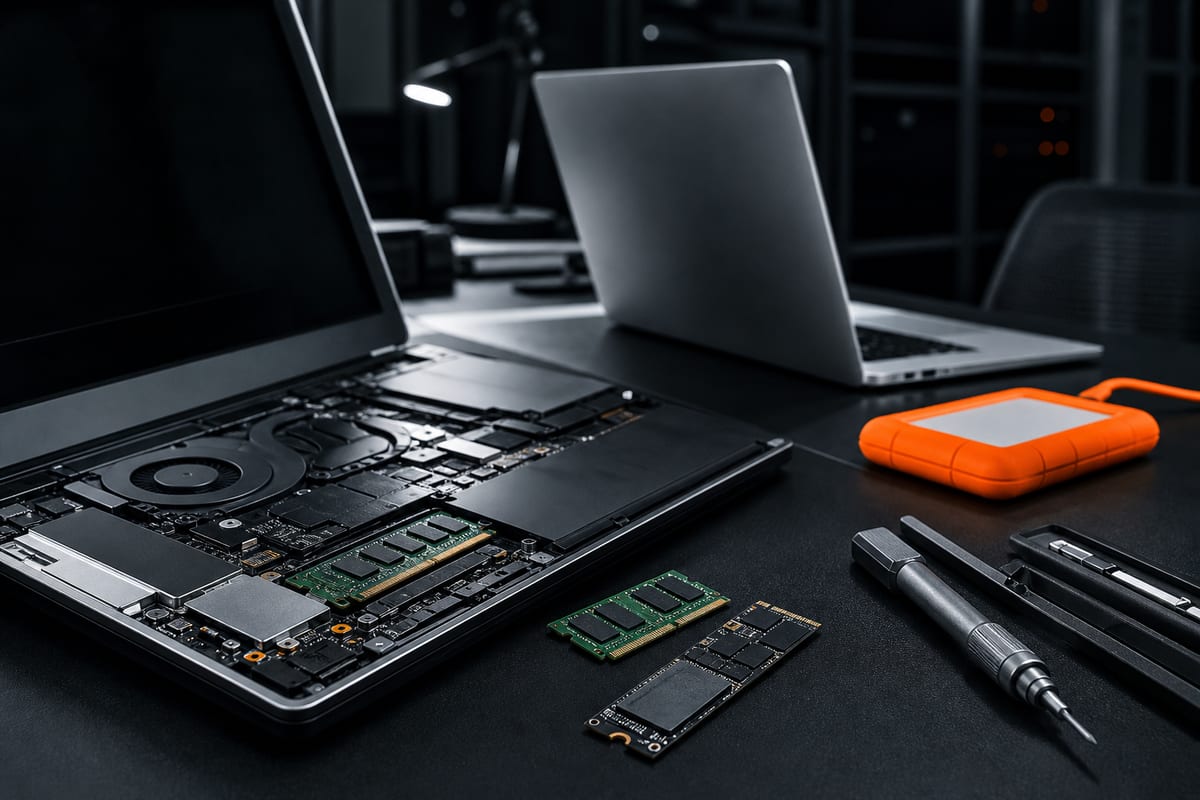
Verification should also focus on the possibility of replacing RAM, rather than just its capacity: it may be soldered. Any surcharges charged for this memory should also be clarified. Another request to the supplier is to check if an accepted replacement can arrive faster, without additional cost.
Testing Configurations Before Ordering
The decision between a standard laptop and a more powerful machine requires identifying employees likely to use locally executed AI functions, along with their daily memory and storage needs. A model run on the device may require more RAM or a dedicated graphics processor, depending on the software and model chosen. Microsoft's Copilot+ designation sets its own thresholds: a neural processing unit, or NPU, reaching at least 40 trillion operations per second, at least 16 GB of RAM, and at least 256 GB of storage.
The AI brief the pros read every evening
The 7 best AI stories, the essentials in 5 min. Free.
Included when you join: our pick of the best AI guides & comparisons.
Choose your rhythm
Free · No spam · Unsubscribe in 1 click
Before placing an order, comparing quotes should be accompanied by testing the proposed configurations. For the standard machine, a representative day may include a video conference, the tabs typically open in the browser, and large spreadsheets, without disabling usual cybersecurity protections. When memory is limited under Windows, the Task Manager can help observe tabs that reload or delays when switching between applications.
The AI test should target a specific function, with the Windows image and company policies. When it relies on Copilot+, compatibility must be verified on the exact configuration. If working offline is a requirement, a test after setup should ensure that the task completes offline with acceptable speed and quality. These results, compared with price discrepancies, can guide the allocation of more powerful machines according to job roles.
Revenues Grow Despite Lower Volumes
In HP's accounts, the personal systems segment shows a revenue of $11.8 billion, up 14% year-over-year. However, the corresponding volumes have decreased by 29%, with a 28% drop in commercial units. Commercial revenues, on the other hand, have increased by 23%. HP explains this rise due to higher prices and a greater contribution from premium products and services.
The proportion of AI PCs was 46% in the third fiscal quarter. HP uses its own category to account for these machines. Shipping data does not reveal the number of devices that have actually reached end users, nor how frequently their integrated AI hardware is utilized.
Brief AI — AI news in French
The essentials of artificial intelligence news, decoded and explained every day.