HP Bets on AI PCs Amid Expected Market Decline
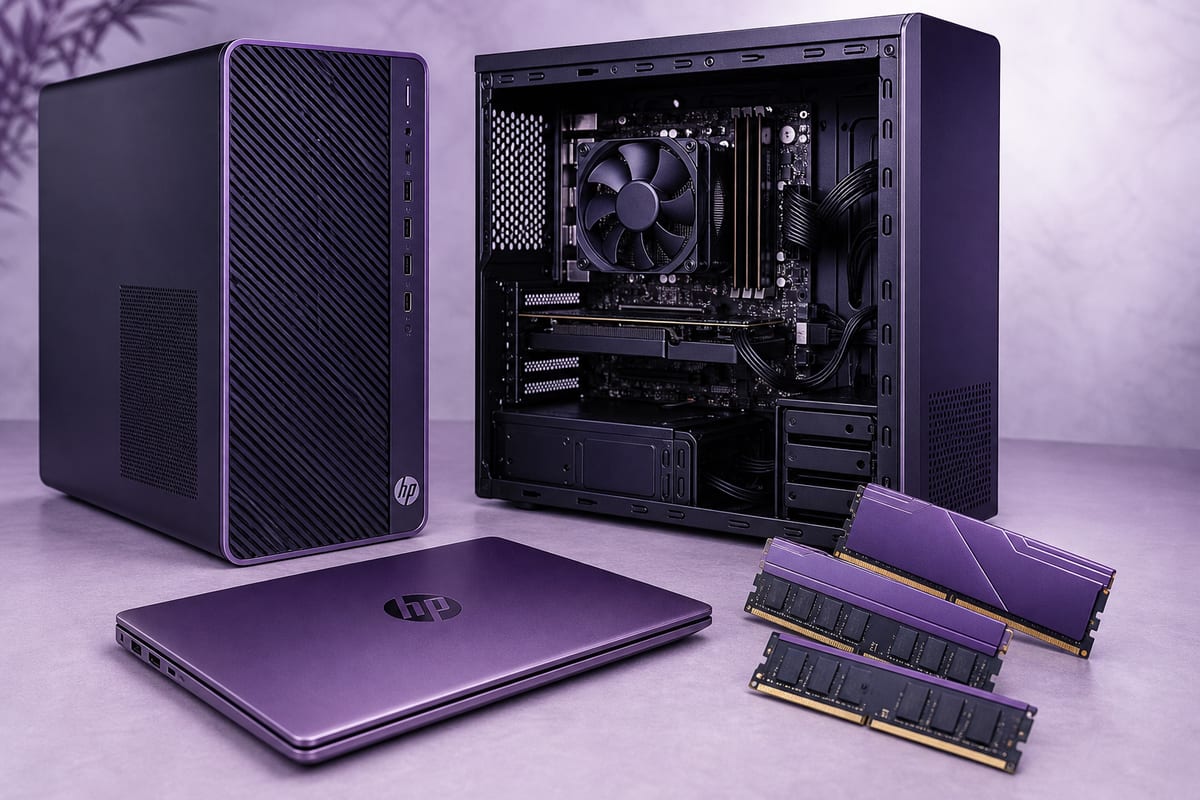
HP is betting on premium PCs and AI-enabled devices to gain market share, as it anticipates a contraction in the PC market by 2027 due to the memory chip crisis. The company expects a decline ranging from the high end of the range to a low double-digit figure.
HP anticipates even more expensive components
In February, HP assessed memory and storage to account for nearly 40% of the material cost of a PC, compared to 15 to 18% at the beginning of the year. The company's CFO, Karen Parkhill, now refuses to update this proportion, deeming it less relevant given the more moderate cost curves and rapidly changing production composition. However, she does foresee further increases in memory and storage costs, albeit at a slower pace than during the previous fiscal year. Processors are also expected to become more expensive, though to a lesser extent than the increases observed for memory and storage; these changes are already factored into the financial forecasts, she assures.
HP is entering long-term agreements with memory manufacturers to secure its supplies. According to Nikkei Asia, the company is also purchasing limited volumes from the Chinese firm ChangXin Memory Technologies (CXMT). When questioned about possible additional purchases in China, Karen Parkhill did not respond directly, indicating that no significant changes in suppliers are planned at this stage. She stated that HP sources globally and expressed confidence in its current partners and their ability to meet demand this year.
Le brief IA que les pros lisent chaque soir
Les 7 actus IA du jour, décryptées en 5 min. Gratuit.
Inclus dès l'inscription : notre sélection des meilleurs guides & comparatifs IA.
Choisissez votre rythme
Gratuit · Pas de spam · Désabonnement en 1 clic
HP's interim CEO, Bruce Broussard, explained that the rise in component costs has affected profitability. He also cited difficulties in pricing, particularly in the consumer market.
HP focuses on AI PCs and high-end models
AI-enabled machines accounted for nearly 60% of HP's quarterly shipments. Like its competitors, the manufacturer is prioritizing high-end models that offer high margins. Bruce Broussard aims to leverage the migration of AI processing to devices and edge infrastructures, relying on the company's products designed for demanding applications.
The executive referenced a projection from IDC: by 2030, half of the enterprise AI inference processing would be conducted on terminals or edge nodes. He emphasized that HP has shipped 500 million devices, claiming a deep understanding of their performance, security, and large-scale management.
Personal systems drive HP's sales
For the three months ending October 31, HP reported $16 billion in revenue, representing a year-over-year increase of 9.3%. For fiscal year 2026, revenues are projected to reach $60 billion, up 9.5%. Growth is driven by personal systems, with sales increasing by 14% thanks to business customers and advanced computing. Printer sales, on the other hand, showed a slight decline in activity.
Bruce Broussard believes that personal systems margins will hit their low point in the fourth quarter. He expects an improvement thereafter due to further adjustments in product design and component configuration choices. Emma Walmsley, former GSK executive and new CEO of HP, is set to join the company on January 4.
Brief IA — L'actualité IA en français
L'essentiel de l'actualité de l'intelligence artificielle, décrypté et expliqué chaque jour.