HP and OpenAI Transform Business PCs with Frontier
Le brief IA que les pros lisent chaque soir
Les 7 actus IA du jour, décryptées en 5 min. Gratuit.
Inclus dès l'inscription : notre sélection des meilleurs guides & comparatifs IA.
Choisis ton rythme
Gratuit · Pas de spam · Désabonnement en 1 clic
HP Inc. and OpenAI: A Strategic Collaboration Around AI
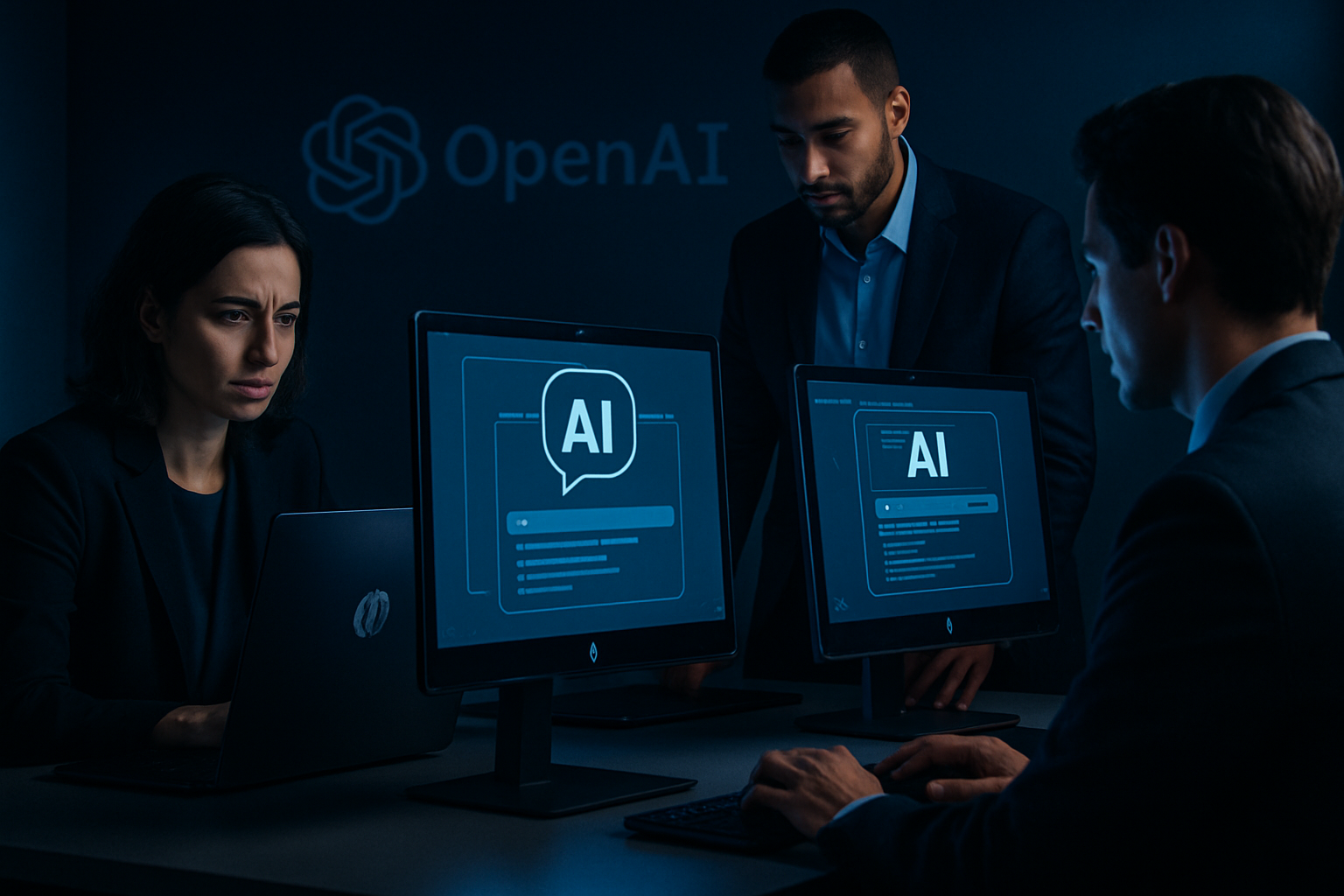
HP Inc. has announced a strategic partnership with OpenAI to deploy the Frontier platform on a global scale. The goal is ambitious: to integrate artificial intelligence at the core of professional computers, as well as in the company's services and operations. This initiative aims to transform HP's internal functioning, enhance customer experience, increase employee productivity, and optimize the management of IT environments.
The American manufacturer formalized this partnership after several months of experimentation. The integration of Frontier is not limited to a simple enhancement of products. HP also aims to offer AI solutions to its customers and internal teams. Furthermore, the company is preparing a new generation of professional PCs capable of handling AI workloads directly on the devices. This approach positions HP among the first major groups to adopt Frontier as an operational foundation for its digital transformation.
Integrating Frontier into HP's Operations
The partnership between HP Inc. and OpenAI is the result of several months of intensive testing. Since February 2026, the two companies have conducted a series of pilot projects to assess the capabilities of Frontier, both technically and securely, as well as its integration into business processes. This exploratory phase has allowed HP to realize that the platform can go beyond simple one-off experiments.
Initially, HP plans to deploy Frontier in several key areas. Solutions aimed at customers and partners are a priority, with the ambition of providing a seamless experience in-store, at retailers, as well as through chat and phone channels. The goal is to accelerate responses, simplify recurring tasks, and reduce processing times for requests.
HP also intends to leverage AI to analyze telemetry data collected through its Workforce Experience Platform (WXP), in order to improve employee productivity and accelerate software development. According to HP, this will enable the connection of various company systems around a single layer of AI, thus avoiding the proliferation of isolated tools.
Initial feedback from the pilot projects is promising. OpenAI reports that some HP engineers have been able to automate the processing of dozens of software projects. Cybersecurity teams have also managed to reduce correction tasks that previously took several weeks down to just one day. Although these results need to be confirmed on a larger scale, they illustrate the shared commitment of both partners to transform one-off gains into standardized processes.
Towards AI-Optimized Professional PCs
Regarding hardware strategy, HP Inc. believes that AI should no longer be confined to the cloud but should also be executed directly on the devices used daily by employees. Thus, the manufacturer is developing a new generation of devices that integrate intelligent agents into existing workflows.
For tasks requiring continuous inference, HP plans to offer equipment equipped with dedicated hardware components capable of managing these workloads continuously, without relying exclusively on remote infrastructures. Companies are increasingly seeking to reconcile performance, responsiveness, security, and data control.
In this new architecture, the WXP platform plays a central role as the entry point for this layer of AI. It is already used to manage PCs, workstations, printers, and collaborative equipment. HP highlights WXP's recognition in Gartner's 2026 Magic Quadrant, dedicated to managing the digital employee experience. This argument could reassure IT departments regarding governance and administration aspects of future deployments.
For businesses, this partnership between HP Inc. and OpenAI demonstrates that PC manufacturers are looking to transform their devices into platforms for executing AI. They will now be able to orchestrate agents, automate business processes, and integrate with existing systems. If this strategy delivers on its promises, Frontier could help transform professional computers from mere workstations into integral players in the digital organization of companies.
Brief IA — L'actualité IA en français
L'essentiel de l'actualité de l'intelligence artificielle, décrypté et expliqué chaque jour.