Huawei Develops 4,096-Bit AI Memory Interface
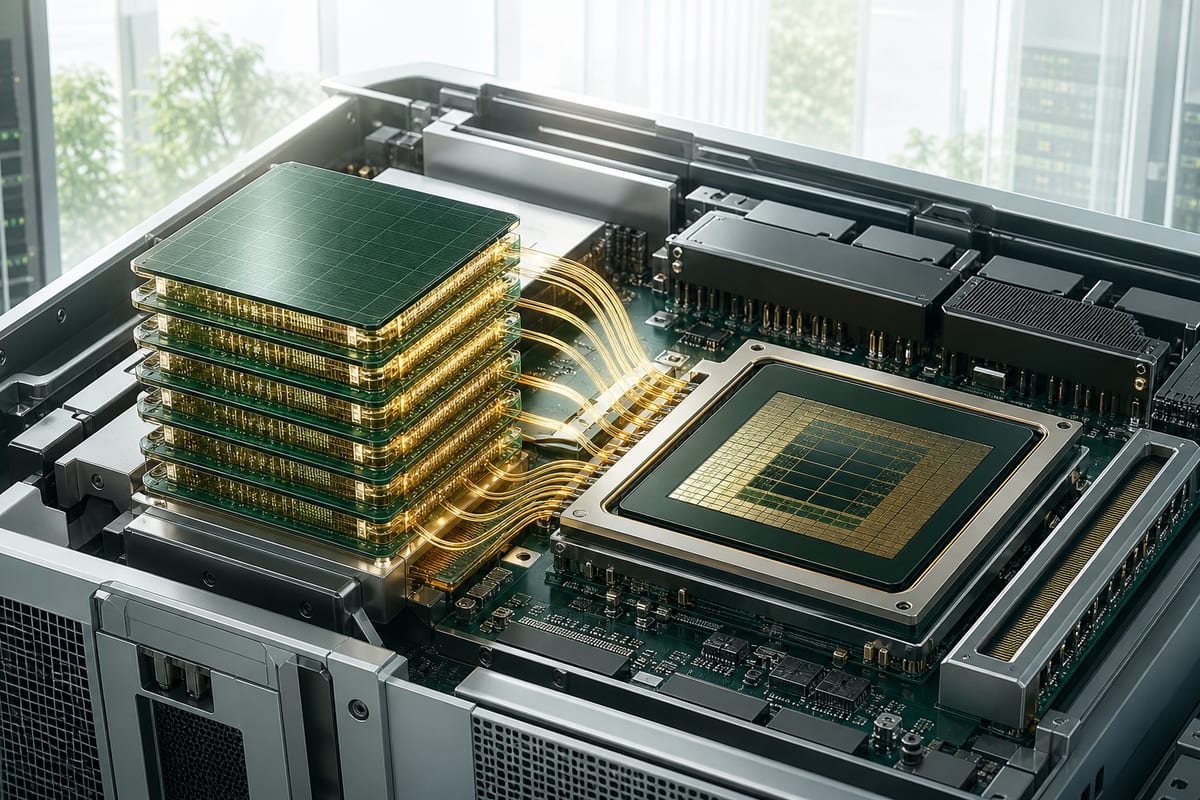
Huawei plans to detail a memory architecture for AI with a 4,096-bit interface at ISSCC 2027. Its commercial availability has not been demonstrated, as U.S. restrictions limit Chinese access to advanced memory supplies.
Huawei Still Needs to Demonstrate Industrial Capability
The reliability of the process, industrial yields, and thermal management still need to be proven for this architecture. A high density of connections alone is not enough to establish a performance advantage in real-world usage.
Moreover, China has limited access to extreme ultraviolet lithography machines. In contrast, Samsung, SK Hynix, and Micron have years of experience in mass-producing high-performance memory.
U.S. Restrictions Limit Chinese Options
U.S. measures prohibit Samsung, SK Hynix, and Micron from supplying their HBM memory to customers based in China. This restricts the options available to Huawei and other designers of advanced accelerators. The Ascend chips represent a significant alternative to Nvidia products in the Chinese market, but their supply of sophisticated memory remains challenging.
According to reported information, Huawei has indicated to some clients that the Ascend 960DT, its upcoming accelerator, would heavily rely on memory from Samsung and SK Hynix. A Chinese HBM could mitigate this dependence; its volume production would also help companies purchasing their AI systems in China to rely less on restricted imports. CXMT is also exploring other memory architectures in a sector where Chinese manufacturers are seeking to close the gap.
The AI brief the pros read every evening
The 7 best AI stories, the essentials in 5 min. Free.
Included when you join: our pick of the best AI guides & comparisons.
Choose your rhythm
Free · No spam · Unsubscribe in 1 click
Huawei Plans 64 Channels for Its Memory
The recently unveiled design falls under HBM, high-bandwidth memory. It distributes 4,096 data pins across 64 channels and includes a hybrid bonding assembly on five layers, as well as integrated controllers. These choices could accelerate data flow between memory and AI processors. The pin density would be twice that of the products currently mass-produced by Samsung Electronics and SK Hynix.
The technical event is scheduled in San Francisco during the IEEE International Solid-State Circuits Conference from February 14 to 18, 2027. For the infrastructure teams, metrics on throughput, available capacity, and power requirements will be the data to examine. These would help assess the feeding speed of an accelerator, the possible processing tasks, and the role of this memory in a server's energy envelope.
Buyers Will Need to Verify Compatible Systems
Integration will also depend on the compatibility of software and hardware with this custom architecture. An interface that deviates from standards often requires closer design collaboration between these two components. Therefore, usage may only pertain to certain Huawei server cabinets, without offering a straightforward upgrade path for already installed clusters.
The technical presentation could assist infrastructure managers in selecting the equipment to monitor. However, before any deployment commitment, they will need a precisely identified accelerator or server configuration, along with a confirmed delivery schedule.
Brief AI — AI news in French
The essentials of artificial intelligence news, decoded and explained every day.