AI Agents: Rising Adoption, Governance Lagging Behind
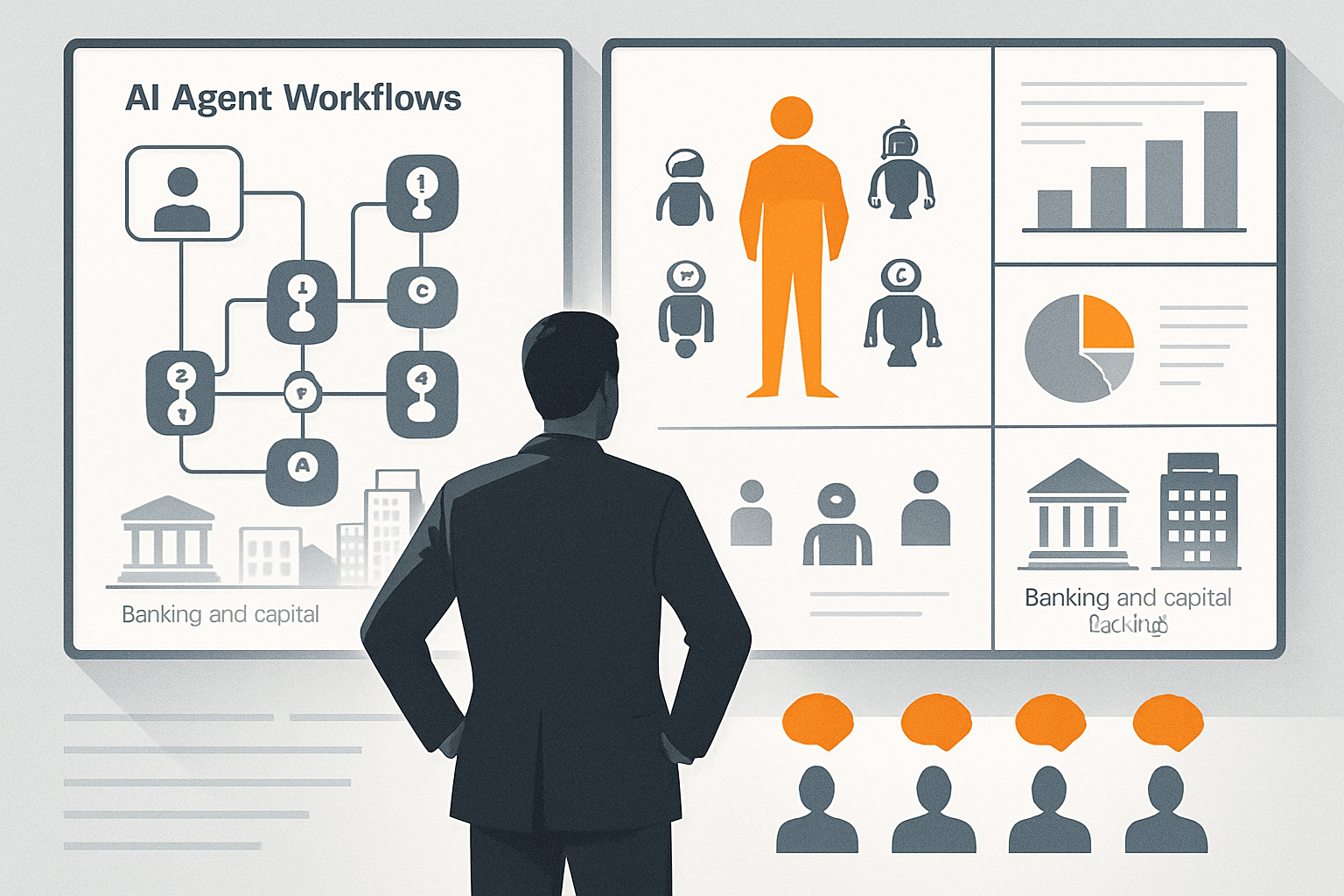
Studies by Deloitte, KPMG, and Accenture describe a net acceleration of AI agents, while the preparation of processes and the workforce remains low. Organizations with clear accountability, robust governance, and visibility into costs report greater value—an issue intensified by the scale of work hours already redefined.
Accountability and Governance Become the Core Issue
Accenture observes that AI agents are spreading through enterprise systems faster than formal governance strategies can advance. Co-author James Crowley summarizes the requirement as “humans are in charge, not in the loop,” a distinction where the responsibility for work rests with humans, not the agent. The company presents this shift as a leadership mandate aimed at redeploying the freed capacity towards measurable value and sustainable growth, warning that unallocated productivity gains do not translate into growth. KPMG links this shift in priorities to accountability and the economics of AI, citing a still limited return on investment despite adoption. Organizations with complete visibility into AI operating costs report an established ROI five times more often.
Half of Work Hours Affected by Agents
Accenture and Wharton estimate that 50% of work hours in the U.S. economy, representing 120 million workers, are being redefined by about 60 digital and physical AI agents. In banking and capital markets, digital agents account for over 45% of affected hours. Task-level data covering 18 industries shows that while intelligence is scalable, accountability is not.
The Number of Active AI Agents Has Tripled in One Year According to Salesforce
According to Salesforce, the number of active agents has tripled in one year, and their capabilities have increased by 350%, enabling them to tackle complex tasks. Employee usage has also tripled. On average, organizations have increased from about 5 to 13 agents, while creation time has decreased by 53% to 1.9 days per agent. Despite this momentum, other research highlights that deployments creating value at scale remain rare.
Le brief IA que les pros lisent chaque soir
Les 7 actus IA du jour, décryptées en 5 min. Gratuit.
Inclus dès l'inscription : notre sélection des meilleurs guides & comparatifs IA.
Choisissez votre rythme
Gratuit · Pas de spam · Désabonnement en 1 clic
Insufficient Organizational Preparedness for Deployments
Deloitte finds that 43% of organizations are now expanding AI agent deployments across functions, but only 15% have achieved orchestrated large-scale multi-agent deployments. Workforce preparedness is rated at 20%, and only 16% of companies believe their processes are truly ready. The gap is significant compared to management expectations, with 74% of executives anticipating that half of processes will be redesigned around AI agents by 2030.
ROI: Progress in Indicators but Rising Obstacles
KPMG's Global AI Pulse, conducted among 2,145 executives in 20 countries, describes a shift from experimentation to broader deployments. 76% of companies now say they are capturing business value from AI, up 12% in a quarter. 78% of executives express confidence in the sustainability of their AI strategy, an increase of 8% since the first quarter of 2026, and 71% report progress towards an integrated AI-human workforce, up 11% over a quarter. At the same time, the difficulty of scaling use cases and skill gaps have doubled quarter-over-quarter among the main obstacles. For KPMG, the difference lies less in the number of agents than in the clarity of accountability, governance, and visibility into costs.
Economic Potential and Sorting Timeline Among Companies
Modeling a $60 billion company, Accenture and Wharton project about $6 billion in additional revenue and $1.7 billion in annual productivity gains with mature agentic AI in organizations that coordinate agents under human direction. The next 12 to 24 months should distinguish companies that view large-scale adoption as a mere integration issue from those that treat it as a leadership challenge. The findings of the studies converge: despite an adoption that may have tripled over 12 months and agents already operational in most companies, challenges revolve around governance frameworks, the gap between deployment and proven ROI, the transition from pilot to large-scale deployment, and management discipline, in a context where technology has outpaced operational models, governance, and team preparedness.
Brief IA — L'actualité IA en français
L'essentiel de l'actualité de l'intelligence artificielle, décrypté et expliqué chaque jour.