Agentic AI: Countering Prompt Injection and Tool Abuse
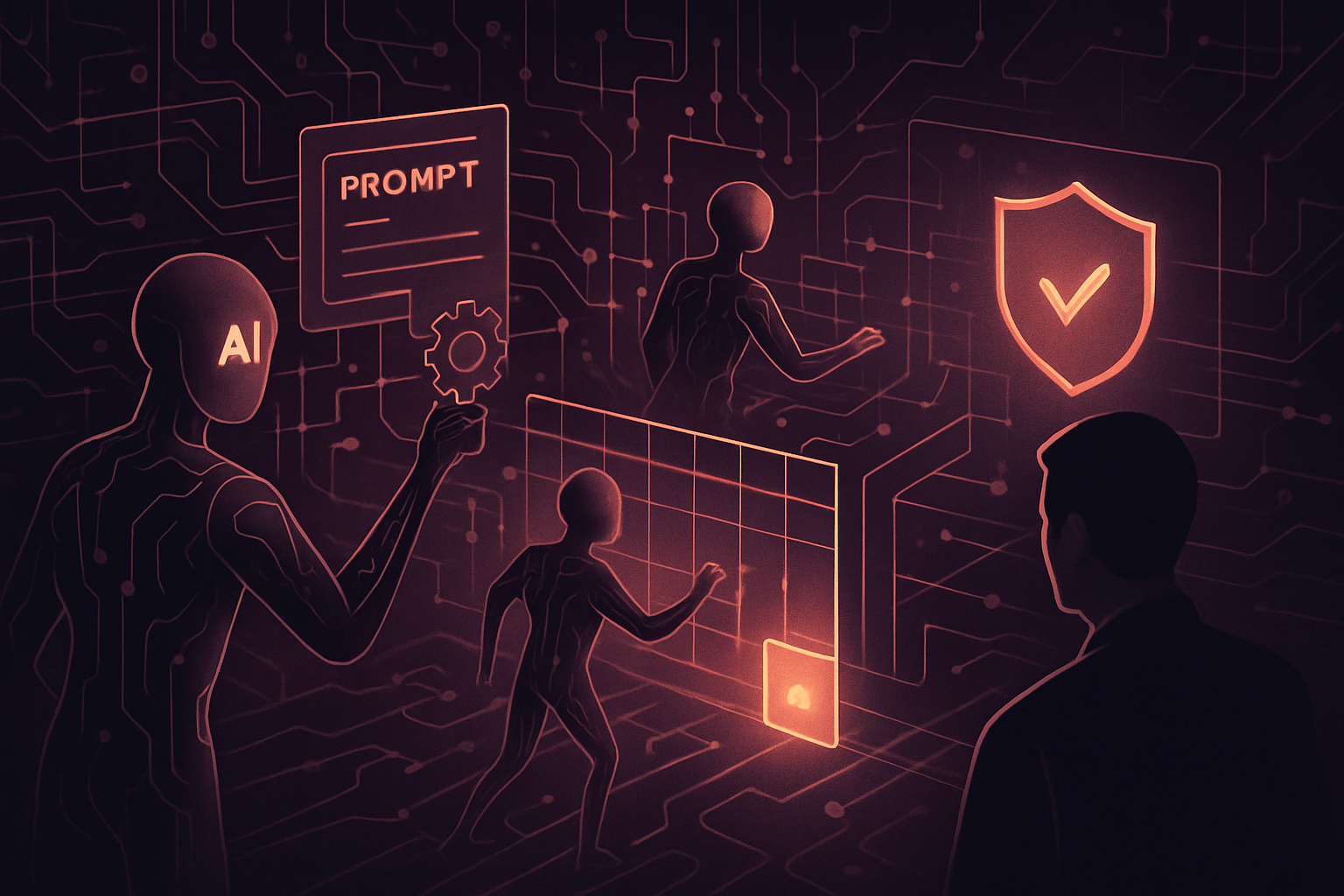
Understanding the Threats of Agentic AI: Prompt Injection and Tool Abuse
The evolution of agentic AI systems, which allows them to act autonomously, has introduced new vulnerabilities. Among these, prompt injection and tool abuse stand out as major threats. These risks require specific defense strategies to ensure the security and integrity of the systems.
The Threats: Prompt Injection and Tool Abuse
Prompt Injection
Prompt injection is a technique that is not limited to agentic AI systems but is also present in conversational AI applications. It occurs when unreliable inputs are interpreted as instructions by the language model, thereby disrupting its expected behavior. In the context of agentic AI, this phenomenon is often referred to as "agent goal hijacking." Attackers can insert malicious commands into various mediums, such as emails or web pages, that the agent processes. Due to the difficulty language models have in distinguishing legitimate instructions from malicious ones, it is possible for an attacker to divert the agent from its original mission.
Tool Abuse
Also known as the "confused deputy vulnerability," this threat arises when a trusted system with elevated privileges is manipulated by a less privileged user to exploit its permissions. Agents, which rely on various internal and external tools to perform their tasks, may inadvertently use legitimate permissions to carry out harmful or unauthorized actions. The consequences can be severe, ranging from the disclosure of sensitive information to cascading failures across multiple interconnected applications.
Defense Strategies
Traditional security protocols are insufficient to effectively protect entities with autonomous reasoning and action capabilities. Therefore, it is crucial to develop new architectures to regulate not only the behavior of agents but also the overall permissions of the system.
- Application of a strict principle of least privilege
This approach involves limiting the capabilities and permissions of agents to only what is necessary. For example, an agent tasked with reading customer support tickets should not have access to modify production databases. To implement this strategy, it is recommended to use identity and access management (IAM) mechanisms to restrict access to datasets, APIs, and operations, ideally separating responsibilities among specialized agents to minimize vulnerability risks.
Le brief IA que les pros lisent chaque soir
Les 7 actus IA du jour, décryptées en 5 min. Gratuit.
Inclus dès l'inscription : notre sélection des meilleurs guides & comparatifs IA.
Choisissez votre rythme
Gratuit · Pas de spam · Désabonnement en 1 clic
-
Implementation of open-source guardrails
Solutions like NVIDIA NeMo Guardrails and Meta Llama Guard are examples of open-source guardrails that help strengthen security protocols and reduce exposure to threats. However, it is important to note that these guardrails are only one layer of defense and must be complemented by other security mechanisms to effectively prevent issues like prompt injection. -
Sandboxing execution environments
Using Docker containers and Wasm sandboxes is an effective method to isolate code generated by agents before ensuring there are no potential compromises. While this approach is effective against the execution of insecure code, additional measures are needed to secure actions involving external APIs or enterprise systems. -
Designing human-in-the-loop (HITL) checkpoints
Simplicity can often be the most effective strategy, as demonstrated by the HITL approach. This involves allowing agents to operate autonomously for low-stakes tasks, such as retrieving and summarizing information, while requiring explicit human verification for high-stakes or irreversible actions, such as financial transactions. -
Monitoring and auditing agent activity
To ensure security, AI agents must be treated as privileged software entities rather than mere intelligent assistants. This involves logging prompts, permission requests, approval decisions, tool calls, and external actions. Comprehensive monitoring is essential to detect vulnerabilities and threats, such as prompt injection attempts, undesirable tool usage, and other policy violations.
Final Thoughts: Future Perspectives
As agentic AI systems continue to gain sophistication, organizations must remain vigilant against emerging risks such as prompt injection and tool abuse. This article has highlighted these critical security concerns and presented several essential strategies for confidently deploying autonomous systems powered by AI agents in the real world, while ensuring productivity and security.
Brief IA — L'actualité IA en français
L'essentiel de l'actualité de l'intelligence artificielle, décrypté et expliqué chaque jour.