AI in Business: 42% of Projects Halted Due to Lack of ROI
The proportion of companies abandoning the majority of their AI initiatives has risen from 17% to 42% in one year (S&P Global, 2025), while 46% of large groups have no framework to measure the return on investment (Wavestone, 2025). In France, 61% of employees using AI at work rely on public tools, compared to 19% through internal solutions (KPMG, 2026). Geoffrey Harrazi, co-founder of Idun, argues that the priority is shifting towards usage-driven management to industrialize what works and stop what doesn’t.
Real usage guides choices, much more than the quantity of tools
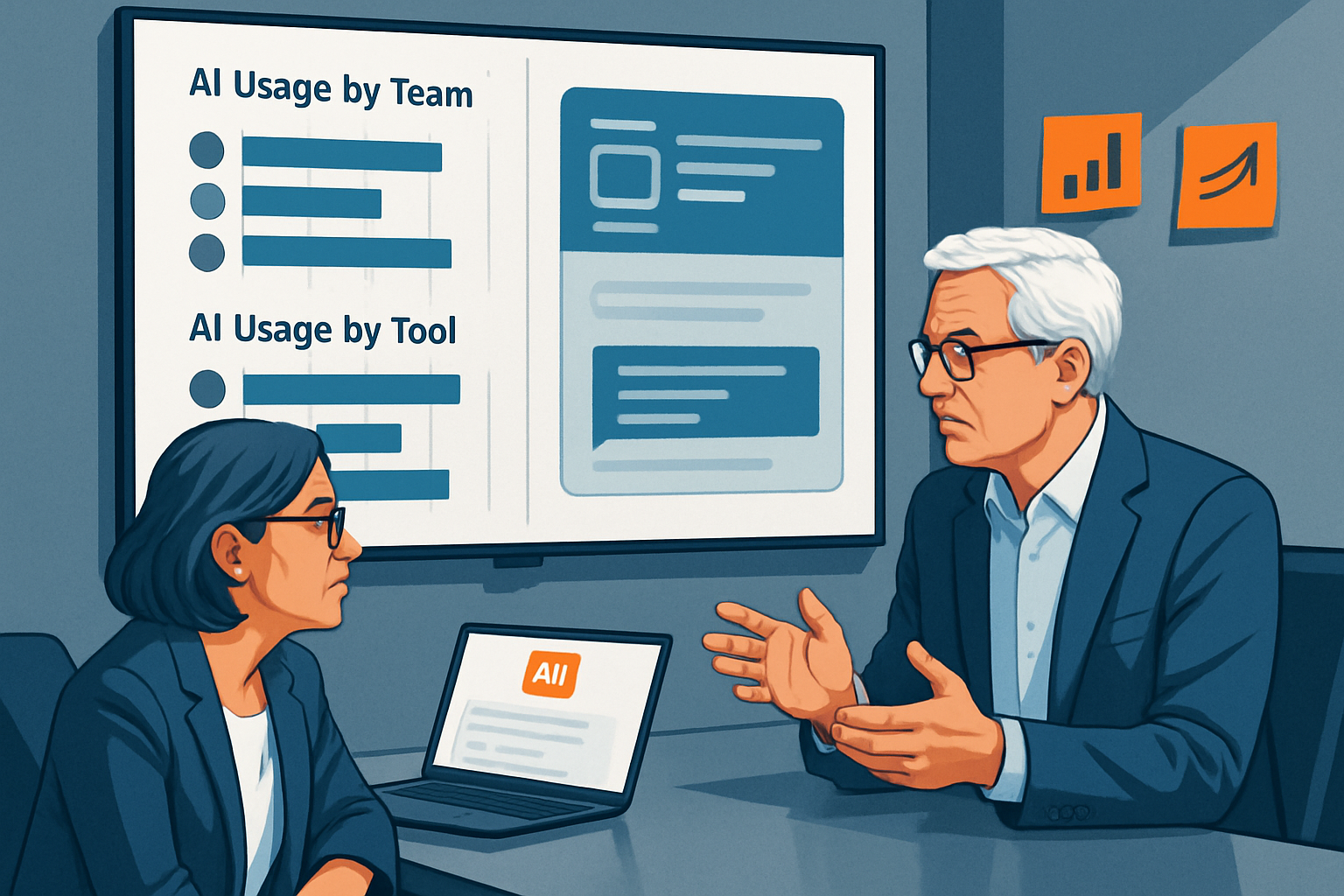
In France, 61% of employees using AI at work resort to public tools, compared to 19% for internal solutions (KPMG, 2026). In an asset management company cited by Geoffrey Harrazi, an internal GPT is used daily by 90% of employees, alongside automated workflows and public self-service tools. However, no one knows precisely who is doing what with which tool, the associated costs, or what should be industrialized. Geoffrey Harrazi recommends managing by observing actual usage, beyond logs and questionnaires, by identifying which teams use what, for what purposes, and when drop-offs occur. This knowledge then allows for decisions on industrializing what works, rescoping what disappoints, and stopping what is useless. He believes that companies that cut back in 2027 under financial pressure will suffer their trajectory, as budgets for 2027 are already being prepared.
Significant cuts on the rise, but ROI poorly measured
The share of companies abandoning the majority of their AI initiatives has jumped from 17% to 42% in one year (S&P Global, 2025). At the same time, 46% of large groups have no framework to measure the return on investment of their AI projects (Wavestone, 2025). Geoffrey Harrazi considers the increase in abandonments to be positive for AI in business, provided that the value of projects can be assessed, and warns against "blind" cuts in the absence of measurement. He places the new phase of AI in business on the side of evaluating the created value, with a central question emerging — "what does it bring?" — rather than simply launching new use cases.
Le brief IA que les pros lisent chaque soir
Les 7 actus IA du jour, décryptées en 5 min. Gratuit.
Inclus dès l'inscription : notre sélection des meilleurs guides & comparatifs IA.
Choisissez votre rythme
Gratuit · Pas de spam · Désabonnement en 1 clic
Internal "ChatGPTs" often lag behind the market
According to Geoffrey Harrazi, in 2023 and 2024, nearly all large companies implemented an "internal ChatGPT" to reduce the risks of data leaks to public tools. Many of these offerings were limited to an LLM interface, isolated from the information system, sometimes deployed with delays of up to eighteen months, while public solutions evolved into agents capable of conducting web searches and executing tasks autonomously. In this context, shadow AI has made a strong comeback. Geoffrey Harrazi also reports situations where people feel "up to date" because the model — like Claude — has changed, without the chat interface or the operational capabilities evolving.
On the ground, projects halted due to lack of adoption and metrics
Over the course of a hundred meetings and thirty diagnostics conducted in eighteen months, Geoffrey Harrazi describes a recurring gap: adoption preceded management, with use cases piled up without usage instrumentation. In a major luxury brand, numerous agents were put into production over three years, and teams gained skills, but measuring value remained secondary. A customer review analysis agent, pushed by management, saw very little adoption: users did not understand its scope or what to do with the responses, and the project was cut due to lack of usage. Feedback mechanisms like thumbs up and a comments box were added without being genuinely utilized, which, according to Geoffrey Harrazi, prevented the identification of the reasons for failure and the rescoping of the project. He believes that the phase opening up is not "more AI," but "which AI, for whom, and does it work," after two years of widespread deployments.
Brief IA — L'actualité IA en français
L'essentiel de l'actualité de l'intelligence artificielle, décrypté et expliqué chaque jour.