AI and Patents: The Inventor Remains Human, Space Mirrors Raise Concerns
Le brief IA que les pros lisent chaque soir
Les 7 actus IA du jour, décryptées en 5 min. Gratuit.
Inclus dès l'inscription : notre sélection des meilleurs guides & comparatifs IA.
Choisis ton rythme
Gratuit · Pas de spam · Désabonnement en 1 clic
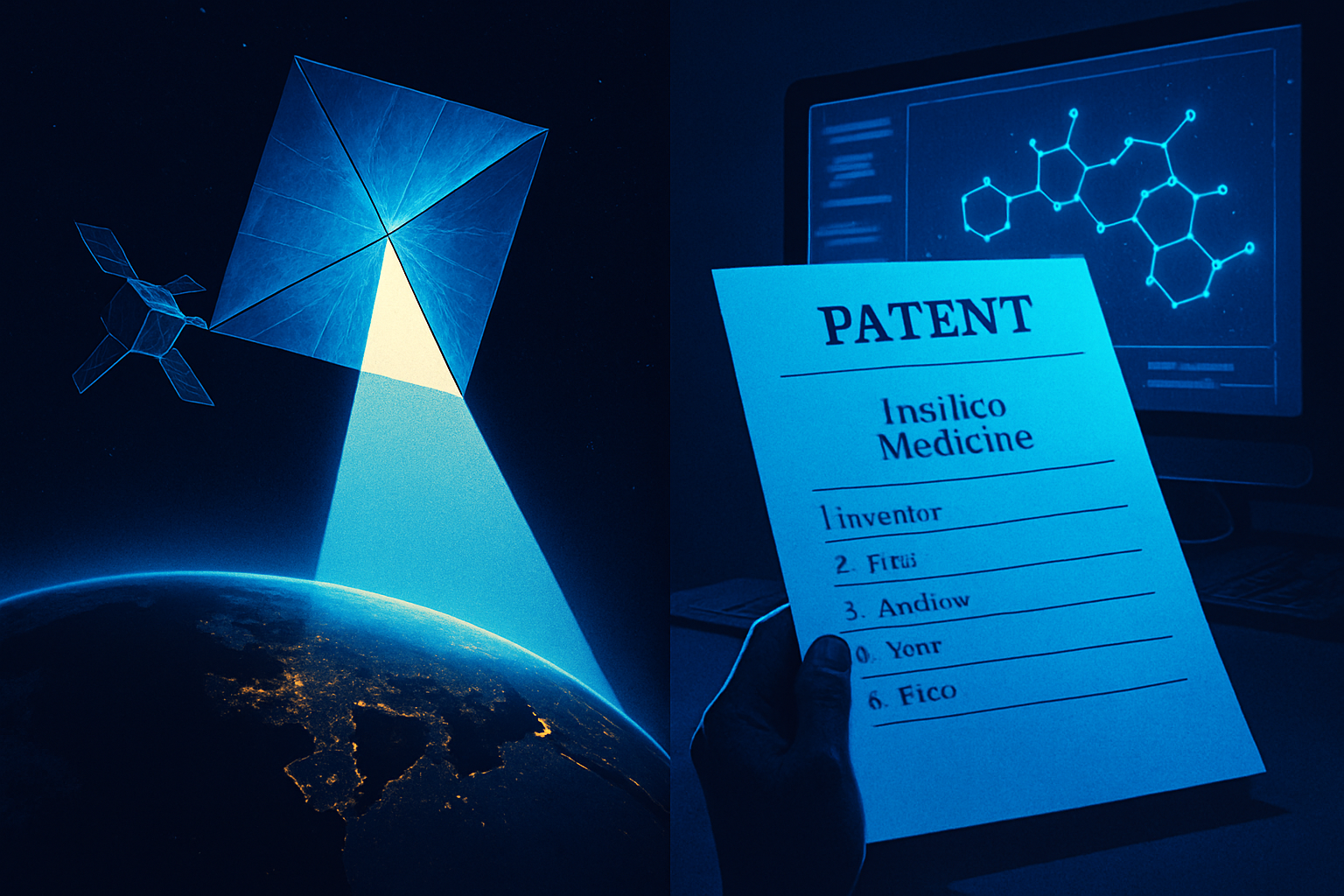
AI is already making its way into the majority of biomedical articles, while researchers still struggle to explain how these models work. In this context, Insilico Medicine claimed a molecule "discovered by" AI but patented it in the name of five humans, in accordance with current law. Meanwhile, Reflect Orbital plans to test a solar mirror in orbit this year and deploy up to 50,000 of them, a prospect that comes with alarming estimates about the brightness of the night sky.
AI Proliferates in Biomedical Publications While Remaining Opaque
About 90% of biomedical articles already show signs of AI usage, a rate much higher than previously assumed. This trend is also reflected online, where one-third of new web pages would involve AI authorship. For scientific research, some argue that AI should be evaluated based on its reasoning capabilities and not just on the amount of data processed.
At the same time, large language models remain so complex that even their creators do not fully understand them. This opacity complicates the analysis of hallucinations, the establishment of safeguards, and the trust we place in them. Researchers are now adopting methods inspired by biology or neuroscience to observe these systems and better understand their behaviors, including when they act unexpectedly.
Patents: Insilico Describes an "Inventive" AI but Lists Five Human Inventors
Insilico Medicine used computational models to propose a molecule for pulmonary fibrosis and publicly presented this discovery as the work of a generative AI. However, when filing for a patent, the company made no mention of AI and listed five individuals as inventors.
This decision aligns with the current intellectual property legislation: regardless of an automated system's contribution to a discovery, only humans can be recognized as inventors. As AI models gain the ability to design drugs, identifying the true inventor could become more complex.
Orbital Mirrors: Promises of On-Demand Light and Quantified Risks
Reflect Orbital intends to launch an experimental satellite by the end of the year, equipped with an 18-meter by 18-meter mirror, marking the first phase of an initiative that could include up to 50,000 larger satellites capable of redirecting sunlight to Earth as needed. The company cites potential applications such as extending sunlight hours to power solar panels, supporting emergency operations, and certain military uses.
However, recent research estimates that these beams could reach the brightness of 10,000 full moons and spread their light over tens of kilometers. These projections raise concerns about the darkness of the night sky, as well as potential impacts on aviation and wildlife.
Brief IA — L'actualité IA en français
L'essentiel de l'actualité de l'intelligence artificielle, décrypté et expliqué chaque jour.