AI: /loop Revolutionizes Agents with Continuous Loop Tasks
Le brief IA que les pros lisent chaque soir
Les 7 actus IA du jour, décryptées en 5 min. Gratuit.
Inclus dès l'inscription : notre sélection des meilleurs guides & comparatifs IA.
Choisis ton rythme
Gratuit · Pas de spam · Désabonnement en 1 clic
AI: /loop Revolutionizes Agents with Continuous Loop Tasks
What are Agent Loops?
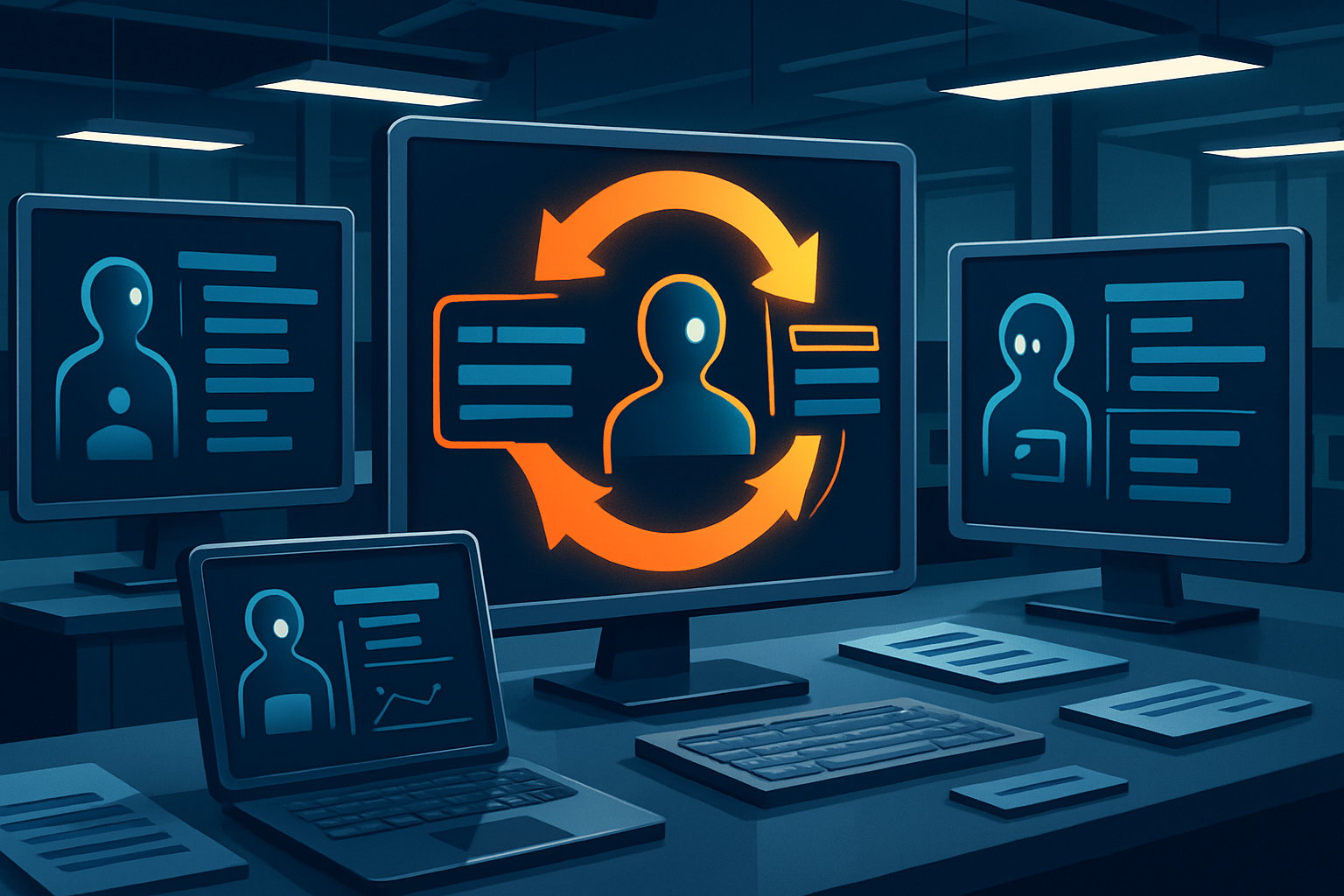
An agent loop is a repeated cycle where an AI agent observes the current context, decides on the next action, uses tools, checks the result, and continues or stops.
A basic agent loop generally follows these steps:
- Observe the context
- Plan the next action
- Use a tool or take action
- Inspect the result
- Continue, stop, or request approval
In a typical interaction with a chatbot, this loop often ends after a single response. In an agentic workflow, it can continue through multiple tool calls, turns, or scheduled executions. For example, an agent might check a pull request every 15 minutes until the continuous integration is successful, summarize the result, and suggest the next step.
Why /loop is Important Now
The main value of /loop does not lie in the fact that it repeats a prompt. Cron jobs have allowed for scheduled execution for decades. The difference is that loop-based agents can reason at each execution.
A cron job can run a script every 10 minutes. A loop agent can inspect the output, decide if the failure is intermittent, search for related logs, compare the current state with the previous execution, update a task, and write a human-readable summary.
This is a significant step in the evolution of AI assistants. We are going through three stages:
- Ask once, get a response
- The user must manage the next steps
- Ask the agent to use tools
- The user often supervises manually
- Loop Engineering
- The agent repeats the work until a stop condition is met
- Requires governance, cost control, and secure permissions
From Prompt Engineering to Loop Engineering
Prompt engineering focuses on crafting a good instruction for a single response. Loop engineering focuses on designing a repeatable agent system.
A loop engineer considers questions such as:
- What should trigger the agent?
- What tools can it use?
- What does it need to check?
- What is the stop condition?
- What actions require human approval?
Addy Osmani describes this shift as replacing manual requests with small systems that find work, assign it to agents, check outputs, and repeat. He frames loop engineering around automations, workflow trees, skills, plugins or connectors, sub-agents, and memory.
Basic Architecture of a Loop-Based Agent
A production-ready loop agent typically has the following architecture:
-
Trigger Layer
- The trigger starts the loop. It can be manual, time-based, event-based, or goal-oriented.
-
Loop Orchestrator
- The orchestrator decides what happens at each cycle. It manages the order of operations and controls whether the loop should continue.
-
Context Builder
- A loop agent needs fresh context at each execution. This may include code diffs, build logs, issue comments, client messages, etc.
-
Tool Layer
- This is where the agent takes action. Examples include searching for documentation.
-
Verifier or Judge
- The verifier checks if the loop has made progress. This can be deterministic or AI-based.
-
State Store and Memory
- Loops need memory to avoid repeating the same work blindly.
-
Human Review Layer
- The safest loop systems keep humans in charge of irreversible decisions.
Types of Agent Loops
Agent loops can be grouped into four major types:
- The agent completes the response
- Goal achieved or max turns
- Interval or schedule
- Event or external trigger
Claude Code /loop: Capabilities, Access, and Limitations
The /loop of Claude Code allows you to execute a prompt repeatedly as long as the current session remains open.
To use /loop, you must have version 2.1.72 or later of Claude Code.
Brief IA — L'actualité IA en français
L'essentiel de l'actualité de l'intelligence artificielle, décrypté et expliqué chaque jour.