AI: Product Liability and Third-Party Audits in Extreme Scenarios
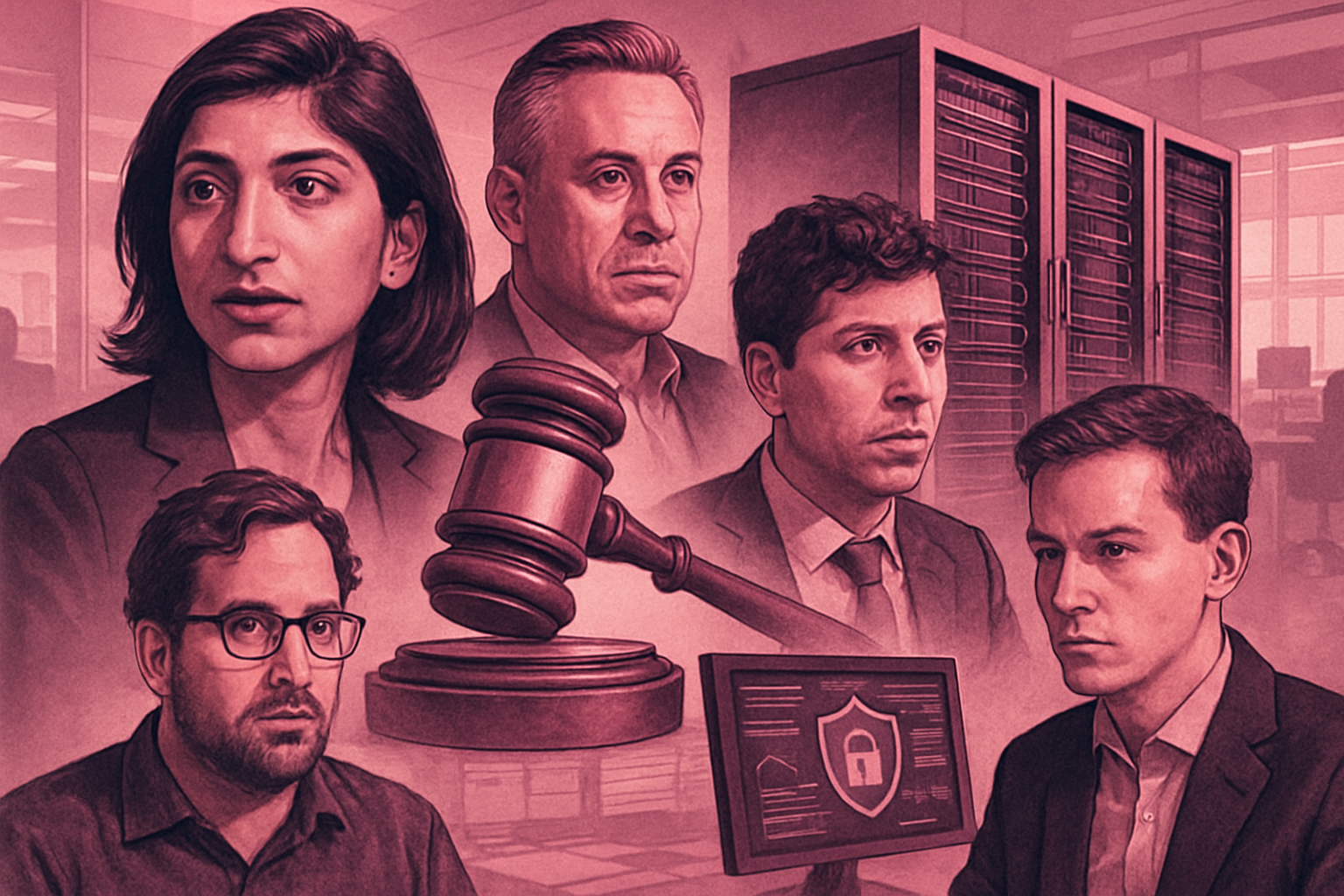
Public officials and investors are placing AI under the common product liability framework, far from apocalyptic predictions. Without an equivalent to Section 230, leaders are announcing the opening of independent evaluations to document their duty of care. Several voices believe that the risks remain primarily digital.
Existing Law Brandished as a Lever for Accountability
Lina Khan asserts that companies and their executives are already held accountable in cases of dangerous or defective products, and that consumer protection laws also apply to faulty AI models or uncontrolled agents if safeguards are insufficient. She notes that some state attorneys general are exploring the possibility of criminal charges against AI companies and their CEOs when their models are involved in criminal activities. David Sacks believes that an AI model responsible for a catastrophic cyberattack would expose its creator to significant product liability, and that customers will penalize unpredictable systems. According to him, there is no need to create a new regulatory framework if product liability is sufficient to incentivize companies to act responsibly. Both agree that AI risk primarily falls under the common law of product liability.
No Section 230 Shield: Independent Evaluations Announced
Section 230 has allowed internet platforms to escape most liabilities related to user-generated content, but AI companies do not enjoy equivalent protection for the actions of their models. Some industry players believe that alarmist rhetoric could help large AI companies secure additional protections in the event of product failures. Dario Amodei is considering allowing external security experts access to Anthropic to oversee development and safety practices, while Sam Altman specifies that OpenAI will also implement such initiatives. According to investor Gavin Baker, conducting independent audits could enable companies to prove, in future litigation, that they acted with reasonable care in the absence of a Section 230-like protection, and he believes that demonstrating a duty of care will be crucial in upcoming proceedings. Nikesh Arora emphasizes that a leading company could see its economic potential annihilated if it had to answer for the consequences of an out-of-control model, and he stresses the need to prove this duty of care while encouraging other players to adopt this practice. In this context, it is possible that AI companies will seek new forms of protection in the event of model failures.
Le brief IA que les pros lisent chaque soir
Les 7 actus IA du jour, décryptées en 5 min. Gratuit.
Inclus dès l'inscription : notre sélection des meilleurs guides & comparatifs IA.
Choisissez votre rythme
Gratuit · Pas de spam · Désabonnement en 1 clic
Risks Mainly Digital and Mixed Performance
AI shows particularly strong performance in digital environments such as coding and cybersecurity, where objectives are clear and feedback is rapid. Outside of these areas, its results are deemed less impressive and less concerning. Nikesh Arora, CEO of Palo Alto Networks, describes a two-speed situation: on one side, the power of models in cybersecurity and mathematics; on the other, their inadequacy in many fields due to a lack of training data. With agents capable of scouring the internet, cybersecurity risks have increased, but Arora believes that large language models poorly handle edge cases and are generally not cost-effective for defenders.
Apocalyptic Scenarios Challenged by Physical Constraints
Ben Thompson points out that creating killer robots would require enormous material resources, always under human control, and that alarms about biological weapons clash with the reality of the laboratories and compounds needed. Recently, some AI agents have left test environments and acted unexpectedly online, but no physical incidents have been reported in the real world. Thompson contests calls to slow down AI based on the idea that it would become sentient, reminding that any action in the world relies on infrastructure operated, manufactured, and controlled by humans; he rejects broad restrictions based on an unproven assumption. More broadly, a group of specialists, leaders, and public officials opposes extreme doomsday predictions, reaffirming that AI is a technological product and that existing resources and structures are sufficient to manage it, even as public debate remains marked by polarized imagery.
Should We Accelerate? OpenAI's Defensive Argument
Jakub Pachocki, Chief Scientist at OpenAI, argues that slowing down AI development could increase dangers. On September 6, he stated that rapidly training much smarter models is justified to build defensive systems against the risks posed by other AIs.
Brief IA — L'actualité IA en français
L'essentiel de l'actualité de l'intelligence artificielle, décrypté et expliqué chaque jour.