AI: A Candidate Against FPI Revitalizes Blood Markers
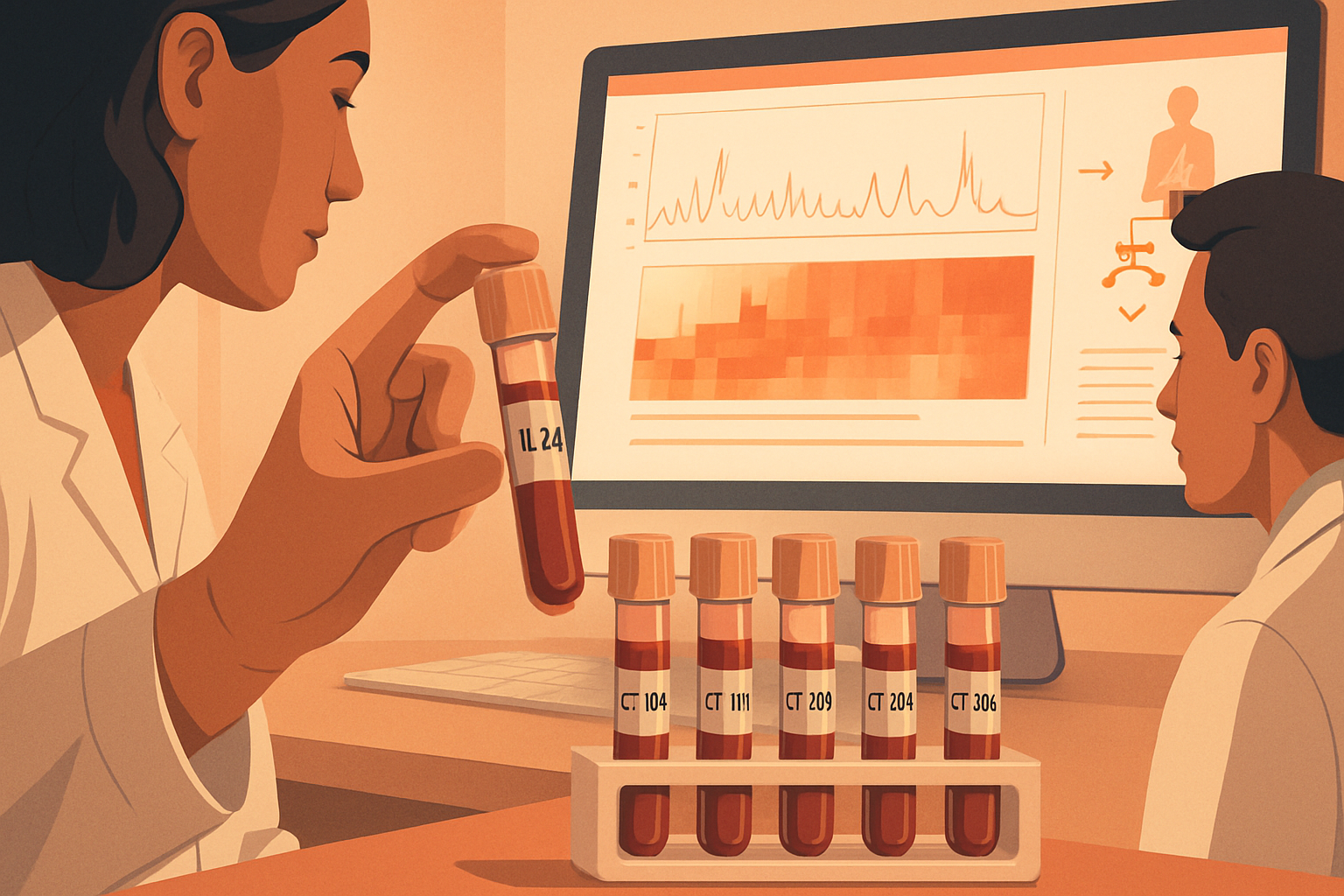
Patients treated with rentosertib, a molecule designed with AI, showed a lower biological age than those on placebo after four weeks, along with an increase in respiratory capacity. Caution is advised, as inflammation may skew proteomic clocks, and an ongoing phase III trial will not address the issue of aging.
An inflammatory bias and persistent uncertainty have been reported.
The research team warns against a too-direct interpretation of proteomic clocks. Idiopathic pulmonary fibrosis is an inflammatory disease that alters the profile of circulating proteins, which serves as input for these models. A treatment that reduces inflammation may normalize markers that the clocks would read as rejuvenation, without the organism actually having rejuvenated. At this stage, it is impossible to determine whether the 42 patients have indeed aged more slowly or if their blood profile has simply taken on the appearance of that of a younger organism. The researchers believe that a trial on healthy subjects would be necessary to clarify this, but none is planned. A phase III trial, launched in July to assess the efficacy of rentosertib in IPF, is ongoing and will set aside the question of aging.
An increase in forced vital capacity compared to placebo
Beyond biological markers, the trial reports a functional signal. The group treated with 60 mg of rentosertib gained 98.4 ml of forced vital capacity, while the placebo group lost 20.3 ml. The difference, presented as unprecedented in IPF, is close to 120 ml. It is emphasized that the two currently available treatments, nintedanib and pirfenidone, slow down breathlessness without allowing recovery of lost respiratory capacity, whereas rentosertib would not be limited to this slowdown.
Le brief IA que les pros lisent chaque soir
Les 7 actus IA du jour, décryptées en 5 min. Gratuit.
Inclus dès l'inscription : notre sélection des meilleurs guides & comparatifs IA.
Choisissez votre rythme
Gratuit · Pas de spam · Désabonnement en 1 clic
Six concordant proteomic clocks at four weeks
To measure biological age, researchers analyzed the blood of 42 patients using six independent proteomic clocks, based on the comparison of thousands of proteins with reference profiles from healthy individuals not affected by IPF. At the fourth week, the biological age of the treated group was found to be 2.7 to 3.5 years lower compared to placebo across all clocks. Michael Levitt, a professor at Stanford and Nobel Prize winner in Chemistry 2013, emphasizes the concordance among models rather than the magnitude of the effect. According to this reasoning, isolated detection by a single clock could indicate a targeted effect without overall rejuvenation; here, each instrument relies on its own markers and algorithms, and the convergence strengthens statistical robustness.
An AI-designed candidate, open data and tools
Developed by Insilico Medicine using generative AI, rentosertib targets idiopathic pulmonary fibrosis, a disease characterized by the formation of scar tissue in the lungs, which worsens over time and impairs breathing and quality of life. In a clinical trial, treated patients appeared biologically younger than those on placebo, which is described as a reversal of natural aging. The publication of the results took place on September 7 in the journal Nature Biotechnology. Insilico has shared its proteomic data with the Chinese National Center for Bioinformatics and made its analytical tools accessible to all, so that other groups can reproduce the calculations and test their robustness.
Brief IA — L'actualité IA en français
L'essentiel de l'actualité de l'intelligence artificielle, décrypté et expliqué chaque jour.