IBM in the Storm: Is AI Really a Threat to the Mainframe?
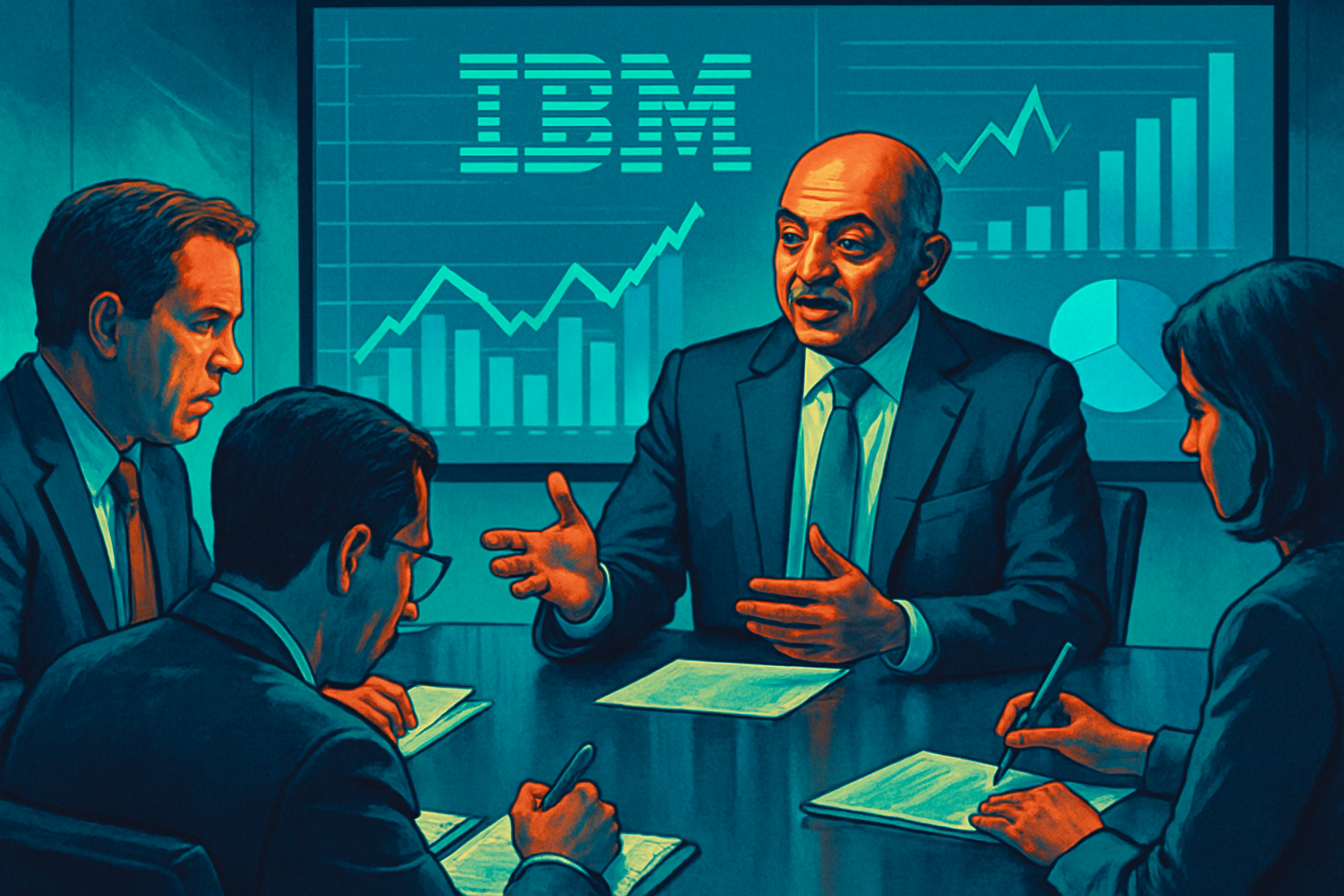
IBM Announces Disappointing Financial Results
IBM recently unveiled its financial results for the last quarter, and the news did not meet expectations. Despite an impressive revenue of $17.2 billion and a gross profit of $9.9 billion, the results were deemed disappointing by Wall Street. The company, which has been around for 115 years, recorded a profit margin of nearly 58% and a net income of $2.2 billion for this period.
However, these figures were not enough to satisfy investors, who had anticipated better performance. This disappointment led IBM's CEO, Arvind Krishna, and the board of directors to take the unusual step of warning investors in advance that profits would fall short of expectations.
An Early Warning and Its Consequences
In the week leading up to the official announcement, IBM had already sent a letter to investors revealing concerning preliminary results. This letter warned of a significant decline in revenue in the company's "infrastructure" category, stating that profit margins would also suffer. This announcement resulted in a 25% drop in the stock price in a single day. This decline is the largest recorded under Krishna's leadership, who has been at the helm of the company for six years.
Until now, IBM had benefited from the boom in data centers related to artificial intelligence, but this momentum seems to have reversed. The company also revised its growth forecasts downward for the entire year, indicating that this challenging quarter would have lasting repercussions.
The Decline of Mainframe Business
The primary culprit for this situation is the 42% drop in mainframe business, which has historically been a stable revenue source for IBM. During the quarterly call with investors, CFO Jim Kavanaugh explained that for every dollar generated from mainframe hardware sales, IBM earns an additional three dollars in revenue from associated software.
Le brief IA que les pros lisent chaque soir
Les 7 actus IA du jour, décryptées en 5 min. Gratuit.
Inclus dès l'inscription : notre sélection des meilleurs guides & comparatifs IA.
Choisissez votre rythme
Gratuit · Pas de spam · Désabonnement en 1 clic
Despite these challenges, the CEO and CFO insisted that this situation is only temporary. They emphasized that dozens of customers who were supposed to purchase a new mainframe during the quarter chose not to do so. Mainframes are expensive systems, ranging from hundreds of thousands to millions of dollars, and with maintenance contracts and software, they generate millions more.
The Impact of AI on Purchasing Decisions
The rise of artificial intelligence, which initially benefited IBM, has also contributed to its current difficulties. Arvind Krishna explained that some customers opted not to invest in new mainframes, preferring to allocate their budgets to other equipment due to a 15% to 30% increase in costs for data center hardware and PCs.
Companies like Dell, HP, and Apple have also reported price increases due to rising component costs, particularly memory, driven by growing demand related to AI. Despite this, Krishna remains optimistic, asserting that customers will eventually purchase the mainframes and associated software contracts.
The Future of Mainframe at IBM
Arvind Krishna reiterated his confidence by stating that there is no evidence of customer disinterest in mainframes. According to him, some customers have already made their purchases this quarter. Nevertheless, the debate over the sustainability of the mainframe has persisted in the tech industry for decades.
As AI continues to transform the technological landscape, IBM will need to navigate these turbulent waters to maintain its market position. The question remains: will artificial intelligence signal the end of the mainframe, or can it adapt and survive?
Brief IA — L'actualité IA en français
L'essentiel de l'actualité de l'intelligence artificielle, décrypté et expliqué chaque jour.