IBM Reinvents Business with an Integrated and Secure AI Model
Le brief IA que les pros lisent chaque soir
Les 7 actus IA du jour, décryptées en 5 min. Gratuit.
Inclus dès l'inscription : notre sélection des meilleurs guides & comparatifs IA.
Choisis ton rythme
Gratuit · Pas de spam · Désabonnement en 1 clic
IBM recently unveiled its ambitious vision for the future of artificial intelligence (AI) in business during its annual Think 2026 conference. The tech giant proposes an AI operating model aimed at fundamentally transforming how companies operate by integrating AI at all levels of their operations.
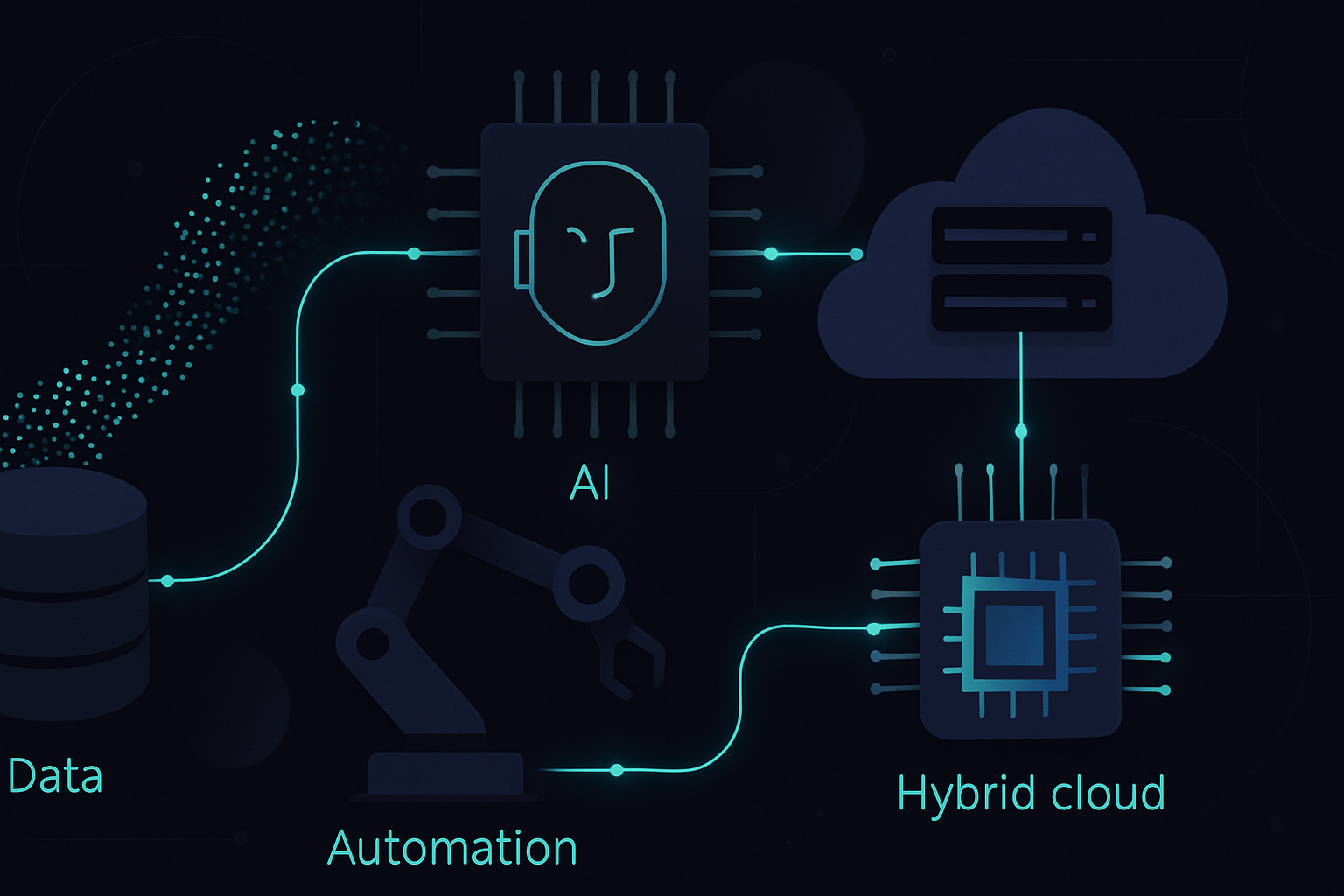
This model is based on four essential pillars: data, AI agents, automation, and hybrid infrastructures. IBM aims to bridge the gap between companies that have already integrated AI into their daily operations and those that are still in the experimental stage. The goal is to create reliable, governed, and consistently integrated AI.
An Integrated and Coordinated AI Model
IBM emphasizes the importance of an AI operating model, which it calls the "AI operating model," to enable companies to function with a comprehensive AI system. Rob Thomas, Senior Vice President of Software at IBM, highlights that data quality is crucial for any AI strategy. Companies must have reliable, contextualized, and real-time accessible data to build effective AI systems.
Isolated AI initiatives, such as internal assistants or predictive analytics, have shown their limitations. IBM proposes connecting these initiatives to create coordinated systems across all business operations.
Watsonx Orchestrate: Multi-Agent Control
One of the major announcements from Think 2026 is the evolution of the IBM watsonx Orchestrate platform. It is becoming a multi-agent control system, allowing companies to oversee AI agents specialized in various fields such as finance, customer support, cybersecurity, human resources, and supply chain. These agents can now collaborate and execute complete workflows in an automated manner.
Mark Tauschek, Vice President of Research at Info-Tech Research Group, notes that companies are facing a proliferation of AI agents, often managed inconsistently. IBM positions itself as an AI governance provider rather than just a tool vendor.
The Importance of Real-Time Data
IBM stresses the importance of real-time data to prevent AI models from working with outdated information. Through its partnership with Confluent, IBM enhances data streaming with technologies like Kafka and Flink. This adds a layer of real-time context in watsonx.data, helping AIs better understand business information.
Additionally, IBM's Presto GPU accelerator promises to reduce costs and processing times for certain massive analytical workloads, particularly in environments using NVIDIA technologies.
Security and Governance at the Heart of the Strategy
IBM also seeks to reassure large enterprises about the security and compliance of their AI systems. The IBM Sovereign Core solution, now available, is designed for regulated environments, while IBM Concert offers unified visibility into applications and infrastructures without requiring the replacement of existing tools.
Sanchit Vir Gogia, Principal Analyst at Greyhound Research, emphasizes that accountability is at the core of IBM's strategy. Companies must now control the behavior of their AI systems, especially when interacting with sensitive data or regulated infrastructures. IBM aims to play a key role in the industrialization of AI by orchestrating, securing, and overseeing AI at scale.
Brief IA — L'actualité IA en français
L'essentiel de l'actualité de l'intelligence artificielle, décrypté et expliqué chaque jour.