IEEE Xplore Launches Full-Text Search AI
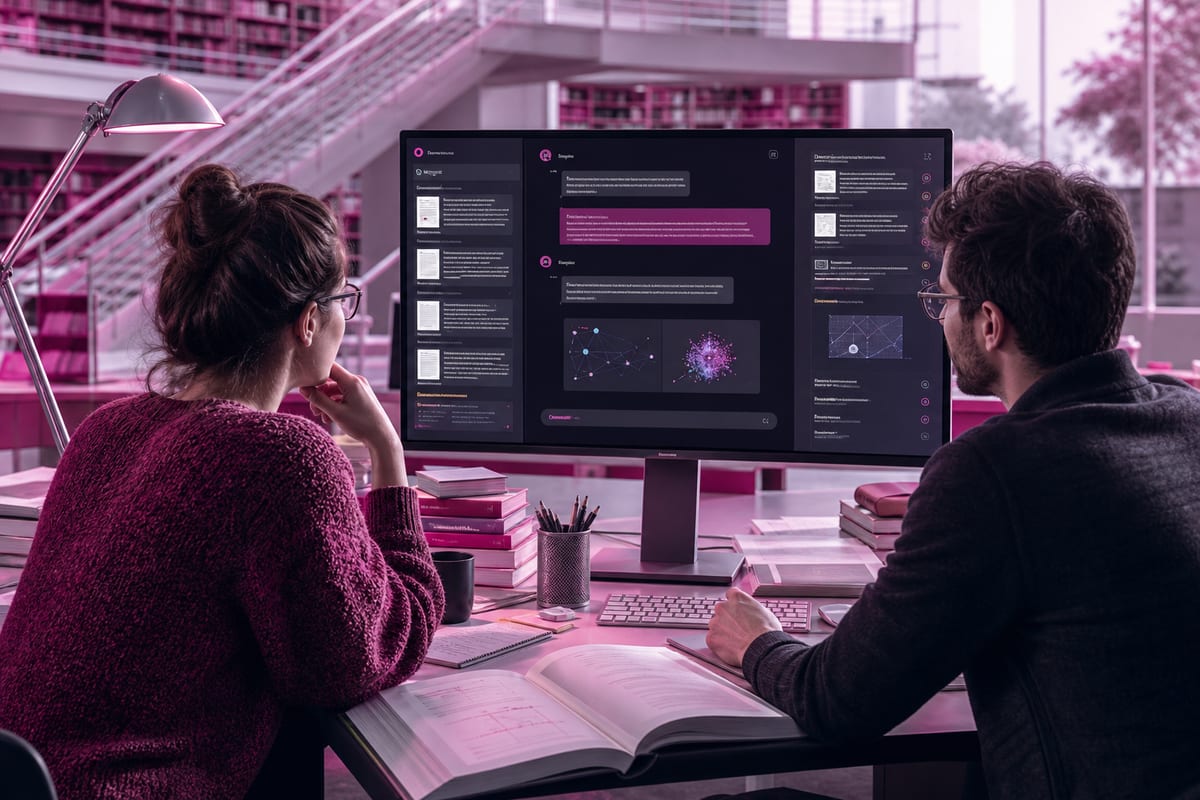
IEEE launches the Xplore AI Research Suite, a research assistant based on its peer-reviewed content. The organization highlights anti-hallucination mechanisms and claims a threefold increase in result quality during internal tests. The offering is available to institutions subscribed to IEEE Xplore.
Internal Tests: Results Tripled and Active Safeguards
Steven Heffner reports that internal tests have shown a threefold increase in the quality and accuracy of results across every key indicator. To limit hallucinations, the search is restricted to millions of peer-reviewed full-text documents from IEEE and a selected set of STEM metadata. If no relevant content is found, the tool informs the user instead of generating a fabricated response. Heffner emphasizes that these results highlight the importance of full-text grounding for technical research.
Positioning: Use of Full Text and Metadata
IEEE presents the suite as the only AI research assistant that utilizes both full text and metadata from the organization’s peer-reviewed content. Steven Heffner underscores this specificity, in contrast to tools limited to abstracts. The generated responses include links to sources to allow for verification and cross-referencing. The corpus includes a variety of STEM metadata derived from selected articles to reduce noise present in other tools. The foundation relies on the full text of millions of publications hosted in IEEE Xplore.
Le brief IA que les pros lisent chaque soir
Les 7 actus IA du jour, décryptées en 5 min. Gratuit.
Inclus dès l'inscription : notre sélection des meilleurs guides & comparatifs IA.
Choisissez votre rythme
Gratuit · Pas de spam · Désabonnement en 1 clic
Access and Scope: An Option for Institutional Subscribers
The IEEE Xplore AI Research Suite option is accessible through an additional subscription for all institutions already subscribed to the digital library. The IEEE Xplore platform allows access to the organization’s standards, as well as journals, magazines, and conference proceedings.
Design: International Collaboration and 3,000 Testers
The development of the suite involved close collaboration with global scientific and library communities. The process began with a study of user needs and challenges faced with existing AI assistants. Over 3,000 testers, including engineers, scientists, and information professionals, contributed their feedback to refine the AI engine and research pathways.
Features: Conversational Search, Summaries, and Definitions
The suite offers semantic search that accepts natural language or long text excerpts to identify similar works and new solutions. It generates quick summaries and contextual definitions of technical terms to facilitate the assimilation of new concepts. The system favors conversational searches over keyword queries and aims to accelerate the understanding of complex technical documents. IEEE describes a set of intelligent features based on a proprietary engine optimized for STEM literature, with responses grounded in verified scientific results. W. Clem Karl, IEEE's Vice President of Publishing Services and Products, notes that AI can accelerate discovery, enhance decision-making, and establish new connections, while also presenting risks of hallucinations and bias. He indicates that IEEE has implemented safeguards to ensure responsible use. Steven Heffner asserts that the goal is to provide a highly accurate and reliable research experience. The recently launched suite is part of this initiative.
Brief IA — L'actualité IA en français
L'essentiel de l'actualité de l'intelligence artificielle, décrypté et expliqué chaque jour.