AI Boost 2027: €80M to Train and Support SMEs
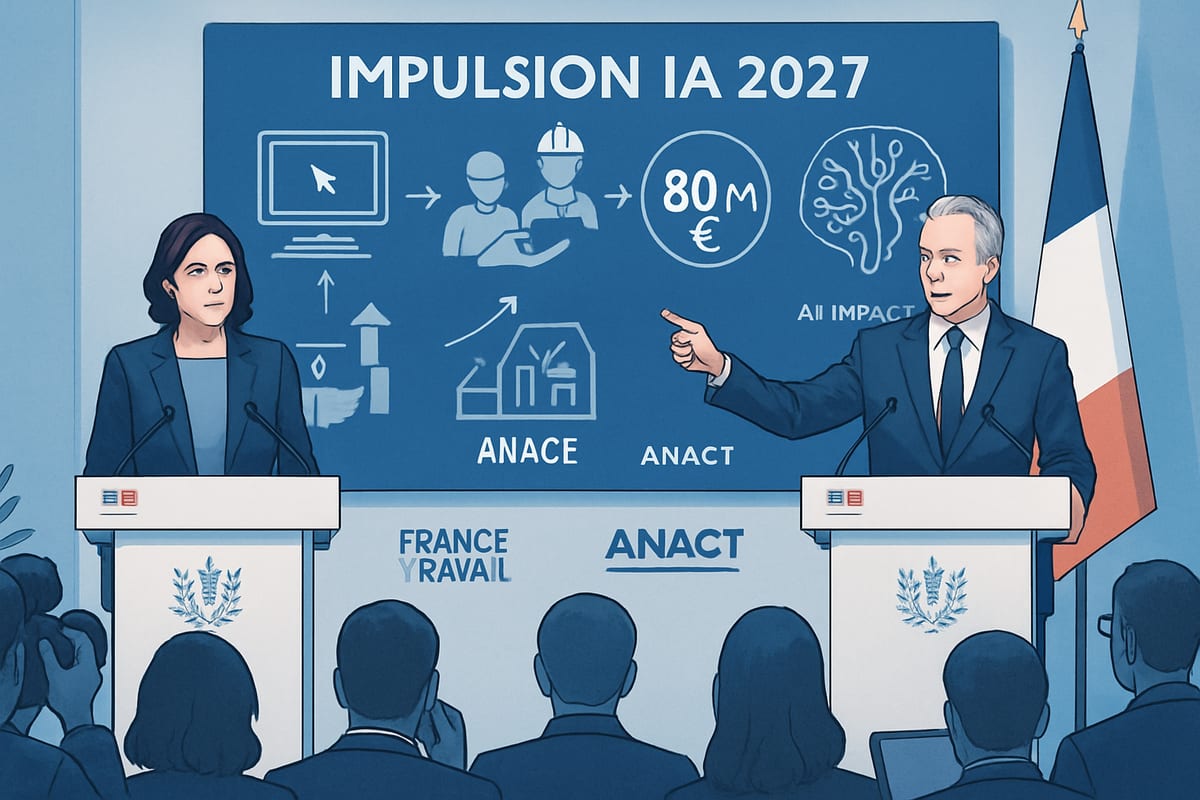
The government is launching 12 measures backed by €80 million to accelerate the adoption of AI in the workplace. The plan includes training platforms, support for CFA (apprenticeship training centers), an AI-focused CPF (Personal Training Account), tools for SMEs, and the creation of an observatory. This initiative comes as economic benefits are expected by 2027 and has faced criticism from unions regarding the lack of new rights and countermeasures.
Union Reservations and an Interprofessional Negotiation Project
Agathe le Berder, a member of the CGT confederal office, believes that the part of the plan dedicated to social dialogue does not provide any new rights for employees. She finds it "scandalous" to announce new aid for businesses without any conditions and criticizes the use of the CPF to finance AI training. According to her, the failure to mention companies' skill development plans absolves them of responsibility. Meanwhile, several union and employer organizations expressed their readiness, the previous week, to open interprofessional negotiations on AI, considering that it is no longer time to take a stand for or against it. The government also plans to experiment with new methods of technological social dialogue in about twenty companies and professional sectors with the support of Anact.
Skills: Platforms, CFA, Priority CPF, and AI Certification
Half of the twelve measures aim to familiarize workers with AI. Explore IA, a platform accessible for free without prerequisites, will offer self-assessment and interactive learning paths, while a second platform will focus on training apprentices. Financial support will be provided to apprenticeship training centers to develop the skills necessary for integrating AI, particularly for AI developers and cybersecurity professionals. A national fund for CFAs is to be created in the 2027 finance bill, with increased public funding for apprenticeship training deemed strategic. The reform of the Personal Training Account aims to tighten funding for training that is too far removed from a professional project, while making AI a national priority through co-financing to limit the out-of-pocket costs for individuals wishing to train. The ministry also aims to develop a certification for the use of AI in professional activities. For job seekers, France Travail will offer an AI maturity test followed by a personalized pathway.
Le brief IA que les pros lisent chaque soir
Les 7 actus IA du jour, décryptées en 5 min. Gratuit.
Inclus dès l'inscription : notre sélection des meilleurs guides & comparatifs IA.
Choisissez votre rythme
Gratuit · Pas de spam · Désabonnement en 1 clic
SMEs and Industry: Awareness, Tax Credit, and Social Dialogue
Task forces will be set up to raise awareness among small and medium-sized enterprises about the use of AI, particularly for recruitment, and professional sectors will be supported in organizing social dialogue on this topic. Roland Lescure, Minister of Economy, mentioned a tax credit aimed at accelerating depreciation for robots, especially for small businesses. The Ministry of Labor notes a lag in the adoption of AI by French companies and identifies a risk of new divides, with SMEs adopting AI less than large companies.
Management, Finances, and Reasons to Act: Between Risks and Timelines
The creation of an observatory tasked with analyzing the impact of AI is expected to evaluate the consequences of its widespread adoption on employment. The Ministry of Labor plans to save €2.5 billion in the 2027 budget and has selected the measures considered most cost-effective and capable of quickly providing a replicable framework. The "Impulsion IA 2027" plan transposes, for the employment sector, the "Dare AI" strategy announced in the summer of 2025. The plan includes 12 measures and €80 million in new funding, presented on a Tuesday by Labor Minister Jean-Pierre Farandou. He emphasizes the need to act to prevent AI from shaping a world that does not meet expectations, while also highlighting that AI can improve working conditions by eliminating certain tasks, but can also lead to increased work intensity and exacerbate inequalities between jobs and qualifications. According to a Coface study published in April, one in six jobs in France, or 5 million, could be automated within the next three to four years. Roland Lescure asserts that we should not wait for the next electoral deadlines to accelerate efforts on AI and mentions significant risks related to cybersecurity and algorithmic biases. Other concerns include the energy and water consumption associated with the growth of AI.
Brief IA — L'actualité IA en français
L'essentiel de l'actualité de l'intelligence artificielle, décrypté et expliqué chaque jour.