In 2016, IBM Already Described an AI Agent for the Stage
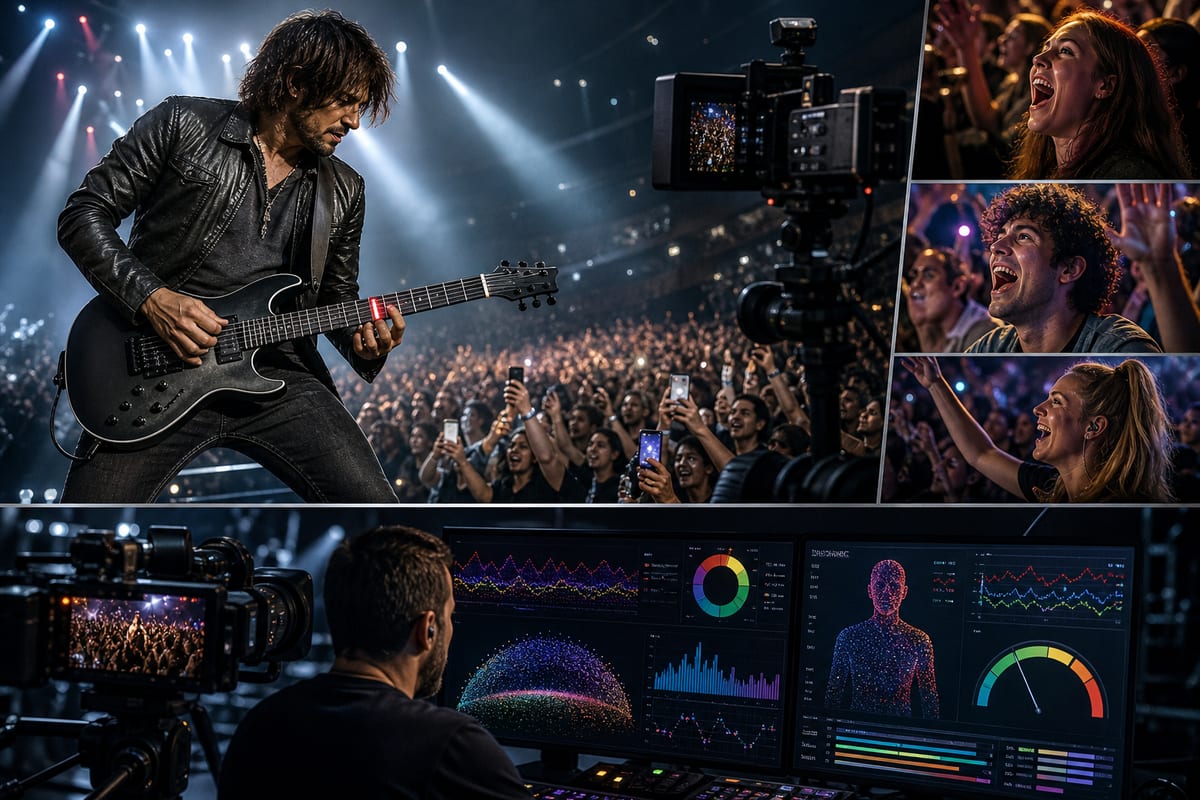
An IBM patent filed in 2016 for real-time analysis of musical performance combines sensors, feedback aggregators, memory, performance indices, and real-time loops. Ten years later, this architecture resembles a modern AI agent, with the human as the actuator. This retrospective look details what was right and the flaws that the decade has exposed.
Missing Permissions and Memory Without Forgetting: Major Blind Spots
The specification does not mention consent or an access framework, even though it provides for cameras capable of analyzing faces, using zooms to target individuals, and exposing sentiment streams by person. The filing dates back to November 2016; eighteen months later, the GDPR became applicable and would have had implications for these choices. On the data side, the described memory was only additive: the database grew without degradation, expiration, or provable deletion, an approach perceived as a feature at the time. Viewed today, an agent's memory designed without forgetting becomes a liability, caught between obsolete facts and personal data without a lifecycle. Retention, degradation, and verifiable deletion are part of an architecture, not an after-the-fact cleanup. The real-time constraint—at worst a few seconds to loop—does not exempt this governance. The author indicates that they now dedicate a significant portion of their activity to formalizing what AI is allowed to observe, retain, and activate, and for whom, with application in the data layer.
The Loop, Memory, and Human: Foundations That Hold
Several design options remain relevant. The value of such a system lies in a closed loop that perceives, evaluates, and corrects, rather than in isolated inference. Inference must be anchored in memory; otherwise, the device reduces to a disconnected sentiment classifier. Processing evidence by provenance and class, merging families of signals according to their reliability, constitutes an appropriate practice. Finally, the human is explicitly a component of the architecture: the artist acts as an actuator, and the interface respects attention, timing, and cognitive load, illustrated by the LED that turns green, blinks yellow, or turns red based on accuracy and tempo.
Le brief IA que les pros lisent chaque soir
Les 7 actus IA du jour, décryptées en 5 min. Gratuit.
Inclus dès l'inscription : notre sélection des meilleurs guides & comparatifs IA.
Choisis ton rythme
Gratuit · Pas de spam · Désabonnement en 1 clic
A Stage Machine in Seven Blocks Under a Few Seconds Constraint
The system is structured around seven parts. Microphones and sensors present in the instruments measure timing, pitch, intonation, and volume; the specification refers to these sensors as 113a and includes MIDI, tactile, vibrational, ultrasonic, pressure, and infrared options. Cameras, adapted for low light and covering the room to obtain a representative sample, record the expressions and postures of the audience. Simultaneously, feedback such as "likes," "dislikes," and comments are transmitted from individual terminals to a web service. An aggregator centralizes this data, assigns each item an origin and category, organizes them into streams by artist, and converts them for analysis; it thus determines the information accessible to the reasoning engine and their order of presentation. The analysis engine deduces the properties of the performance based on previous executions and a knowledge base, that is, by combining episodic and semantic memory. A performance index then aggregates positive tweets, "likes," emotional facial signals, body language signals, and objectively measured accuracy to produce a normalized score, accompanied by a threshold and tracked over time. A reporting module presents these results to the human user in the form of graphs, explicitly named sentiments, suggestions, or through LEDs integrated into the instrument. The entire system aims for a feedback loop ideally under one second, at worst within a few seconds, and operates in successive iterations described from step 200 to 280.
What 2016 Lacked and What 2026 Has Reversed
In 2016, intelligence was the bottleneck: the "analysis procedure" relied on rules, ontologies, and classifiers, and aggregating grimaces, sarcastic tweets, and MIDI streams into a causal judgment was largely aspirational. The loop was correct, but the reasoning was weak. Fundamental models have since reversed the situation: reasoning capabilities are strong, but the loop, memory, and context remain the weak links in many deployments. The lesson is bilateral: an architecture without intelligence stagnates, while intelligence without architecture bogs down.
From Decision Support to Agent, Same Diagram, Human Actuator
The device has been named Analytics, and its core referred to as the "artificial intelligent analysis engine." Initially presented as a decision support tool, it now fits the definition of an agent, with a deliberate choice: actuation is entrusted to the artist. Specifically, in a rock concert, instrument sensors, cameras, and explicit audience feedback are merged into a real-time judgment, then relayed to the artist for adjustment, including through minimalist signals like the three-state LED on the guitar neck.
Brief IA — L'actualité IA en français
L'essentiel de l'actualité de l'intelligence artificielle, décrypté et expliqué chaque jour.