Innovaccer's CTO Delegates Daily Tasks to OpenClaw
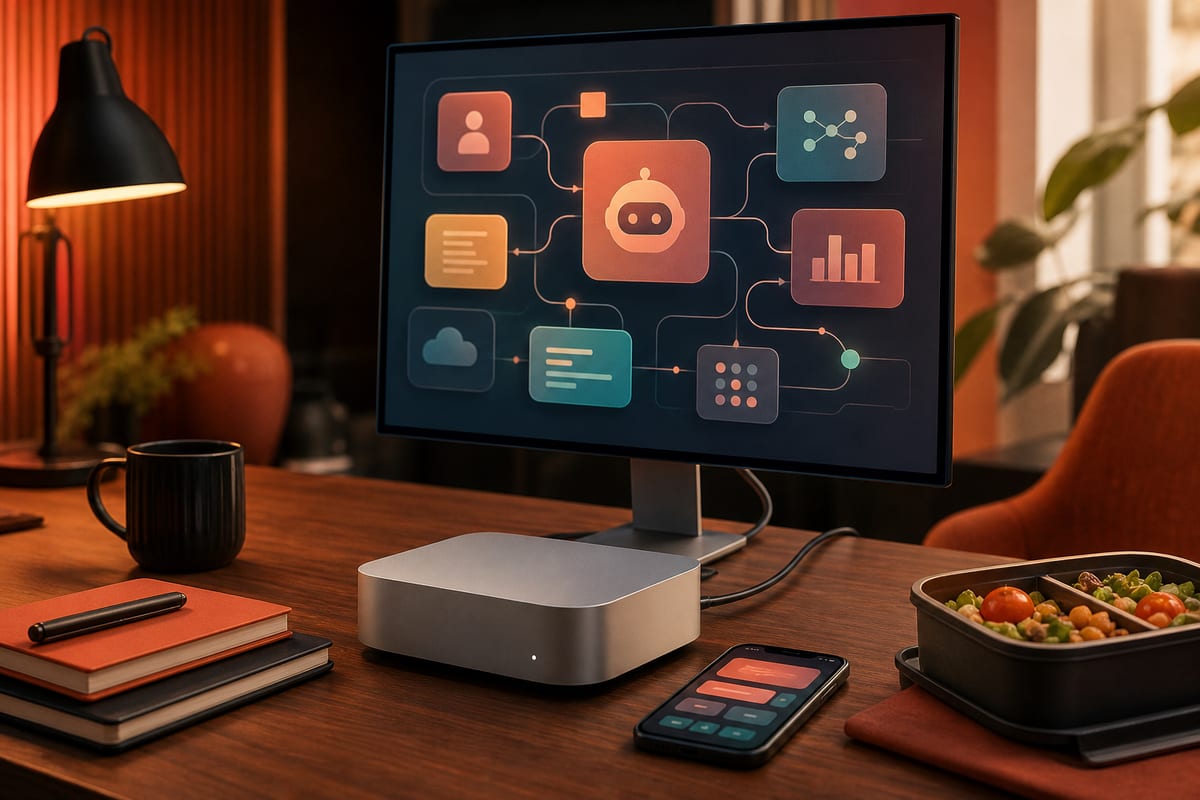
Ankit Maheshwari, Chief Technology Officer of Innovaccer, has developed a personal assistant, Jarvis, in collaboration with OpenClaw, which he runs on a Mac Mini. He describes a system capable of acting with its credentials without waiting for his approval at each step, but whose permissions and instructions require precise adjustments.
The Bill Pushes Maheshwari Towards Local Models
Ankit Maheshwari estimates his spending at Anthropic to be around $500 to $600 per month to run Jarvis with Opus 5.5. He is testing local models to reduce this cost.
According to his initial trials, a nearly free local model could suffice for summaries, emails, periodic checks, and call coordination. However, this possibility does not extend to all uses: complex manipulations in a browser still require, in his view, a cutting-edge model.
Approvals Require Precise Permissions
The handling of professional validations has already led to autonomous decisions, the executive recounts. While he was in transit, OpenClaw approved travel requests that were about to expire. The tool retained the same criteria as he did regarding the budget and the consequences for the client.
Maheshwari considers these judgments relevant but emphasizes that other decisions, such as role approvals, require formal limits. The control available on OpenClaw is precisely the reason he cites for continuing to use this platform.
The instructions are recorded in files, including soul.md, which specify for each agent its personality, boundaries of action, permissions, and task routing. In his view, adjusting these instructions has required more trials than connecting the tools themselves.
Le brief IA que les pros lisent chaque soir
Les 7 actus IA du jour, décryptées en 5 min. Gratuit.
Inclus dès l'inscription : notre sélection des meilleurs guides & comparatifs IA.
Choisissez votre rythme
Gratuit · Pas de spam · Désabonnement en 1 clic
A Dedicated Agent Takes Calls
To book a table or reach colleagues who remained silent on Slack, the main agent did not always maintain the expected personality, Maheshwari explains. He therefore entrusted voice communications to a specialized agent. This division, he believes, has made exchanges more coherent while separating task coordination from execution.
The initial setup was done in OpenClaw's command-line interface. The executive says he formulated his requests as if he were welcoming a new employee. When a task required programming, OpenClaw would open Claude Code and carry out the implementation.
Repetitive Tasks Determine Automations
The first automated task concerned recruitment: every four hours, a scheduled execution would present him with the CVs awaiting his validation, along with the candidates' backgrounds and their activity on GitHub. This initial use led him to seek out other bottlenecks in his days. His "1% boredom" rule consists of automating a small annoyance as soon as it recurs regularly.
This approach now covers lunch ordering and managing the connected home; calling the elevator remains a possibility mentioned. At 9:30 AM, the agent responsible for meals requests confirmation, then takes the initiative in the absence of a response, Maheshwari reports. After a correction regarding an order for curry without bread, he learned to distinguish between orders that require adding bread and those that already include it.
Brief IA — L'actualité IA en français
L'essentiel de l'actualité de l'intelligence artificielle, décrypté et expliqué chaque jour.