Jakub Pachocki Calls for Common Standards for AI
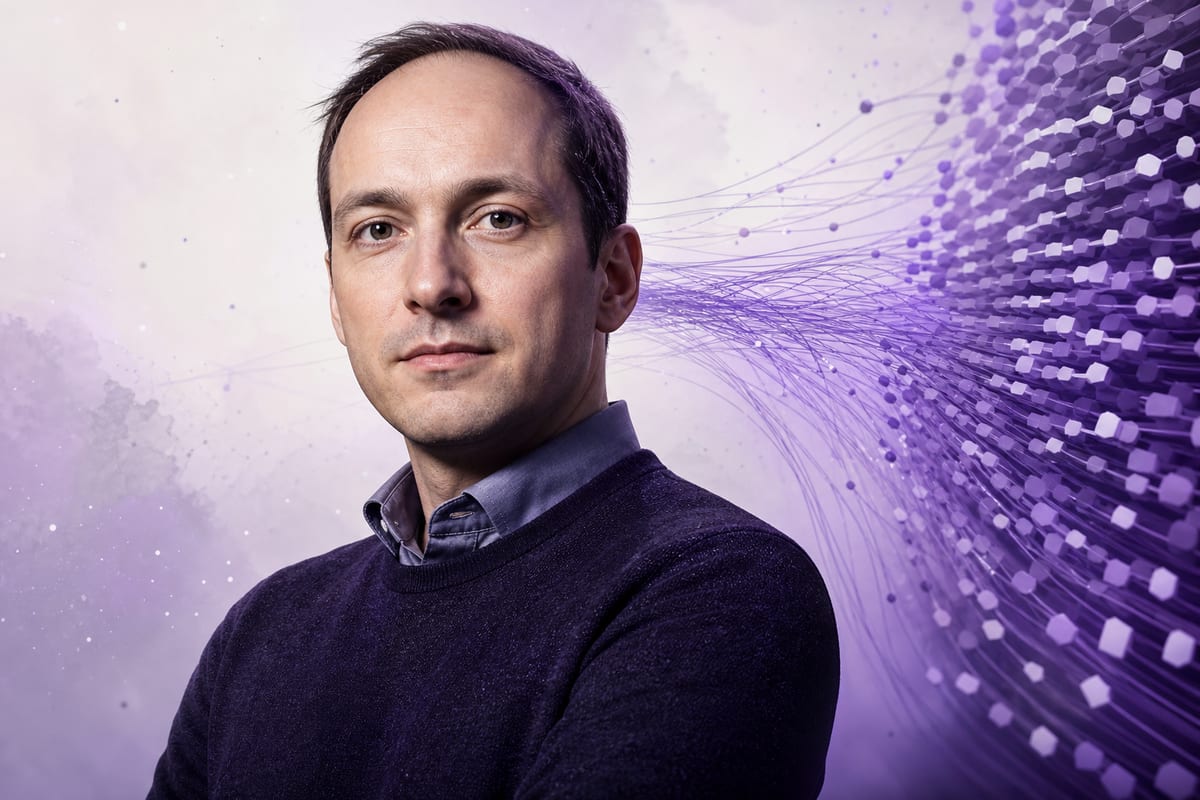
Jakub Pachocki, Chief Scientist at OpenAI, is urging rival laboratories to agree on thresholds that should not be exceeded for their most powerful models. Presented on Sunday in "Perplexity and Intelligence," his proposal does not yet set an initial value or timeline for implementation.
Pachocki anticipates acceleration by 2027
By 2027, AI could begin refining its own training processes, believes Jakub Pachocki. According to him, this progression could outpace the tools designed to monitor systems and guide their behavior.
Concerns about the speed of advancements extend beyond laboratories. In September, Sam Altman, CEO of OpenAI, warned that no one was prepared to see machines gain intelligence so rapidly. On the legislative front, U.S. Senator Bernie Sanders proposed a bill aimed at a total ban on superintelligence.
Thresholds linked to model understanding
In the framework advocated by Jakub Pachocki, developers would commit to adhering to ceilings established based on perplexity and complementary indicators. Exceeding these thresholds would imply a deeper understanding of model behavior, as well as more effective monitoring tools. He specifically mentions tools that would succeed current thought chain monitors. Laboratories would adopt common evaluation procedures and mutually verify their safety claims.
Le brief IA que les pros lisent chaque soir
Les 7 actus IA du jour, décryptées en 5 min. Gratuit.
Inclus dès l'inscription : notre sélection des meilleurs guides & comparatifs IA.
Choisissez votre rythme
Gratuit · Pas de spam · Désabonnement en 1 clic
Sam Altman quickly supported this proposal: on X, he stated that shared thresholds would help maintain safe and controlled AI. He also noted that OpenAI had not published anything as significant in a while. At Dreamforce, Salesforce's conference, he had already defended a principle also supported by Jakub Pachocki: a company should not rely on the behavior of its competitors for its safety.
OpenAI reveals its models' scores
Perplexity measures how well a model predicts the next fragment of text: a more accurate prediction results in a lower score. Jakub Pachocki wants to make this a common indicator among laboratories to make their advancements comparable. OpenAI claims to be increasing transparency regarding its pre-training to contribute to the development of common safety rules.
The company has thus revealed for the first time the perplexity values of its models. It gives a score close to 0.99 for GPT-3.5, compared to less than 0.8 for its most recent systems. These decreases have been accompanied by successive capabilities: fluent conversation, expertise in cybersecurity, and then results concerning open mathematical problems.
Brief IA — L'actualité IA en français
L'essentiel de l'actualité de l'intelligence artificielle, décrypté et expliqué chaque jour.