Jensen Huang Critiques Alarmist Discourse on AI
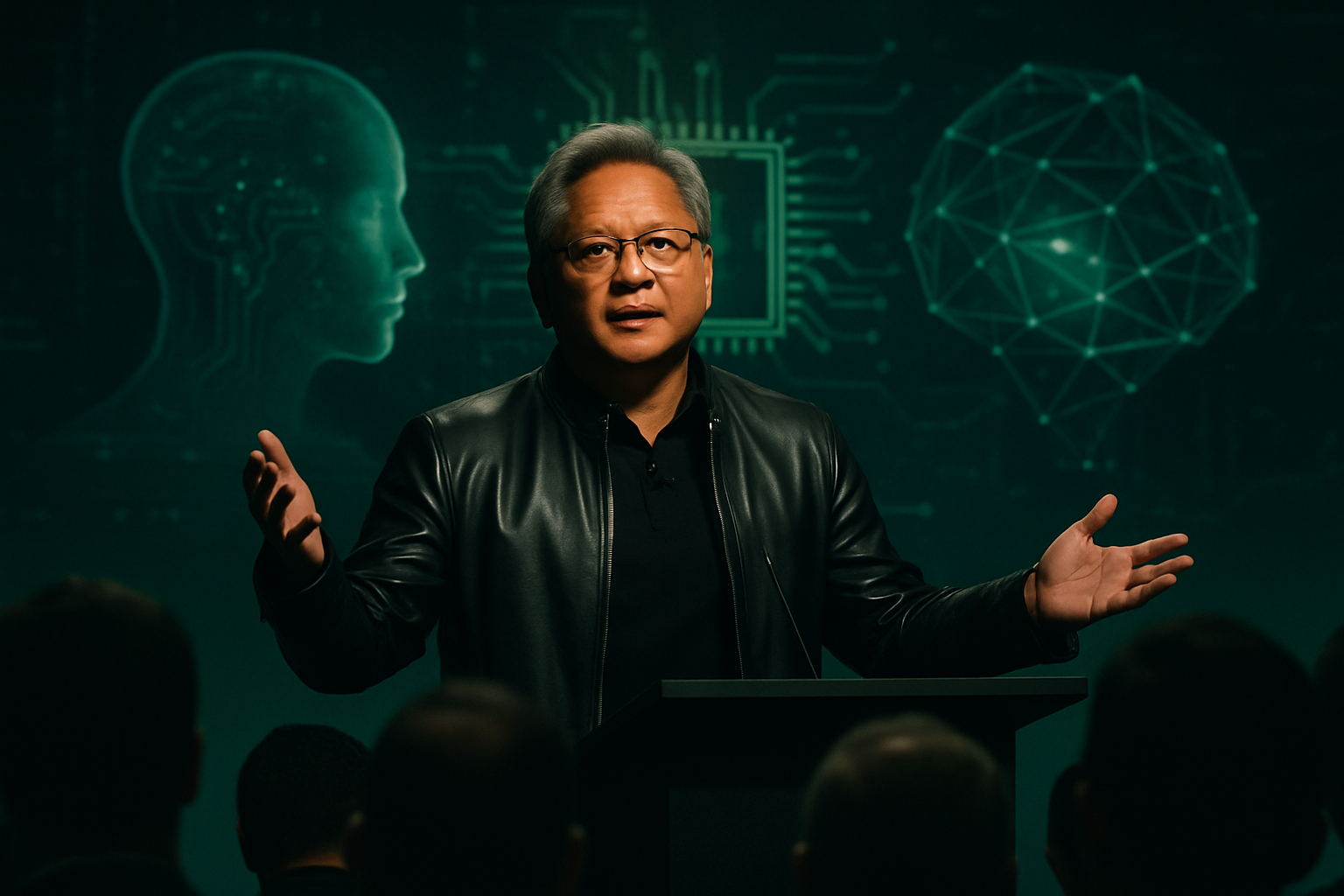
Jensen Huang Calls for More Measured Communication on AI
Nvidia CEO Jensen Huang recently expressed his concern about how some leaders in artificial intelligence (AI) communicate about this technology. Without naming names, he criticized his peers for instilling fear among Americans regarding advancements in AI. Huang hopes the industry will adopt a more positive and thoughtful approach in its communication.
Huang specifically mentioned the "doomsters" of AI, those voices warning about the potential dangers of the technology. In an interview with Mike Allen of Axios, published in full on Thursday, he stated that it is time to change the narrative, asserting that warnings about AI capabilities have already been heard enough.
Job Fears and China at the Heart of Concerns
According to Huang, some of his colleagues are fueling fear by discussing massive job losses due to AI. He also highlighted that concerns about China's position in the AI race worry policymakers in Washington. "We all need to be thoughtful and careful," he insisted, adding that "we are scaring people" with these frightening narratives that are not constructive.
Huang acknowledges that it is important to focus on safety and inform regulators about the implications of AI. However, he believes the industry should also highlight the benefits of this technology. "We should be much more enthusiastic about it," he stated, emphasizing that "the only way we will be left behind is if we do not apply the technology."
A Critical Moment for AI
AI is at a crucial turning point, especially with the upcoming midterm elections in November. The use of this technology has spread like never before. Generative AI models such as Fable 5 from Anthropic and GPT-5.6-Sol from OpenAI have made significant progress compared to their previous versions. Despite this, polls reveal that the American public fears AI may lead to massive layoffs. Data centers are also becoming a political issue, with restrictions imposed by states across the political spectrum.
Le brief IA que les pros lisent chaque soir
Les 7 actus IA du jour, décryptées en 5 min. Gratuit.
Inclus dès l'inscription : notre sélection des meilleurs guides & comparatifs IA.
Choisissez votre rythme
Gratuit · Pas de spam · Désabonnement en 1 clic
The Need to Provide Concrete Facts
Huang calls on AI leaders to "give the facts" rather than speculate on catastrophic scenarios. He notes that the predicted massive job losses have not materialized. Evidence shows that some leaders, like Sam Altman from OpenAI, have changed their rhetoric regarding the future of work.
Huang also criticizes other narratives in the AI field that he deems unconstructive, such as debates about AI consciousness, the singularity, or the idea that we are living in a simulation. "Don't create a made-up story," he stated. "It is made up that there will be a singularity. It is made up that we are living in some way in a simulation."
Tensions with Other Industry Leaders
Although Huang did not name specific leaders or companies, it is hard to ignore that some of the rhetoric he criticizes is associated with Anthropic and its CEO, Dario Amodei. Amodei has often expressed concerns about the potential for AI to eliminate up to half of entry-level office jobs within the next five years. Anthropic also publishes research on the potential consciousness of its AI, Claude.
Huang also mentioned that some companies exaggerate concerns about China to influence regulations in their favor. Amodei and Huang have disagreed on the necessity of imposing export controls that would limit China's access to advanced technologies. Nvidia could benefit if regulators in the U.S. and China allow it to resume operations in China.
A More Optimistic Vision of AI
Despite his criticism of alarmist rhetoric, Huang expressed admiration for science fiction characters like R2D2 and C3PO from Star Wars, which he considers the closest representations of true AI. He has a fondness for these iconic characters from a $10 billion franchise. "And who wouldn't want R2D2 and C3PO?" he joked, thereby highlighting a more optimistic and accessible vision of AI.
Brief IA — L'actualité IA en français
L'essentiel de l'actualité de l'intelligence artificielle, décrypté et expliqué chaque jour.