Jürgen Schmidhuber Joins Sakana AI to Lead an RSI Laboratory
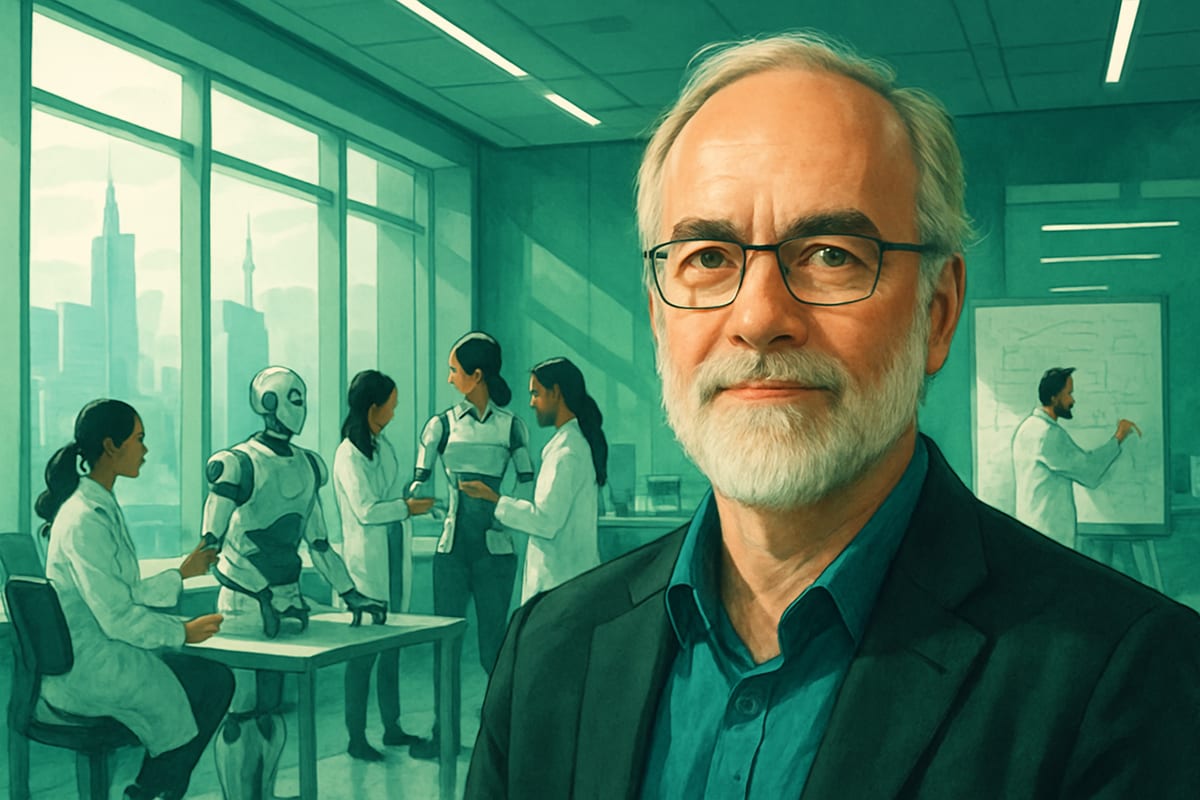
The Tokyo-based startup has appointed Jürgen Schmidhuber as Chief Scientific Advisor and plans for him to co-lead a new RSI laboratory. The stated goal: to create a self-reinforcing research loop and develop an AI focused on the physical world. The company highlights its internal projects fueled by Schmidhuber's longstanding ideas from 1987 to 1991. The researcher positions this strategy within Japan's legacy of innovation.
RSI aims for a research loop and a physically grounded AI
The RSI laboratory at Sakana AI aims to establish a self-reinforcing research loop to make machines smarter. Jürgen Schmidhuber is set to help lead this new laboratory. According to him, the future of intelligence is not limited to language but involves a physical AI based on models of the world. He believes that Sakana AI is well-positioned to leverage Japan's legacy of innovation by building autonomous systems capable of understanding, simulating, and interacting with the physical universe. It is also suggested that Japan is the birthplace of fundamental architectures for neural networks and advanced robotics.
Le brief IA que les pros lisent chaque soir
Les 7 actus IA du jour, décryptées en 5 min. Gratuit.
Inclus dès l'inscription : notre sélection des meilleurs guides & comparatifs IA.
Choisissez votre rythme
Gratuit · Pas de spam · Désabonnement en 1 clic
Recruitment in Tokyo and gathering of experts
Sakana AI's headquarters is located in Tokyo, where the company has appointed Jürgen Schmidhuber as Chief Scientific Advisor. To realize the program of the RSI laboratory, the company aims to gather a significant group of internationally renowned experts in Tokyo. Schmidhuber describes his arrival as an opportunity to bridge the fields of neural networks and robotics.
Previous work cited and claimed internal projects
Sakana AI describes Jürgen Schmidhuber as the father of modern AI and highlights several achievements attributed to him: pioneering research on world models in 1990 as well as deep learning methods in 1991. His thesis written in 1987 focused on meta-learning and recursive self-improvement; it is noted that it initiated nearly forty years of work on how machines can learn to learn. The company claims that these ideas have directly influenced its Darwin Gödel Machine and The AI Scientist projects.
Brief IA — L'actualité IA en français
L'essentiel de l'actualité de l'intelligence artificielle, décrypté et expliqué chaque jour.