Kevin Weil, former OpenAI, joins Stoke Space to challenge SpaceX
Le brief IA que les pros lisent chaque soir
Les 7 actus IA du jour, décryptées en 5 min. Gratuit.
Inclus dès l'inscription : notre sélection des meilleurs guides & comparatifs IA.
Choisis ton rythme
Gratuit · Pas de spam · Désabonnement en 1 clic
A Tech Veteran Joins Stoke Space
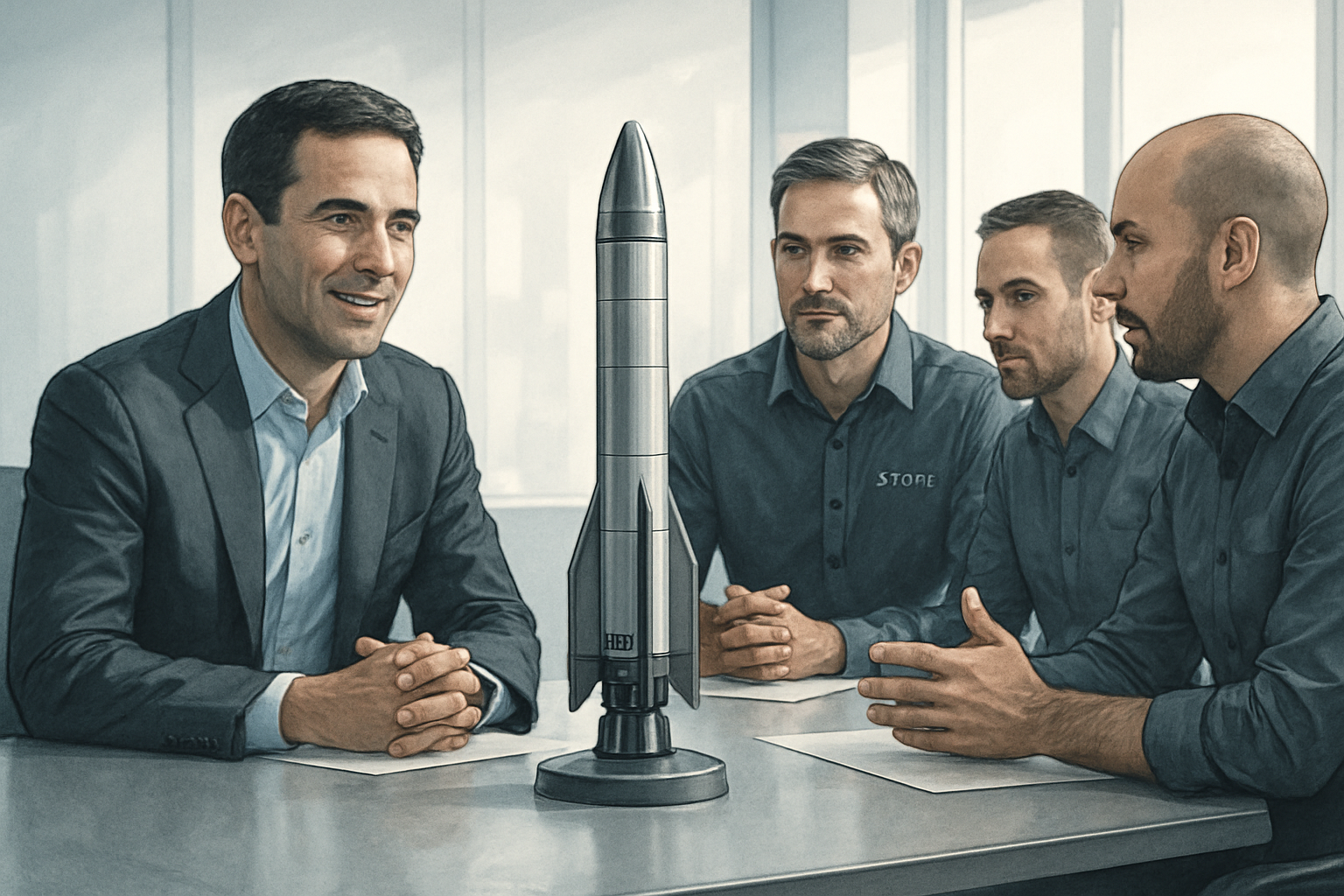
Kevin Weil, a well-known figure in the tech world, has recently joined the board of directors at Stoke Space. This Seattle-based startup, which has solid funding, focuses on building reusable rockets, a sector where it hopes to compete with the giant SpaceX. Weil, who has an impressive background with stints at Twitter, Meta, Planet Labs, and OpenAI, brings a wealth of experience to this ambitious company.
Stoke Space CEO Andy Lapsa shared with TechCrunch that his meeting with Weil was pivotal from the company's inception in 2020. At that time, Stoke was joining Y Combinator's winter cohort. Lapsa, an engineer by training, admits he lacked knowledge about fundraising and how Silicon Valley operates. Kevin Weil, already an early investor through Scribble Ventures, the fund he manages with his wife Elizabeth, played a crucial role in helping him navigate these uncharted waters.
Massive Financial Support
The discussions between Lapsa and Weil have been fruitful, allowing Stoke Space to raise an impressive total of $1.34 billion. Among these funds, a Series D funding round of $510 million in 2025 was particularly notable. These financial resources aim to develop a reusable rocket that could conduct its first flights this year. Although Stoke has declined to make Weil available for interviews, his role on the board is seen as strategic for the company's evolution.
Digital Expertise Serving Space
Kevin Weil has primarily worked on digital products and platforms, skills that do not seem directly aligned with Stoke Space's goals. However, his recent experience at OpenAI, where he led efforts to accelerate scientific research, could prove valuable. Weil left OpenAI after his program was integrated into a cutting-edge lab last April. His career at OpenAI, where he served as product director from June 2024 to October 2025, demonstrates his ability to manage complex projects.
A Possible Connection with OpenAI
Weil's appointment raises questions about a potential link between Stoke Space and OpenAI. Sam Altman, a leading figure at OpenAI, reportedly considered investing in Stoke last year, hinting at a possible collaboration between the two entities. However, Andy Lapsa chose not to comment on these speculations, clarifying that Weil's role is focused on Stoke itself.
The Challenge of Fully Reusable Rockets
Stoke Space is working on a rocket named Nova, designed to be fully reusable. This ambition has never been achieved before, although SpaceX has come close to this goal with its Starship rocket. The technical challenges associated with reusability, particularly the intense heat resistance during atmospheric re-entry, have often deterred investors. Blue Origin, founded by Jeff Bezos and where Lapsa has worked, has explored this path without making it a priority.
An Evolving Market
SpaceX's spectacular IPO, largely based on promises of operational Starship missions this year, validates Lapsa's vision. Despite the billions invested in new launch vehicles, the market still lacks available rockets. The company that manages to offer regular launches at a competitive cost could reap significant profits.
The Future of Space Data Centers
The idea of distributed data centers in space, harnessing solar energy and escaping terrestrial constraints, appeals to some investors. The cost of sending computer chips into orbit remains a major obstacle. According to Lapsa, these centers will only become viable with complete and rapid rocket reusability, an area where Stoke could stand out.
The Importance of Military Contracts
Contracts with the military sector will be crucial for Stoke Space. Kevin Weil has valuable experience in building bridges between Silicon Valley and the Department of Defense. He notably joined the U.S. Army Reserve to strengthen cooperation between the military and industry. Weil is no stranger to the space sector, having served as president of Planet Labs, an Earth observation satellite company, for three years until its IPO in 2021.
A Strategy to Execute
As Stoke Space approaches the delivery of an operational launch vehicle, Weil's expertise could be a major asset. However, as Lapsa points out, the company still needs to overcome certain risks. "We have a good portion of the risk behind us, but there is still more to go," he stated. Lapsa remains determined to work tirelessly to achieve the company's goals.
Brief IA — L'actualité IA en français
L'essentiel de l'actualité de l'intelligence artificielle, décrypté et expliqué chaque jour.