Kimi from Moonshot AI Worries Washington and Silicon Valley
The Rise of Kimi and Its Implications
The recent launch of Kimi, an artificial intelligence model developed by the Chinese company Moonshot AI, has sparked a wave of intense discussions on the international stage, particularly in the United States. This model has reignited debates about technological competitiveness between the two superpowers, as well as the question of whether open AI models are more advantageous than proprietary ones. This situation has highlighted the growing tensions between the U.S. and China in the field of artificial intelligence.
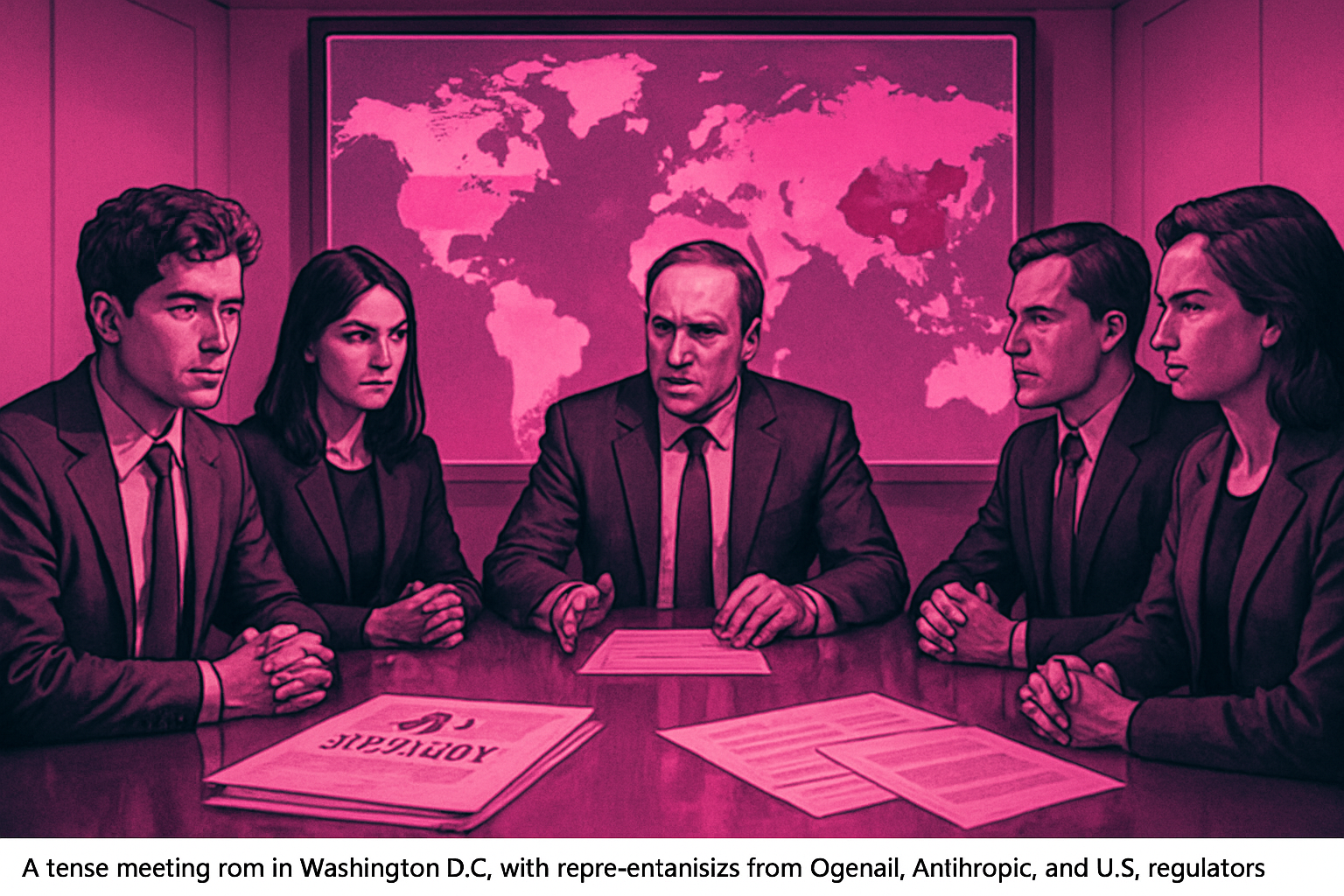
The discussions are not limited to social media. In Washington, D.C., influential companies like OpenAI and Anthropic have reportedly pressured regulators to take action against open Chinese AI models, which they view as a potential threat to American technological supremacy. These companies fear that the openness of Chinese models could allow China to gain an edge in this crucial technological race.
Concerns from Silicon Valley
In a recent episode of TechCrunch's Equity podcast, hosts Kirsten Korosec, Sean O’Kane, and Anthony Ha explored why this topic has become so sensitive. Sean O’Kane compared the current situation to past crises, emphasizing that Silicon Valley seems to be bracing for an imminent major disruption, with a palpable anticipation that something could come along to upset the established order. He suggested that the tech industry is on high alert, ready to respond to any new advancement that could change the game.
Kirsten Korosec raised the issue of potential restrictions on Chinese AI models, questioning whether these measures would aim to ensure American supremacy in the AI race or favor certain American companies at the expense of others. She highlighted the idea that these restrictions could benefit a small number of leading labs, raising the question of whether the goal is truly to protect the American industry as a whole or simply to favor certain players.
Sino-American Technological Competition
Anthony Ha reminded listeners that this debate is not new. Since the launch of DeepSeek, another high-performing Chinese model, the American tech industry has often reacted with concern to the rise of Chinese models. The central question remains whether Chinese companies can surpass their American counterparts, particularly in terms of cost and openness. This concern is fueled by the perception that Chinese models could offer comparable performance at a lower cost, potentially eroding the dominant position of American companies.
Sean O’Kane cited a recent example where Kimi managed to graphically reproduce macOS in 30 minutes, although this does not constitute a true operating system. Nonetheless, this demonstration has heightened fears of rapid technological advancement in China, reinforcing the notion that American companies must remain vigilant in the face of these developments. Kimi's ability to achieve such a feat in such a short time has been perceived as a sign of the efficiency and speed of Chinese technological progress.
Le brief IA que les pros lisent chaque soir
Les 7 actus IA du jour, décryptées en 5 min. Gratuit.
Inclus dès l'inscription : notre sélection des meilleurs guides & comparatifs IA.
Choisissez votre rythme
Gratuit · Pas de spam · Désabonnement en 1 clic
Security and Protectionism Issues
Kirsten Korosec referenced an article by Tim Fernholz that analyzes the psychosis surrounding Chinese AI in the U.S. Concerns include potential biases favoring China and security risks. However, protectionism and the question of who will win the "AI race" seem to be at the heart of these fears. This dynamic echoes the debates surrounding TikTok, where the app's Chinese origin intensified discussions about national security. The parallels between the two situations highlight how the geographical origin of technologies can influence perceptions and policies.
Anthony Ha compared the current situation to the panic surrounding TikTok, noting that the addition of the Chinese factor often intensifies debates. He pointed out that discussions about open AI models are frequently linked to the perception of their power and danger, prompting some to advocate for American proprietary models. This perception of a potential threat has led to calls for stronger protective measures and controls on foreign technologies.
Implications of Potential Restrictions
Kirsten Korosec highlighted the possible consequences of banning open-weight Chinese models. Such a measure could favor companies like OpenAI, forcing others to use their models instead of those like Kimi. This raises the question of whether the goal is to ensure American victory in the AI race or to favor certain labs. The implications of these restrictions could be vast, influencing not only the technological landscape but also the economic and political relations between the two countries.
The Role of American Players in the Debate
Sean O’Kane mentioned that Dean Ball, head of strategic futures at OpenAI, has played a key role in launching this debate. Ball published a post expressing his concerns, suggesting that the U.S. should create a climate of fear, uncertainty, and doubt (FUD) to complicate the competition from open Chinese models. This suggestion has sparked mixed reactions, with some believing he should not have voiced these ideas publicly, while others viewed it as a necessary strategy to protect American interests.
The reaction to his comments has been mixed, with some feeling he should not have expressed these ideas aloud. Ball later softened his remarks, but the debate remains lively on the technological and political stage. David Sacks, former AI czar under the Trump administration, also expressed concerns about data center regulations. He criticized regulations he considers excessive, claiming they unnecessarily complicate the lives of American companies. Sacks has advocated for a less restrictive approach to allow the U.S. to remain competitive against China.
Brief IA — L'actualité IA en français
L'essentiel de l'actualité de l'intelligence artificielle, décrypté et expliqué chaque jour.