KPMG: AI Transforms the Engineer's Role at Client Sites
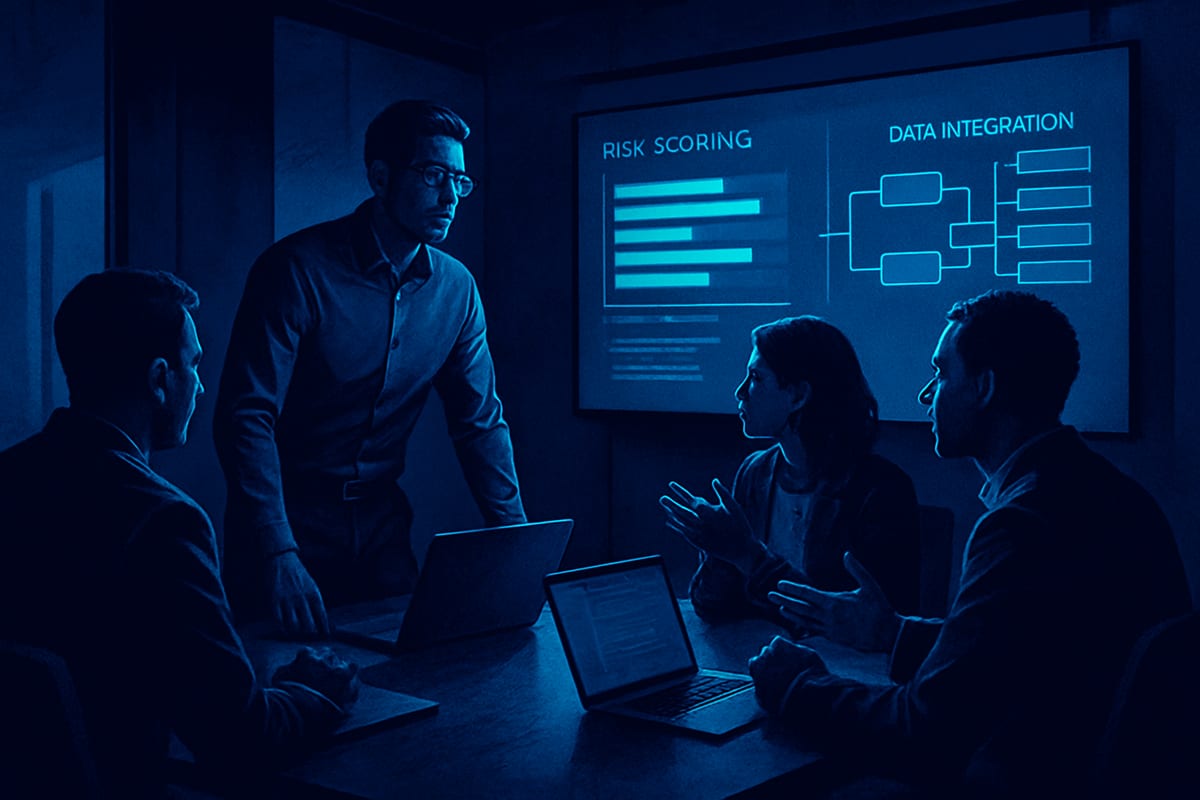
At KPMG, a "forward-deployed" engineer describes how AI is shifting the core of work: less coding, more context, data, and coaching. Projects are delivered faster, risk scoring is automated, on-site presence, and continuous practice transmission are on the agenda, with a bottleneck now located before development.
Continuous Transfer and Enhanced Human Decisions
The forward-deployed engineer model at KPMG emphasizes continuous knowledge transfer rather than a simple software handoff. In traditional approaches, an integrator gathers requirements, builds the solution, and then hands it over to the client, which can create a "thrown over the wall" effect. By working alongside teams during development, training, and coaching, knowledge flows in real-time, and the application is delivered with best practices, documentation, and the necessary artifacts for adoption. AI frees up time to frame problems and make critical decisions, allowing a focus on tasks that require human judgment.
Accelerated Deliveries and AI-Powered Risk Scoring
In a project integrating multiple applications into a complex system, months of requirement gathering and context refinement preceded an execution phase where AI enabled the application to be delivered in about a month. The client wanted to understand the speed and fluidity achieved, then sought support to disseminate the AI and prompting practices employed. In another case, a risk scoring device was implemented: relevant signals are aggregated, AI reasons on these signals to produce a score, which independent evaluators can then use in their analyses.
Le brief IA que les pros lisent chaque soir
Les 7 actus IA du jour, décryptées en 5 min. Gratuit.
Inclus dès l'inscription : notre sélection des meilleurs guides & comparatifs IA.
Choisissez votre rythme
Gratuit · Pas de spam · Désabonnement en 1 clic
Work Shifted Towards Context and Data
The friction point is no longer coding but orchestrating context and intent upstream of development. An increasing share of the effort focuses on data and integration layers. The challenges lie in making data intelligible for AI, organizing monitoring and visibility, and extracting value from data scattered between legacy applications and the cloud. The activity involves aggregating large volumes of data, applying AI reasoning capabilities, and connecting systems that do not naturally communicate.
On-Site Presence and Coaching of Client Teams
Proximity to client teams is part of the setup: the engineer often works on-site and prefers in-person interactions, deemed more conducive to organic exchanges and better reading of non-verbal signals than through video conferencing tools. Support includes coaching on the use of AI, relying on technical skills, business understanding, and clear communication. When teams work in the office, he generally travels to join them, while adapting to remote configurations when necessary.
Career Path and Role Scope at KPMG
The engineer has been in this role at KPMG for about a year, after starting as a federal Salesforce developer and building a career in architecture before moving into consulting. He indicates that he joined the company six years ago and currently holds the position of principal technical architect. The scope combines direct and continuous client relationships, deep contextualization of AI, and injection of results into deliverables. He claims that AI allows him to increase his output, maintain context across multiple projects simultaneously, and that poorly managed implementations exist, particularly on Salesforce. According to him, the effectiveness of AI depends on the quality of the context provided, and a significant portion of his time is spent gathering this information before propagating it into client applications.
Brief IA — L'actualité IA en français
L'essentiel de l'actualité de l'intelligence artificielle, décrypté et expliqué chaque jour.