America Strengthens Its AI Protectionism Against China
Le brief IA que les pros lisent chaque soir
Les 7 actus IA du jour, décryptées en 5 min. Gratuit.
Inclus dès l'inscription : notre sélection des meilleurs guides & comparatifs IA.
Choisis ton rythme
Gratuit · Pas de spam · Désabonnement en 1 clic
America and Its Shift Towards Technological Protectionism
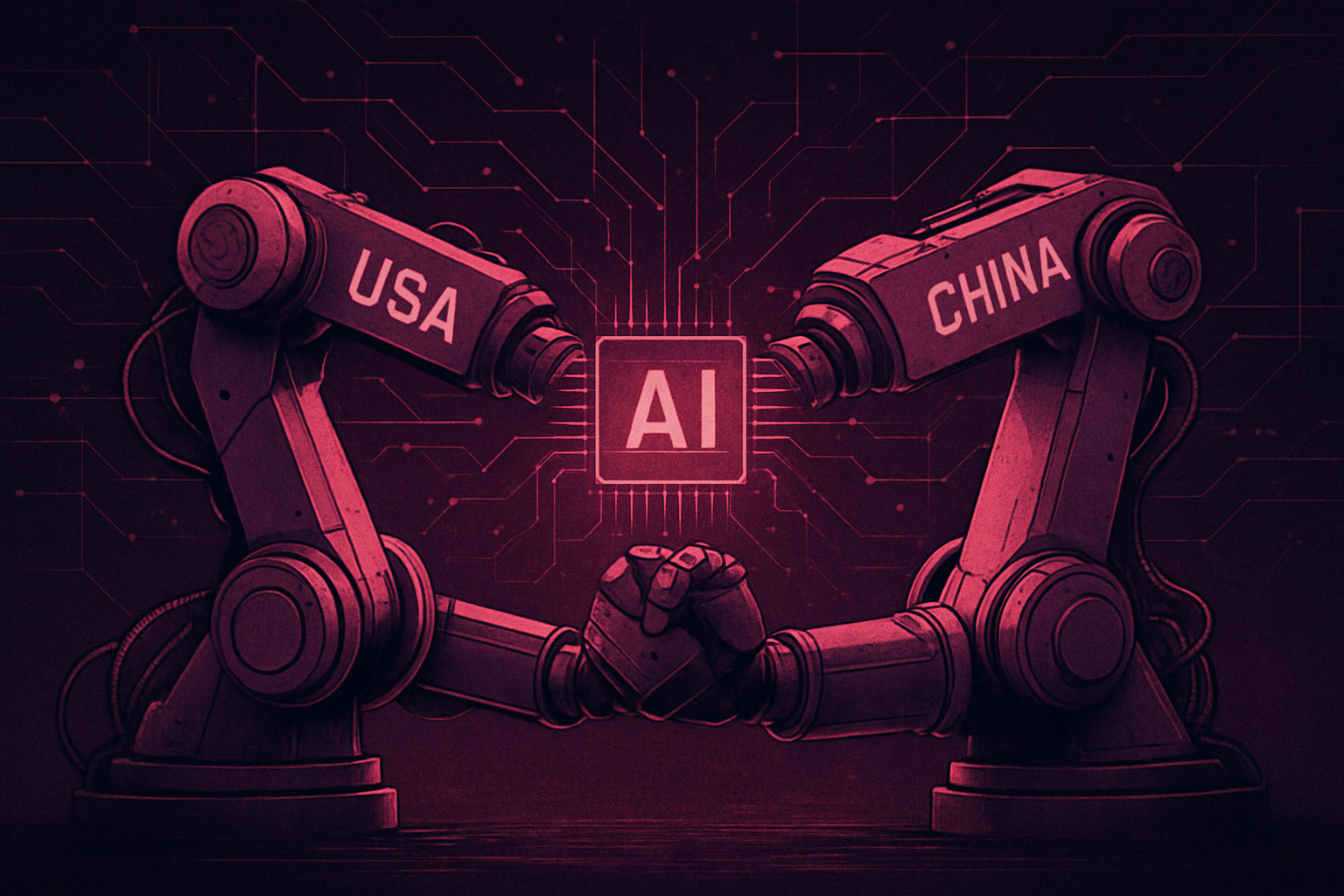
The United States appears to be entering a new era marked by increased protectionism in the fields of artificial intelligence (AI) and robotics. This trend is set against a backdrop of international rivalries, where America seeks to protect its technological interests while moving away from the traditional principles of globalized capitalism.
Recently, an unusual speech by the Federal Reserve Chair highlighted these tensions. Kevin Warsh, during his second meeting as chair of the interest rate-setting committee, oversaw a vote to keep rates unchanged, despite an economic climate marked by war and inflation attributed to AI.
Among the influential figures in this policy is Marc Andreessen, a renowned venture capitalist, regarded by the administration as an AI expert. His presence underscores the importance placed on private sector voices in shaping American technological policies.
Restrictions on Foreign Robots
The Trump administration recently announced measures to ban the import of new robots from China, as well as power inverters. These decisions aim to protect the development of AI in the United States against perceived threats to national security. Indeed, the goal is to relocate key industries to stimulate their growth on American soil.
On July 28, these bans were officially unveiled, specifically targeting humanoid and quadruped robots manufactured abroad. Additionally, power inverters, essential for connecting renewable energy sources to the grid, are also affected.
The Federal Communications Commission seems to be following this directive, influenced by anti-China strategies promoted by figures like Eric Schmidt, former CEO of Google, and supported by influential investors.
Towards a Ban on Chinese Open-Source Models?
The Trump administration is also considering restrictions on Chinese open-source models. In October 2022, the U.S. Department of Commerce already implemented export controls prohibiting the sale of advanced AI chips, marking a turning point in American trade policy.
In May 2024, the Biden administration continued this trend by drastically increasing tariffs on Chinese electric vehicles, raising them from 25% to 100%. This decision, while aimed at protecting the American automotive industry, coincided with a decline in domestic demand, exacerbated by the political stances of Elon Musk.
Paradoxically, as the United States tightens its protectionism, Chinese electric vehicle manufacturers continue to expand internationally, gaining ground in Western markets such as Australia and potentially Canada.
The Future of American Technological Protectionism
These protectionist measures raise questions about the future of trade relations between the United States and China, particularly in the technology sector. As America seeks to preserve its technological supremacy, it must also navigate an increasingly competitive and interconnected global landscape.
Brief IA — L'actualité IA en français
L'essentiel de l'actualité de l'intelligence artificielle, décrypté et expliqué chaque jour.