The AI Economy: An Inverted Model Threatening Its Stability
Le brief IA que les pros lisent chaque soir
Les 7 actus IA du jour, décryptées en 5 min. Gratuit.
Inclus dès l'inscription : notre sélection des meilleurs guides & comparatifs IA.
Choisis ton rythme
Gratuit · Pas de spam · Désabonnement en 1 clic
The AI Economy: An Inverted Model That Threatens Its Stability
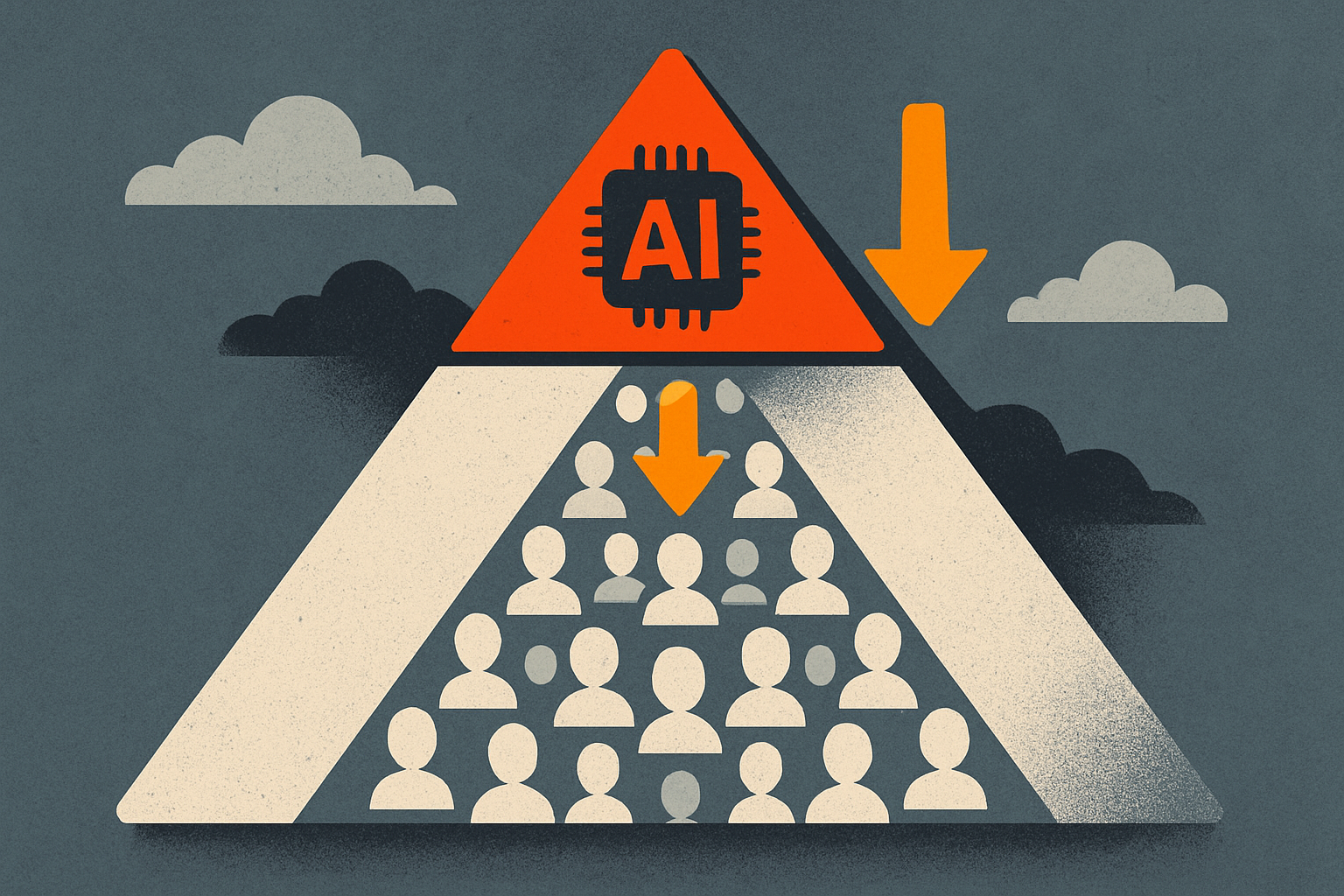
In artificial intelligence (AI), the economic model is inverted compared to the classical economy. While in the former, proximity to the end customer is synonymous with profitability, here the opposite prevails. This imbalance could weaken the entire ecosystem.
Tech giants are set to spend over $650 billion in 2026 to build the infrastructure necessary for AI. This colossal sum is based on the belief that AI will transform the global economy. However, is this growth truly supported by strong user demand, or is it rather fueled by investments from financiers?
Investors Are Funding the Ecosystem Themselves
Torsten Slok, chief economist at Apollo, analyzed the AI value chain, breaking it down into four links:
- Chip and equipment manufacturers
- Energy and electrical networks
- Cloud and computing power
- Models and applications intended for the end user
By examining the financial data of companies such as NVIDIA, Microsoft, Amazon, and Anthropic, he calculated the operating margin of each link. The results show that chip manufacturers have an operating margin of 41%, the highest in the chain, while model and application creators are losing money, with a margin of -59%.
In practical terms, this means that NVIDIA is making profits by selling its chips, while OpenAI or Anthropic, despite strong revenue growth, continue to accumulate losses. The profits generated upstream do not come from end-user demand but from the capital raised by downstream companies, those that are in the red. Thus, it is the investors who, for now, are financing the profitability of the players at the top of the chain.
Oracle, a Case in Point
This mechanism may work temporarily, but not indefinitely, warns Torsten Slok. As long as investors continue to inject capital, the most profitable part of the chain remains protected. However, if this funding were to slow down, the entire ecosystem would then be at risk.
Signs of tension are already beginning to appear. According to the Bank for International Settlements (BIS), the five largest hyperscalers issued $121 billion in debt in 2025, four times their average annual amount over the previous five years. This allows them to continue financing investments that now exceed their revenues and available cash.
The case of Oracle perfectly illustrates this situation. The company reports a negative cash flow of $23.7 billion, a debt of nearly $130 billion, and $260 billion in lease commitments for AI infrastructures that have yet to be built. Everything hinges on a $300 billion contract signed with OpenAI: if the latter manages to fulfill this commitment, the bet will pay off. Otherwise, Oracle's financial stability could be jeopardized.
For now, it is difficult to determine whether the concrete uses of AI will generate enough revenue to justify such massive investments. As long as this answer remains unknown, the balance remains extremely precarious.
Brief IA — L'actualité IA en français
L'essentiel de l'actualité de l'intelligence artificielle, décrypté et expliqué chaque jour.